Data-Driven Decisions Start with Data-Driven Connectivity
Connectivity is no longer a background function in business. It is the foundation that enables real time insights, operational intelligence, and accurate decision making. As organizations shift toward cloud systems, IoT devices, and global operations, data driven connectivity becomes the key to ensuring information flows quickly and securely across every touchpoint. Only when connectivity is strong can analytics, automation, and AI deliver their full value. This is where modern enterprises gain their competitive edge.


 8 min read
 Share
Share
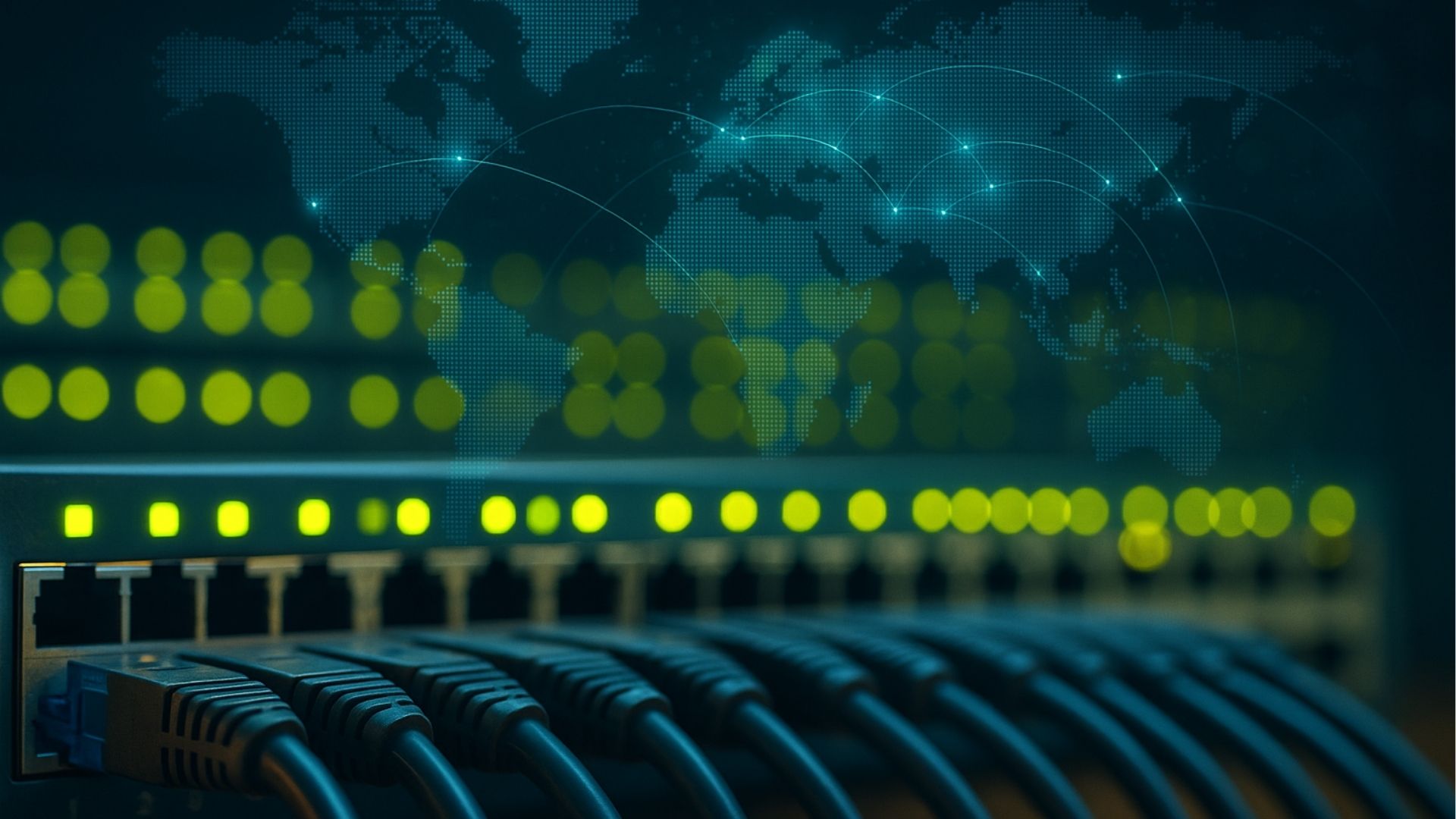
For years, businesses have repeated the idea that data is the new oil. But in reality, data only becomes valuable when it moves freely, quickly, and securely across an organization. Smarter decisions do not begin with analytics dashboards or AI algorithms. They begin with the foundational element that powers every digital system: connectivity.
Connectivity has evolved beyond a basic utility. It is now the starting point of digital transformation and the engine that drives real time intelligence. Every insight that fuels growth, every prediction that prevents downtime, and every personalized customer experience relies on the uninterrupted flow of data. This makes data driven connectivity the backbone of modern decision making.
Today’s enterprises create massive amounts of data across devices, employees, machines, applications, and global operations. But even the most advanced analytics tools fail when data arrives late, arrives inconsistently, or fails to sync entirely. To operate with speed and clarity, businesses must ensure that the movement of data is just as intelligent as the analysis of data.
This is why the future belongs to organizations that build their strategy on data driven connectivity.
Connectivity as the Foundation of Intelligent Decision Making
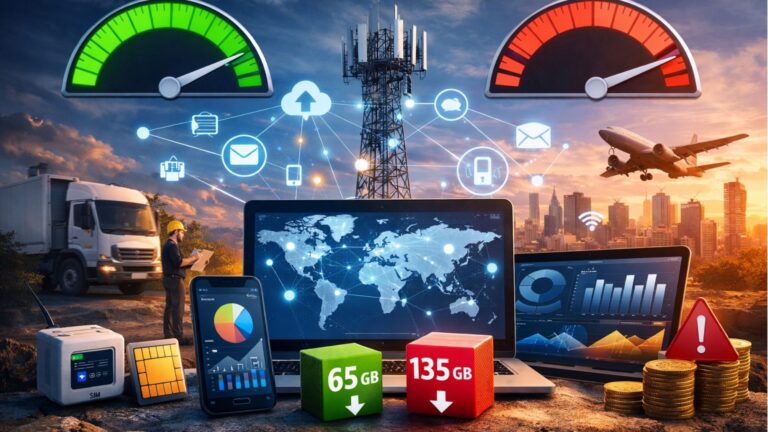
Many organizations invest heavily in cloud computing, BI platforms, data warehouses, and AI systems. Only later do they discover that the true bottleneck lies not in analytics but in infrastructure. When connectivity is weak, data becomes unreliable. When connectivity is unstable, insights become outdated. When connectivity is fragmented, decisions become flawed.
No amount of analytics can compensate for delayed or incomplete data.
No amount of AI can fix gaps created by poor connectivity.
To make accurate decisions, organizations need data that is continuous, complete, and available the moment it is created. Connectivity is the bridge that allows data to reach the systems that analyze it. It is the first step in any data transformation journey.
This shift from analytics first to connectivity first marks a major turning point in how enterprises view digital readiness.
The Rise of Connected Data Ecosystems
Businesses today no longer operate in isolated environments. They run on integrated ecosystems where supply chains interact with sensors, customers interact with cloud platforms, employees connect across regions, and machines continuously feed data into analytics engines.
These ecosystems work only when connectivity is strong and intelligent.
Connected data ecosystems ensure that:
- Devices share information instantly
- Sensors transmit live metrics without interruptions
- Cloud systems sync in real time
- Applications remain accessible from anywhere
- Data flows between tools without manual effort
- Global operations communicate without friction
Every modern business is becoming a connectivity powered ecosystem. This shift is visible in logistics networks, retail operations, healthcare systems, manufacturing hubs, and financial applications.
Organizations that embrace this model experience greater visibility, faster decision making, and stronger customer satisfaction.
Why Real Time Connectivity Matters More Than Ever
Industries across the world are shifting from batch based operations to real time environments. Logistics, supply chain, retail, automation, fintech, and even healthcare now rely on live data for accuracy and efficiency.
When data arrives in real time, decisions follow in real time.
When data is delayed, businesses experience operational blind spots.
Examples show this clearly:
A logistics company that receives location updates late cannot optimize routes or fuel usage.
A factory that learns about machine vibration changes too slowly cannot prevent equipment failure.
A retail chain with outdated inventory data cannot manage stock efficiently or forecast demand.
A healthcare provider that receives patient data with a delay risks compromising care quality.
Real time connectivity ensures that information is always current and actionable. It transforms reactive workflows into predictive and proactive operations.
How eSIM and Intelligent Connectivity Enable Global Data Flow
As digital operations expand across borders, traditional connectivity methods reveal their limitations. Physical SIM cards, manual provisioning, roaming dependencies, and country specific setups slow down global scale.
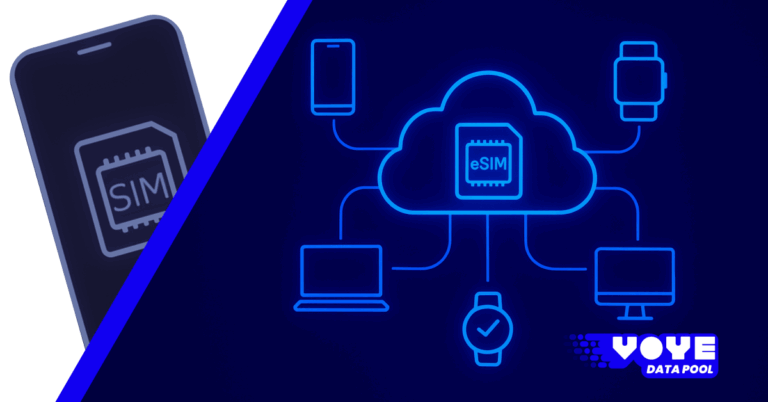
This is where eSIM technology emerges as a powerful enabler of data driven connectivity.
eSIM solutions offer:
- Borderless global coverage
- Instant provisioning
- Remote activation without physical cards
- Multi network redundancy
- Stronger security
- Support for large scale IoT deployments
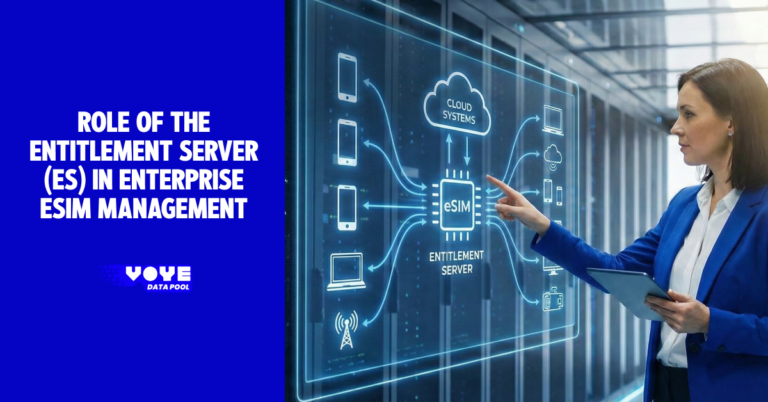
For global enterprises, eSIM unlocks seamless connectivity for traveling employees, distributed devices, cross border IoT systems, and international operations. Data flows continuously without interruptions caused by geography or physical limitations.
eSIM is rapidly becoming a central component of enterprise connectivity strategies.

Upgrade Your Business Connectivity
Empower global teams with seamless, secure, borderless eSIM connectivity.
IoT as the Nerve System of Modern Business
The shift toward automation and predictive operations is made possible by IoT. Sensors and devices now capture millions of data points every minute. These include machine health indicators, environmental readings, product movement data, energy usage trends, and customer interaction patterns.
However, IoT only becomes useful when devices stay connected at all times.
Without strong connectivity:
- IoT devices disconnect
- Data packets are lost
- Predictive analytics fail
- Dashboards lose accuracy
- Automation breaks down
Data driven connectivity ensures that IoT systems deliver continuous insights. It keeps sensors online and enables real time monitoring that powers Industry 4.0, smart retail, digital healthcare, intelligent logistics, and automated energy management.
IoT depends completely on reliable, high quality connectivity to create meaningful outcomes.
Cloud First Systems Depend Entirely on Connectivity
Most organizations have shifted from on premises systems to cloud based and hybrid environments. Business critical applications like CRM platforms, supply chain tools, analytics engines, and communication systems now run on the cloud.
Cloud performance is directly tied to the quality of connectivity.
When connectivity is stable:
- Applications load smoothly
- Teams collaborate effectively
- Data syncs across systems in real time
- Workflows remain consistent
- Downtime decreases
When connectivity is unstable:
- Users experience delays
- Data becomes inconsistent
- Cloud performance drops
- Productivity slows
- Operational costs increase
Cloud adoption succeeds only when supported by intelligent, modern connectivity infrastructure.
How Connectivity Improves Decision Accuracy
The quality of business decisions is only as strong as the accuracy of the data behind them. Connectivity plays a direct role in ensuring that data is reliable.
High quality connectivity guarantees that:
- Data is received without delay
- Information remains consistent across systems
- Analytics teams work with current datasets
- Predictive models produce precise outcomes
- Operational decisions reflect real world conditions
With continuous data flow, organizations can adjust strategies quickly, resolve issues proactively, and uncover opportunities earlier.
Connectivity empowers every department to make smarter decisions, from operations and finance to marketing and customer service.
The Connection Between Connectivity and Speed of Execution
Connectivity does more than support data. It accelerates decision cycles.
When data moves faster, organizations react faster.
Faster reactions lead to higher efficiency and lower risk.
For example:
- Machines can be shut down before damage occurs
- Delivery routes can be optimized instantly
- Customer service teams can respond with real time insights
- Fraud can be detected the moment it happens
- Inventory updates can be reflected across all channels immediately
These improvements compound over time. A small gain in speed often leads to major improvements in productivity, cost savings, and customer experience.
Connectivity becomes a strategic advantage that increases the pace of business execution.
Security as a Core Requirement
With the growing volume of data and interconnected devices, security becomes essential. Data driven connectivity requires protections at every level.
This includes:
- Secure eSIM provisioning
- Network level encryption
- Device authentication
- Intelligent routing
- Real time threat detection
- Zero trust architectures
Security is no longer about protecting networks. It is about protecting the accuracy and integrity of decisions. If data is compromised, every insight built on that data becomes unreliable.
A secure, intelligent connectivity layer ensures that organizations can trust the data driving their operations.
Industries Transforming Through Data Driven Connectivity
Data driven connectivity is reshaping multiple industries.
In supply chain and logistics, real time visibility enables optimized routes, reduced delays, and efficient fleet management.
In retail and e commerce, connected PoS systems and inventory sensors improve stock accuracy and customer experience.
In healthcare, connected devices make remote monitoring and accurate clinical decisions possible.
In manufacturing, continuous sensor data supports predictive maintenance and automated operations.
In financial services, secure and fast connectivity enables real time transactions and fraud detection.
Each industry experiences a direct correlation between better connectivity and better outcomes.
The Future of Connectivity Powered Business Intelligence
Connectivity is entering a new era defined by intelligence, automation, and global scale. Emerging technologies are accelerating this shift.
Artificial intelligence will make networks self optimizing.
Private 5G will support mission critical enterprise applications.
Edge computing will bring analytics closer to the source of data.
Global eSIM platforms will enable seamless cross border operations.
Autonomous systems will rely entirely on uninterrupted data flow.
In the coming years, businesses will measure competitiveness by the speed and quality of their connectivity. Organizations that master data driven connectivity will lead, while those who delay modernization will operate with slower insights and weaker decision cycles.
Conclusion
Organizations often focus on analytics, AI, and digital tools without addressing the most fundamental requirement for intelligent decision making. Data driven decisions begin with data driven connectivity.
Connectivity determines how quickly data moves, how accurately it is captured, how securely it is delivered, and how reliably systems perform.
It builds the foundation for real time insights, predictive analytics, automation, and global operations.
It strengthens cloud environments, supports IoT ecosystems, enhances security frameworks, and enables seamless worldwide communication.
If businesses want to be truly data driven, they must prioritize connectivity as a strategic asset. The future of decision making belongs to organizations that build on strong, intelligent, and secure connectivity that powers smarter, faster, and more confident decisions.
Power Your Global Connectivity
Activate, manage, and scale eSIMs with ease.