

Finance: How to Audit Telecom Bills for International Auditors
International auditors work with sensitive financial records across offices, clients, banks, and regulatory environments. That makes…


International auditors work with sensitive financial records across offices, clients, banks, and regulatory environments. That makes…

Choosing the right international data plan can significantly impact your travel budget and productivity. This guide compares day pass roaming and pay-per-GB pricing models to help travelers understand which option delivers better value. Learn how data usage patterns, cost predictability, business travel needs, and hidden charges influence overall expenses. Whether you are a frequent international traveler or an occasional visitor, understanding these pricing structures can help you make smarter connectivity decisions while avoiding unexpected roaming costs abroad.

Unlimited data plans may appear convenient, but they often include hidden costs, throttling policies, and unnecessary features that increase monthly telecom expenses. This blog explains why businesses and consumers are shifting toward smarter data strategies, including pooled and flexible plans that improve cost efficiency, resource allocation, and network performance. Learn how analyzing actual usage patterns can help users make financially smarter mobile connectivity decisions while maintaining reliable and scalable access for both personal and professional needs.

Traditional “use it or lose it” data plans often lead to wasted connectivity and inefficient spending. Learn how data allowance sharing helps enterprises distribute data across teams and devices, improving resource utilization and enabling smarter connectivity management.

Many organizations still rely on fixed data limits for each user or device, which often leads to wasted capacity and unexpected overage charges. A shared connectivity approach allows businesses to distribute usage where it is needed most, improving cost control, operational efficiency, and support for remote teams and connected equipment.
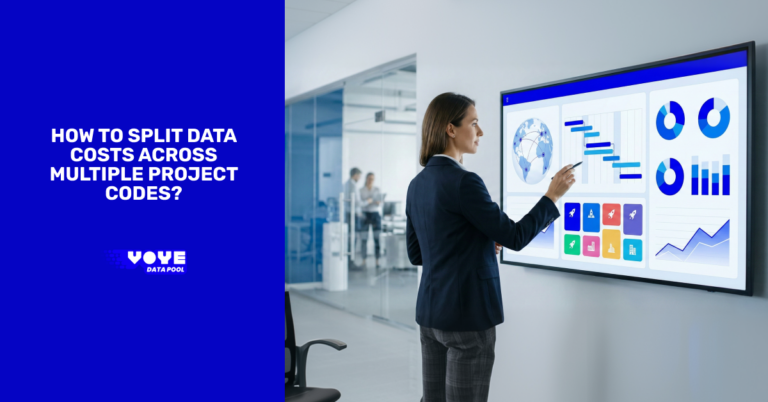
Managing telecom expenses becomes difficult when multiple teams, devices, and projects share the same connectivity. Without proper usage tracking, businesses rely on estimates and manual spreadsheets, leading to inaccurate project costing. By assigning connectivity usage to cost centers and project codes, organizations gain clearer financial visibility, improve billing accuracy, and simplify accounting workflows.

Mobile connectivity costs often look small but quickly become unpredictable with individual SIM billing, roaming charges, and manual reimbursements. Centralized data pooling offers better cost visibility, simplified management, and reliable global connectivity for teams and devices through Voye Data Pool.

Global business travel has transformed mobile connectivity into a financial planning concern rather than a simple operational necessity. Uncontrolled roaming charges, delayed billing cycles, and reimbursement claims introduce uncertainty into monthly budgets and complicate forecasting for finance teams. By adopting centralized eSIM connectivity through Voye Data Pool, organizations can standardize communication expenses, improve reporting accuracy, and gain real time visibility into usage. The result is stronger cash flow management, reduced administrative workload, and better control over global operational spending.
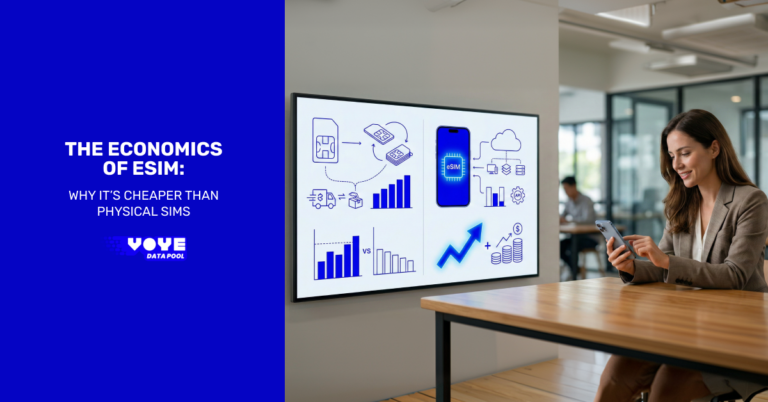
As organizations expand globally, mobile connectivity is becoming a measurable operational expense rather than a simple utility. The shift from physical SIM cards to eSIM technology changes how companies manage, account for, and scale connectivity. By removing manufacturing, shipping, and manual activation processes, eSIM reduces overhead while improving efficiency and control. Businesses can activate devices remotely, avoid roaming premiums, and manage teams and connected devices through a centralized platform, turning connectivity into a predictable and scalable service.
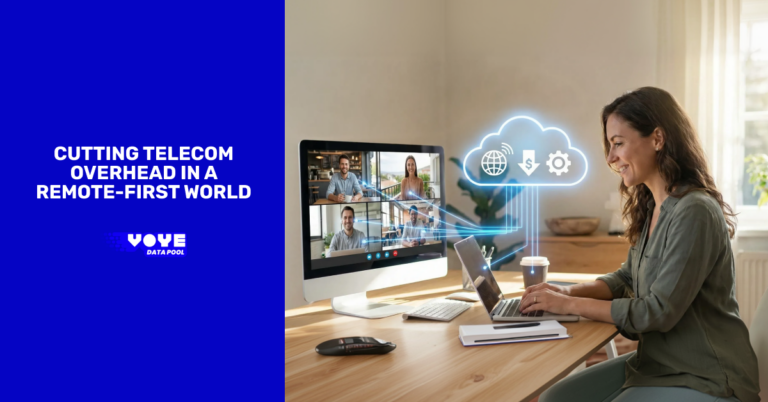
Remote work has transformed how companies manage communication and connectivity, but it has also created a major hidden cost center. From roaming charges and mobile reimbursements to fragmented communication tools, telecom expenses can quickly spiral without centralized control. This guide explains practical strategies to reduce telecom overhead, improve visibility, and streamline global workforce connectivity using modern solutions like business eSIM management, unified communications, and real-time usage tracking.
