Get 5% Discount using the code VOYE15 Buy eSIM close

The Ultimate Guide to Group Data Sharing for Enterprises

Enterprises often struggle with multiple mobile plans, unpredictable telecom costs, and limited visibility across teams and devices. By adopting a shared connectivity model and centralized management, organizations can streamline operations, improve security, and gain better control over usage while supporting remote employees and connected equipment.

Voye Data Pool Team
February 19, 2026 dot Read 7 min read
share Share
The Ultimate Guide to Group Data Sharing for Enterprises

Enterprise connectivity has changed dramatically in the last few years. Organizations no longer operate from a single building with a fixed network. Teams work remotely, employees travel, and connected devices operate in multiple locations simultaneously.

Every employee now depends on mobile connectivity. Sales teams access CRM platforms on the road. Support teams assist customers from different regions. Field engineers upload reports from project sites. At the same time, smart devices continuously transmit operational data.

When each user or device operates on an independent connection, management becomes complicated. Costs increase, billing becomes unpredictable, and visibility disappears. This is why enterprises are adopting structured connectivity models that allow resources to be shared efficiently across the organization.

Why Enterprises Struggle With Individual Data Plans?

At first glance, assigning each employee a separate mobile plan seems simple. Every person receives a SIM card and uses it independently. However, as the organization grows, this model becomes difficult to manage.

A company with 20 employees can track usage manually. A company with 500 employees cannot.

Enterprises begin facing several operational problems.

  • Billing Complexity

Each connection generates its own charges. Finance teams must reconcile multiple invoices and track reimbursements.

  • Uneven Usage

Some employees use very little data, while others consume large amounts. Independent plans waste unused capacity while still charging overage fees to heavy users.

  • Lack of Visibility

IT administrators cannot easily determine who is consuming bandwidth and for what purpose.

  • Administrative Overhead

Activating, replacing, or cancelling individual SIM cards consumes operational time.

Over time, these small inefficiencies turn into a measurable operational expense.

What Does Enterprise Connectivity Actually Require?

Businesses do not just need internet access. They need controlled access.

An enterprise network must provide:

  • Predictable billing.
  • Centralized management.
  • Usage visibility.
  • Security monitoring.
  • Scalability.

When these elements are missing, connectivity becomes a recurring operational problem rather than a supporting infrastructure.

Understanding the Modern Connectivity Model

Enterprises are now moving toward a system where multiple users and devices operate within a shared connectivity environment instead of isolated connections.

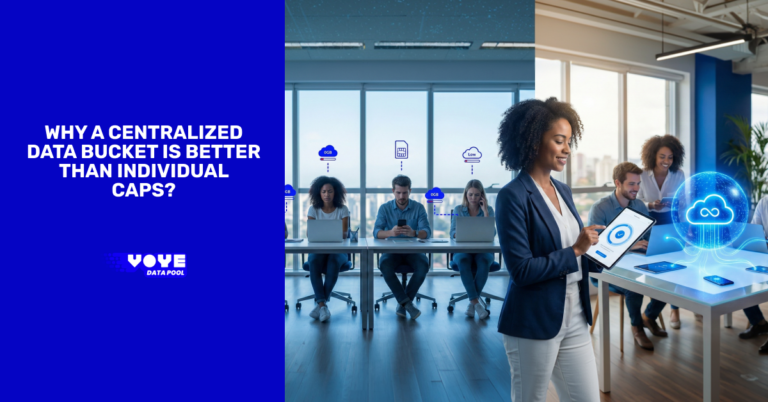
This is where group data sharing becomes valuable. Instead of treating every connection separately, organizations create a shared resource that can be allocated where needed.

Heavy users consume more bandwidth without penalty, while light users do not waste unused data. The organization manages total usage rather than individual plans.

Operational Advantages

A shared connectivity structure immediately changes daily operations.

Employees no longer worry about exhausting individual limits. IT teams spend less time managing activations. Finance teams receive consolidated reporting instead of fragmented billing.

The network begins behaving like a company resource rather than a personal subscription.

How Does It Improve Cost Control?

One of the biggest financial challenges in enterprise telecom management is unpredictability.

Separate plans produce:

  • Overage charges.
  • Roaming fees.
  • Duplicate subscriptions.
  • Unused allowances.

Shared usage distributes consumption naturally across the organization. High usage in one department is balanced by low usage in another.

Enterprises gain clearer budgeting because they monitor total usage rather than guessing individual behavior.

Role of Centralized Management Platforms

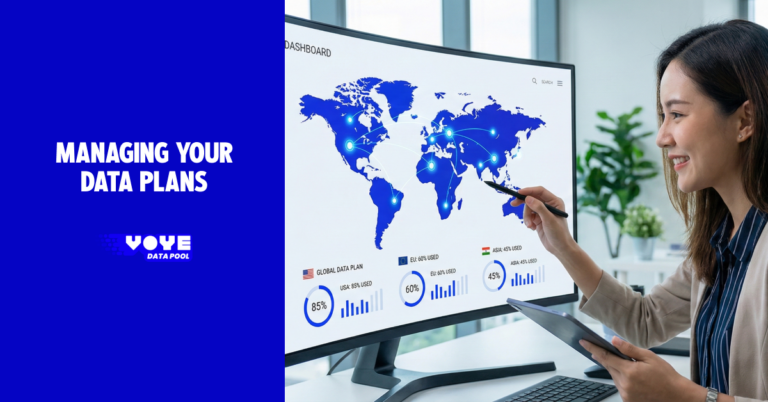
Connectivity cannot be efficiently shared without a management system. Enterprises require a platform that allows administrators to control access and monitor activity.

Central platforms typically provide:

  • Remote Activation

Devices and employees can be connected instantly without physical distribution.

  • Usage Monitoring

Administrators see how much data each team or device consumes.

  • Instant Suspension

Lost or inactive devices can be disabled immediately to prevent misuse.

  • Policy Control

Organizations can set limits for departments or projects.

These capabilities turn connectivity into a manageable IT asset.

Role of Centralized Management Platforms

Connectivity cannot be efficiently shared without a management system. Enterprises require a platform that allows administrators to control access and monitor activity.

Central platforms typically provide:

  • Remote Activation

Devices and employees can be connected instantly without physical distribution.

  • Usage Monitoring

Administrators see how much data each team or device consumes.

  • Instant Suspension

Lost or inactive devices can be disabled immediately to prevent misuse.

  • Policy Control

Organizations can set limits for departments or projects.

These capabilities turn connectivity into a manageable IT asset.

Security Benefits

Security is often overlooked in telecom discussions, yet it is one of the main reasons enterprises change their connectivity strategy.

When employees rely on unknown public networks, sensitive data becomes exposed. Shared enterprise connectivity reduces this risk by keeping traffic within controlled environments.

Security teams gain visibility over:

  • Access locations.
  • Device behavior.
  • Unusual usage patterns.

This helps prevent unauthorized access and reduces vulnerability to data breaches.

Support for Remote Workforces

Remote work requires stable connectivity. Employees working from different cities or countries cannot depend on office networks.

A structured system allows employees to operate as if they were still inside the corporate environment. Communication tools, cloud platforms, and collaboration software function consistently regardless of location.

Organizations benefit from:

  • Improved communication.
  • Faster response time.
  • Fewer operational interruptions.

Managing IoT and Connected Equipment

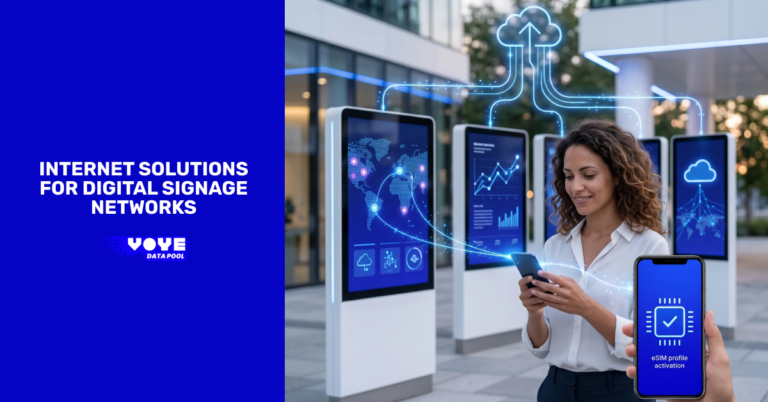
Enterprises increasingly deploy connected equipment such as sensors, tracking devices, and monitoring systems.

Unlike employees, these devices operate continuously. They transmit small amounts of data but must remain online at all times.

Individual plans are inefficient for this purpose. Many devices remain inactive for long periods yet still incur charges.

Shared connectivity allows:

  • Flexible usage allocation.
  • Easier device deployment.
  • Simplified maintenance.

The organization manages thousands of devices without handling thousands of contracts.

Financial Reporting Advantages

Finance departments also benefit significantly.

Instead of processing scattered invoices, they receive structured reports showing overall usage. Costs can be allocated to departments, projects, or business units more accurately.

This supports:

  • Better budgeting.
  • Project cost analysis.
  • Predictable monthly expenses.

Connectivity becomes a measurable operational cost rather than a fluctuating expense.

Implementation Considerations

Before transitioning, enterprises should evaluate operational needs carefully.

  • Usage Patterns

Understand which departments consume the most bandwidth.

  • Geographic Presence

Global teams require flexible coverage across regions.

  • Device Volume

The number of connected devices affects deployment planning.

  • Security Policies

Access control rules must align with company compliance standards.

Planning these elements ensures a smooth adoption process.

How Does the Voye Data Pool Support Enterprise Sharing?

Voye Data Pool provides a centralized eSIM connectivity platform designed for organizations operating across multiple regions.

The platform enables enterprises to connect employees and devices through a single management interface while maintaining coverage in more than 130 countries.

Businesses gain:

  • Centralized control.
  • Scalable deployment.
  • Secure connectivity.
  • Simplified billing.

IT administrators manage activation and monitoring, while finance teams gain clear usage reporting.

Best Practices for Enterprises

To maximize efficiency, enterprises should adopt practical management habits.

  • Assign devices to specific teams or projects
  • Monitor monthly usage trends
  • Disable inactive connections
  • Review security policies regularly
  • Align IT and finance reporting processes

These practices help maintain control as the organization grows.

One Pool, Less Chaos

Connectivity is now a fundamental part of enterprise infrastructure. Independent mobile plans create complexity, unpredictable costs, and security gaps as organizations expand.

A shared connectivity approach allows enterprises to manage employees, remote teams, and connected devices within a unified system. Costs become predictable, operations become smoother, and security improves.

With centralized management platforms like Voye Data Pool, enterprises can scale globally while maintaining reliable communication across their workforce and equipment.

Enterprises that treat connectivity as a managed resource rather than an individual service gain operational efficiency, financial clarity, and long-term scalability.


Enterprise connectivity has changed dramatically in the last few years. Organizations no longer operate from a single building with a fixed network. Teams work remotely, employees travel, and connected devices operate in multiple locations simultaneously.

Every employee now depends on mobile connectivity. Sales teams access CRM platforms on the road. Support teams assist customers from different regions. Field engineers upload reports from project sites. At the same time, smart devices continuously transmit operational data.

When each user or device operates on an independent connection, management becomes complicated. Costs increase, billing becomes unpredictable, and visibility disappears. This is why enterprises are adopting structured connectivity models that allow resources to be shared efficiently across the organization.

Why Enterprises Struggle With Individual Data Plans?

At first glance, assigning each employee a separate mobile plan seems simple. Every person receives a SIM card and uses it independently. However, as the organization grows, this model becomes difficult to manage.

A company with 20 employees can track usage manually. A company with 500 employees cannot.

Enterprises begin facing several operational problems.

  • Billing Complexity

Each connection generates its own charges. Finance teams must reconcile multiple invoices and track reimbursements.

  • Uneven Usage

Some employees use very little data, while others consume large amounts. Independent plans waste unused capacity while still charging overage fees to heavy users.

  • Lack of Visibility

IT administrators cannot easily determine who is consuming bandwidth and for what purpose.

  • Administrative Overhead

Activating, replacing, or cancelling individual SIM cards consumes operational time.

Over time, these small inefficiencies turn into a measurable operational expense.

What Does Enterprise Connectivity Actually Require?

Businesses do not just need internet access. They need controlled access.

An enterprise network must provide:

  • Predictable billing.
  • Centralized management.
  • Usage visibility.
  • Security monitoring.
  • Scalability.

When these elements are missing, connectivity becomes a recurring operational problem rather than a supporting infrastructure.

Understanding the Modern Connectivity Model

Enterprises are now moving toward a system where multiple users and devices operate within a shared connectivity environment instead of isolated connections.

This is where group data sharing becomes valuable. Instead of treating every connection separately, organizations create a shared resource that can be allocated where needed.

Heavy users consume more bandwidth without penalty, while light users do not waste unused data. The organization manages total usage rather than individual plans.

Operational Advantages

A shared connectivity structure immediately changes daily operations.

Employees no longer worry about exhausting individual limits. IT teams spend less time managing activations. Finance teams receive consolidated reporting instead of fragmented billing.

The network begins behaving like a company resource rather than a personal subscription.

How Does It Improve Cost Control?

One of the biggest financial challenges in enterprise telecom management is unpredictability.

Separate plans produce:

  • Overage charges.
  • Roaming fees.
  • Duplicate subscriptions.
  • Unused allowances.

Shared usage distributes consumption naturally across the organization. High usage in one department is balanced by low usage in another.

Enterprises gain clearer budgeting because they monitor total usage rather than guessing individual behavior.

Role of Centralized Management Platforms

Connectivity cannot be efficiently shared without a management system. Enterprises require a platform that allows administrators to control access and monitor activity.

Central platforms typically provide:

  • Remote Activation

Devices and employees can be connected instantly without physical distribution.

  • Usage Monitoring

Administrators see how much data each team or device consumes.

  • Instant Suspension

Lost or inactive devices can be disabled immediately to prevent misuse.

  • Policy Control

Organizations can set limits for departments or projects.

These capabilities turn connectivity into a manageable IT asset.

Role of Centralized Management Platforms

Connectivity cannot be efficiently shared without a management system. Enterprises require a platform that allows administrators to control access and monitor activity.

Central platforms typically provide:

  • Remote Activation

Devices and employees can be connected instantly without physical distribution.

  • Usage Monitoring

Administrators see how much data each team or device consumes.

  • Instant Suspension

Lost or inactive devices can be disabled immediately to prevent misuse.

  • Policy Control

Organizations can set limits for departments or projects.

These capabilities turn connectivity into a manageable IT asset.

Security Benefits

Security is often overlooked in telecom discussions, yet it is one of the main reasons enterprises change their connectivity strategy.

When employees rely on unknown public networks, sensitive data becomes exposed. Shared enterprise connectivity reduces this risk by keeping traffic within controlled environments.

Security teams gain visibility over:

  • Access locations.
  • Device behavior.
  • Unusual usage patterns.

This helps prevent unauthorized access and reduces vulnerability to data breaches.

Support for Remote Workforces

Remote work requires stable connectivity. Employees working from different cities or countries cannot depend on office networks.

A structured system allows employees to operate as if they were still inside the corporate environment. Communication tools, cloud platforms, and collaboration software function consistently regardless of location.

Organizations benefit from:

  • Improved communication.
  • Faster response time.
  • Fewer operational interruptions.

Managing IoT and Connected Equipment

Enterprises increasingly deploy connected equipment such as sensors, tracking devices, and monitoring systems.

Unlike employees, these devices operate continuously. They transmit small amounts of data but must remain online at all times.

Individual plans are inefficient for this purpose. Many devices remain inactive for long periods yet still incur charges.

Shared connectivity allows:

  • Flexible usage allocation.
  • Easier device deployment.
  • Simplified maintenance.

The organization manages thousands of devices without handling thousands of contracts.

Financial Reporting Advantages

Finance departments also benefit significantly.

Instead of processing scattered invoices, they receive structured reports showing overall usage. Costs can be allocated to departments, projects, or business units more accurately.

This supports:

  • Better budgeting.
  • Project cost analysis.
  • Predictable monthly expenses.

Connectivity becomes a measurable operational cost rather than a fluctuating expense.

Implementation Considerations

Before transitioning, enterprises should evaluate operational needs carefully.

  • Usage Patterns

Understand which departments consume the most bandwidth.

  • Geographic Presence

Global teams require flexible coverage across regions.

  • Device Volume

The number of connected devices affects deployment planning.

  • Security Policies

Access control rules must align with company compliance standards.

Planning these elements ensures a smooth adoption process.

How Does the Voye Data Pool Support Enterprise Sharing?

Voye Data Pool provides a centralized eSIM connectivity platform designed for organizations operating across multiple regions.

The platform enables enterprises to connect employees and devices through a single management interface while maintaining coverage in more than 130 countries.

Businesses gain:

  • Centralized control.
  • Scalable deployment.
  • Secure connectivity.
  • Simplified billing.

IT administrators manage activation and monitoring, while finance teams gain clear usage reporting.

Best Practices for Enterprises

To maximize efficiency, enterprises should adopt practical management habits.

  • Assign devices to specific teams or projects
  • Monitor monthly usage trends
  • Disable inactive connections
  • Review security policies regularly
  • Align IT and finance reporting processes

These practices help maintain control as the organization grows.

One Pool, Less Chaos

Connectivity is now a fundamental part of enterprise infrastructure. Independent mobile plans create complexity, unpredictable costs, and security gaps as organizations expand.

A shared connectivity approach allows enterprises to manage employees, remote teams, and connected devices within a unified system. Costs become predictable, operations become smoother, and security improves.

With centralized management platforms like Voye Data Pool, enterprises can scale globally while maintaining reliable communication across their workforce and equipment.

Enterprises that treat connectivity as a managed resource rather than an individual service gain operational efficiency, financial clarity, and long-term scalability.

Related Articles

  • Silent Compliance Risk Lurking Inside Every BYOD Program

    Bring Your Own Device has become essential for modern, mobile workforces, yet it introduces hidden compliance risks that many organisations fail to see. Unmanaged devices, unsecured networks, outdated operating systems, and data leakage can quietly expose companies to breaches and regulatory penalties. Traditional MDM tools no longer provide the required visibility or control in today’s complex environments. Enterprise eSIM management and secure data pools offer a more effective way to enforce policies, protect sensitive data, and maintain oversight without compromising employee privacy. This blog explores these silent vulnerabilities and outlines how organisations can address them before an audit or breach occurs.

  • How IT Teams Can Reclaim Hours Lost in SIM Logistics with Voye Data Pool

    IT teams spend countless hours managing SIM cards, coordinating carriers, and troubleshooting roaming issues across regions. Voye Data Pool replaces these manual processes with a unified global eSIM solution that automates provisioning, monitoring, and cost control. By centralizing data management through a single dashboard, IT departments gain real-time visibility, optimize expenses, and reclaim valuable work hours. Discover how your organization can simplify connectivity, boost efficiency, and scale effortlessly with Voye Data Pool.

  • How to Secure Remote Access to Company Servers from Abroad?

    Securing remote access to company servers from abroad is essential for modern global businesses. This guide outlines proven strategies, including Zero Trust architecture, strong authentication, encrypted networks, and endpoint protection. It also highlights how a custom data pool and Voye Data Pool improve visibility, control, and compliance for distributed teams. By implementing these measures, organizations can secure remote access while minimizing risks, ensuring safe connectivity, and maintaining operational efficiency across international locations.

  • Why Startups Should Switch to Pooled Data Immediately?

    Modern startups depend on always connected teams, remote operations, and real time decision making. Voye Data Pool helps companies manage team connectivity through a centralized dashboard that controls eSIM plans, monitors usage, and allocates data efficiently. Discover how pooled connectivity and centralized control improve productivity, cost visibility, and operational scalability.

  • How to Avoid Data Overage Charges While Traveling?

    Business travel often brings unexpected roaming data costs that administrators only discover after receiving the invoice. Devices running background updates, cloud syncing, and mobile apps can consume large amounts of data within hours. This guide explains how organizations can avoid these issues using effective overage protection strategies, including usage monitoring, device policies, and centralized eSIM connectivity. Learn how to keep traveling teams and connected devices online while maintaining full control over data usage and operational expenses with Voye Data Pool.

  • Business Travel Guide to the USA: Roaming Solutions

    Business travel in the United States requires reliable and efficient connectivity to maintain productivity and communication. This guide highlights essential USA business roaming solutions, helping professionals choose the right option for seamless data access, cost control, and secure usage. It also explains how modern approaches like eSIM and custom data pool models improve flexibility for organizations. With Voye Data Pool, businesses can optimize roaming strategies and ensure uninterrupted connectivity throughout their travel experience.