Data Plans for Gig Economy and Delivery Drivers
Learn how a gig economy data plan helps delivery platforms improve driver connectivity, reduce downtime, and manage mobile data more efficiently. This guide explains the benefits of centralized eSIM solutions, global coverage, and scalable data plans for gig workers, couriers, and last-mile delivery services. Discover why reliable connectivity is essential for faster deliveries, better customer experiences, and business growth in 2026, and how Voye Data Pool simplifies mobile connectivity for modern delivery fleets.


 9 min read
 Share
Share

The right gig economy data plan has become essential for delivery platforms that rely on constant connectivity to manage drivers, orders, navigation, and customer updates. In 2026, food delivery, courier, grocery, and last-mile logistics businesses depend on uninterrupted mobile data to keep operations running efficiently. A weak or unreliable connection can delay deliveries, reduce driver productivity, and impact customer satisfaction.
As gig work continues to expand worldwide, businesses need a connectivity solution that works across cities, regions, and even countries. Instead of depending on different local carriers or expensive roaming plans, companies are choosing global eSIM-based connectivity that simplifies deployment while giving drivers reliable mobile data wherever they work.
Whether a business manages hundreds or thousands of delivery partners, choosing the right mobile connectivity strategy can improve operational efficiency, reduce communication issues, and create a better experience for both drivers and customers.
The Growth of the Gig Economy in 2026
The gig economy has transformed the way businesses deliver products and services. Millions of drivers now work for food delivery apps, grocery platforms, courier companies, ride-sharing services, and on-demand logistics providers.
Industry analysts estimate that the global gig economy continues to grow each year as consumers expect:
- Faster deliveries
- Real-time order tracking
- Same-day shipping
- Flexible delivery schedules
- Instant customer communication
Every one of these services depends on continuous mobile connectivity.

Keep Every Driver Connected, Everywhere
Reliable global eSIM connectivity for seamless delivery operations.
Without reliable internet access, drivers cannot:
- Accept new jobs
- Update delivery status
- Navigate efficiently
- Upload proof of delivery
- Communicate with customers
- Process digital payments
This makes mobile data one of the most important operational tools for modern delivery businesses.
Why Reliable Connectivity Matters for Delivery Drivers?
Unlike office employees, delivery drivers spend their entire workday on the road. Their smartphones are their workplace.
Every completed delivery depends on multiple connected services running at the same time.
Drivers commonly use:
- GPS navigation
- Delivery management apps
- Digital payment applications
- Route optimization software
- Customer messaging
- Barcode scanners
- Proof-of-delivery uploads
- Vehicle tracking systems
If connectivity drops for even a few minutes, operations quickly become inefficient.
Problems include:
- Missed delivery requests
- Delayed arrivals
- Incorrect navigation
- Failed payment processing
- Poor customer ratings
- Lost revenue opportunities
Reliable mobile connectivity directly affects business performance.
Common Connectivity Challenges Faced by Gig Platforms
Many delivery businesses still rely on drivers using their own personal SIM cards. While this may appear cost-effective initially, it creates several long-term challenges.
1. Different Mobile Networks
Every driver may use a different mobile operator. Coverage quality varies across regions, leading to inconsistent service levels.
2. High International Roaming Costs
Businesses operating across multiple countries often face expensive roaming charges. International delivery teams require connectivity that works without changing SIM cards.
3. Difficult Fleet Management
IT teams cannot monitor or control connectivity when every driver manages their own mobile plan.
4. Poor Network Coverage
Urban coverage may be excellent, while suburban and rural areas experience frequent interruptions. Drivers lose productivity whenever the signal becomes unstable.
5. Security Risks
Personal SIM cards make it harder to enforce security policies or monitor company-issued devices.
What Is a Gig Economy Data Plan?
A gig economy data plan is a business-focused mobile connectivity solution designed for companies that manage mobile workforces.
Instead of purchasing individual consumer plans, businesses deploy centrally managed connectivity that supports large numbers of drivers and connected devices.
Typical features include:
- Shared business data pools
- Global coverage
- eSIM compatibility
- Centralized management
- Real-time usage monitoring
- Flexible deployment
- Secure connectivity
- Multi-network support
These capabilities help organizations simplify operations while improving driver connectivity.
Why eSIM Technology Is Changing Fleet Connectivity?
Traditional SIM cards require manual installation and replacement. For organizations managing hundreds or thousands of delivery drivers, this creates unnecessary operational work. eSIM technology removes these challenges. Drivers can activate connectivity digitally without visiting a store or replacing physical SIM cards.
Benefits include:
- Instant activation
- Remote deployment
- Faster onboarding
- Lower logistics costs
- Simplified device management
- Better scalability
Businesses can activate new drivers within minutes instead of days.
Key Features to Look for in a Gig Economy Data Plan
Not every business mobile plan is designed for delivery platforms. Decision-makers should evaluate providers based on several critical factors.
Global Coverage
Drivers should remain connected across cities and international borders without changing providers.
Multi-Network Access
Automatic switching between available networks improves coverage and reduces downtime.
Flexible Data Plans
Businesses should pay only for the data they actually need.
Scalable plans allow organizations to grow without unnecessary expenses.
Centralized Management
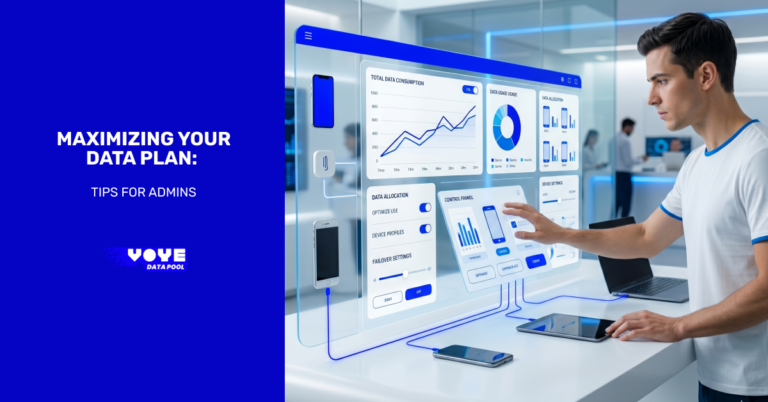
Administrators should have a single dashboard to:
- Monitor usage
- Activate new devices
- Suspend inactive users
- Allocate data
- Track connectivity
Security
Business connectivity should include secure authentication and encrypted communication whenever possible.
Easy Integration
The best providers integrate smoothly with existing fleet management systems and enterprise mobility platforms.
How Better Connectivity Improves Delivery Performance?
Reliable mobile data affects nearly every delivery metric.
| Business Goal | Impact of Reliable Connectivity |
| Faster deliveries | Improved navigation accuracy |
| Higher driver productivity | Less downtime between jobs |
| Better customer experience | Real-time delivery updates |
| Lower operational costs | Fewer connectivity issues |
| Improved fleet visibility | Continuous location tracking |
| Increased order completion | Stable communication with dispatch |
Even small improvements in connectivity can significantly increase operational efficiency across large driver networks.
Simplify Connectivity for Your Delivery Fleet
Manage drivers and mobile data from one powerful platform.
Industries That Benefit from a Gig Economy Data Plan
A business connectivity solution is valuable across many industries.
These include:
- Food delivery platforms
- Grocery delivery services
- Pharmacy delivery
- Courier companies
- Parcel logistics
- Ride-hailing businesses
- Last-mile delivery providers
- Field service organizations
- Mobile healthcare services
- On-demand repair companies
Any organization managing mobile workers benefits from dependable data connectivity.
Why Businesses Are Moving Away from Individual SIM Plans?
Many companies originally reimbursed drivers for personal mobile plans. As operations expanded, this approach became difficult to manage.
Centralized connectivity offers several advantages:
- Consistent service quality
- Better cost visibility
- Easier onboarding
- Simplified compliance
- Improved reporting
- Stronger security
- Reduced administrative workload
For growing businesses, a unified connectivity strategy is easier to scale than managing hundreds of separate mobile accounts.
Why Centralized Connectivity Is Better Than Reimbursing Drivers?
Many gig platforms still reimburse drivers for personal mobile data plans. While this may seem convenient, it creates challenges as the workforce grows.
| Personal Mobile Plans | Centralized Business Data Plan |
| Different carriers and coverage | Consistent connectivity across teams |
| Difficult to monitor data usage | Real-time usage visibility |
| Manual reimbursement process | One centralized billing system |
| Limited control over security | Business-grade connectivity management |
| Varying data costs | Predictable and scalable pricing |
A centralized gig economy data plan gives operations teams better control over costs, simplifies administration, and helps maintain consistent service quality across every driver.
How Voye Data Pool Supports Gig Platforms?
As delivery networks expand across cities and countries, managing connectivity through multiple mobile providers becomes increasingly complex.
Voye Data Pool helps businesses simplify mobile connectivity with a single platform designed for globally connected teams and devices.
Key advantages include:
- Global eSIM connectivity across more than 130 countries
- Remote activation without replacing physical SIM cards
- Centralized dashboard for managing devices and data usage
- Flexible business data plans that scale with workforce growth
- Reliable multi-network coverage for consistent connectivity
- Simplified deployment for large fleets and mobile teams
Whether onboarding 50 drivers or 5,000, Voye Data Pool enables businesses to deploy secure and scalable connectivity from one platform.
Real-World Use Case
Imagine a grocery delivery platform operating in five major cities.
Each driver relies on a smartphone to:
- Receive delivery assignments
- Navigate efficiently
- Contact customers
- Confirm deliveries with photos
- Process digital payments
Without reliable connectivity, orders may be delayed, routes become inefficient, and customer satisfaction declines.
By implementing a centralized gig economy data plan with eSIM technology, the platform can:
- Activate new drivers instantly
- Monitor data usage from one dashboard
- Reduce connectivity-related downtime
- Improve delivery completion rates
- Simplify expansion into new markets
This results in a more efficient operation and a better experience for both drivers and customers.
Trends Shaping Gig Economy Connectivity in 2026
The way gig platforms manage connectivity is changing rapidly. Several trends are expected to define the industry in 2026 and beyond.
1. Wider Adoption of eSIM Technology
Businesses are moving away from physical SIM cards in favor of digital activation, reducing setup time and improving scalability.
2. AI-Powered Route Optimization
Artificial intelligence is helping drivers avoid traffic, reduce fuel consumption, and complete more deliveries per shift. Reliable mobile data is essential for these real-time decisions.
3. Connected Fleet Management
Businesses increasingly rely on real-time dashboards that combine vehicle tracking, driver performance, and mobile connectivity data to improve operations.
4. Cross-Border Delivery Networks
As e-commerce expands internationally, delivery companies need connectivity solutions that work seamlessly across multiple countries without expensive roaming charges.
5. Increased Focus on Data Security
Protecting business and customer information is becoming a top priority. Secure connectivity helps reduce risks associated with unmanaged personal mobile plans.
Tips for Choosing the Right Gig Economy Data Plan
Before selecting a provider, evaluate the following:
- Does the plan support eSIM activation?
- Is coverage available in all operating regions?
- Can data usage be managed centrally?
- Does the provider offer flexible plans for growing fleets?
- Is onboarding fast and scalable?
- Are multiple network partners available for improved coverage?
- Can the solution support future expansion into new markets?
Choosing a provider that aligns with long-term business goals can reduce operational complexity and support continued growth.
Final Thoughts
The gig economy continues to reshape how businesses deliver goods and services. Behind every successful delivery is reliable mobile connectivity that keeps drivers connected, customers informed, and operations running efficiently.
Investing in the right gig economy data plan is no longer just an IT decision-it is a business strategy that directly impacts productivity, customer satisfaction, and long-term growth. As delivery platforms expand in 2026 and beyond, scalable connectivity solutions will play a critical role in maintaining a competitive edge.
By adopting centralized, eSIM-enabled connectivity, businesses can simplify device management, reduce operational complexity, and ensure their drivers stay connected wherever the job takes them.
Scale Your Delivery Operations
Secure, flexible connectivity built for growing delivery fleets.