Get 5% Discount using the code VOYE15 Buy eSIM close

Startups Scaling Globally: The Connectivity Handbook

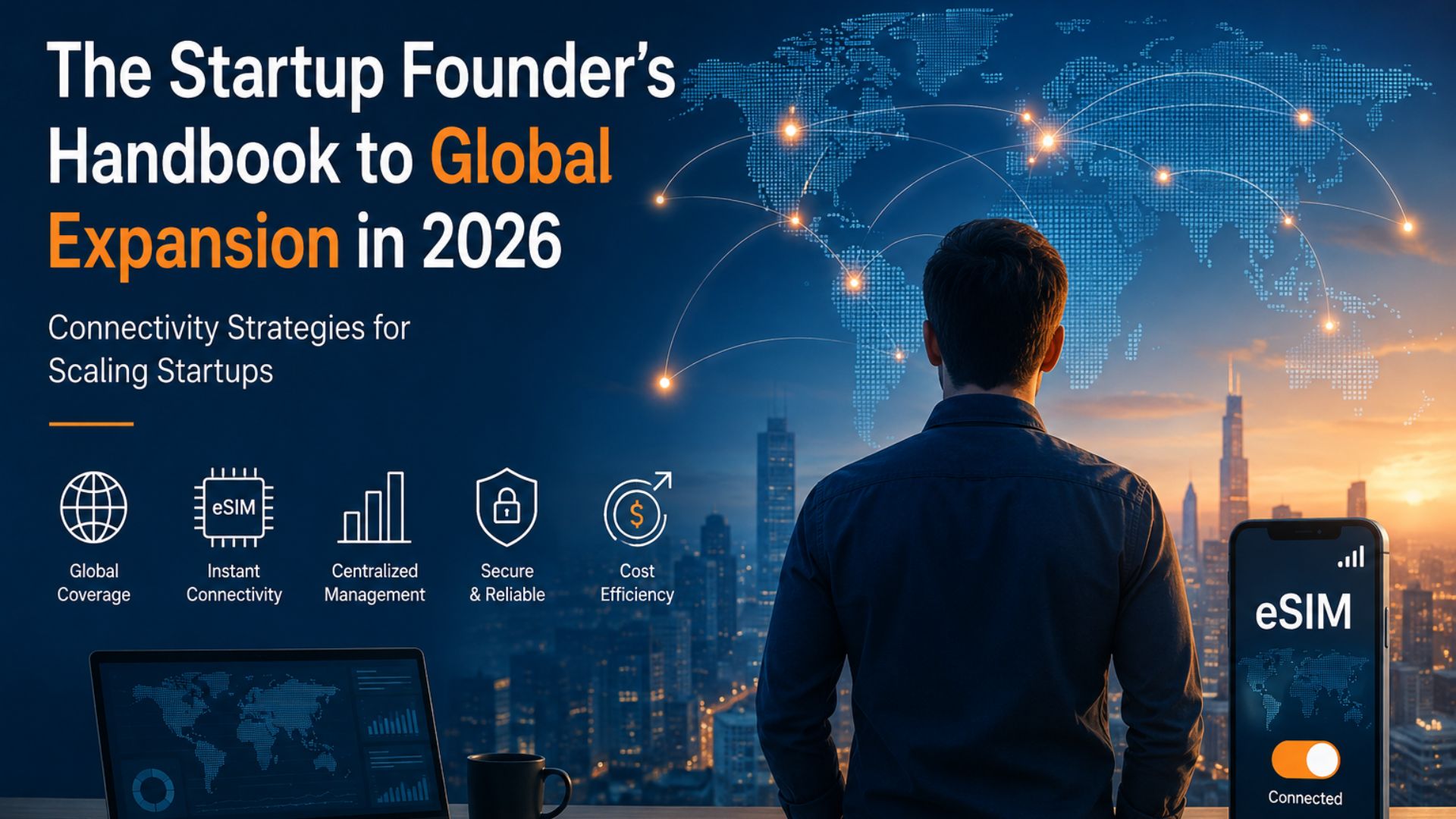
Expanding into global markets requires more than funding and talent. This guide explains how founders can build a scaling startup with reliable connectivity, secure mobile access, and efficient international operations. Learn how eSIM technology, centralized connectivity management, and smart infrastructure help reduce costs, improve productivity, and support distributed teams. Whether you’re entering new markets or managing remote employees, this handbook provides practical insights to help your startup scale confidently in 2026 and beyond.

Voye Data Pool Team
August 11, 2026 dot Read 6 min read
share Share
scaling startup

Growing beyond your home market is exciting, but scaling startup operations internationally introduces new challenges that many founders underestimate. Hiring remote employees, travelling to meet investors, launching in new countries, supporting distributed teams, and keeping devices connected all require reliable digital infrastructure.

In 2026, connectivity is no longer just an IT concern. It directly impacts productivity, customer experience, security, and operating costs. A founder who plans connectivity early can avoid expensive disruptions while expanding into new markets.

This handbook explains what every startup founder should know before scaling globally.

Why Connectivity Matters During Global Expansion?

Many startups invest heavily in product development and customer acquisition. However, operational infrastructure often receives attention only after problems appear.

Common issues include:

  • Employees relying on expensive international roaming
  • Delayed customer support because of unstable internet
  • Security risks from public Wi-Fi
  • SIM card management across multiple countries
  • Remote devices losing connectivity
  • High telecom expenses without centralized visibility

These challenges grow rapidly as the business expands.

Instead of managing connectivity country by country, successful startups build a scalable connectivity strategy from the beginning.

The Five Growth Stages of a Scaling Startup

Stage 1: Local Growth

At this point, most employees work from one office.

Connectivity needs include:

  • Reliable office internet
  • Secure Wi-Fi
  • Cloud collaboration tools
  • Backup internet

The goal is stability.

Stage 2: Remote Team Expansion

As hiring expands globally, employees work from different regions.

Founders should ensure:

  • Secure mobile connectivity
  • VPN access
  • Device management
  • Consistent communication tools

Without these basics, productivity drops quickly.

Stage 3: International Business Travel

Sales teams, founders, and executives begin travelling regularly.

Instead of purchasing local SIM cards in every country, startups benefit from global eSIM connectivity that works immediately upon arrival.

Advantages include:

  • Faster onboarding
  • No roaming surprises
  • Continuous access to business applications
  • Simplified travel management

Stage 4: Multi-Country Operations

Once the company serves customers across several countries, operations become more complex.

Typical requirements include:

  • International customer support
  • Regional sales teams
  • Cross-border collaboration
  • Secure mobile access
  • Centralized connectivity management

At this stage, visibility becomes just as important as connectivity.

Stage 5: Enterprise Scale

Growing startups eventually manage hundreds or thousands of connected devices.

Examples include:

  • Laptops
  • Smartphones
  • Tablets
  • Payment terminals
  • IoT devices
  • Smart logistics equipment

Manual SIM management no longer works.

Automation becomes essential.

Connectivity Challenges That Slow Startup Growth

1. Roaming Costs

International roaming remains one of the largest hidden operating expenses for growing businesses.

Without visibility, monthly telecom bills can increase significantly as travel expands.

2. Operational Delays

Waiting to purchase local SIM cards wastes valuable business time.

Sales meetings, investor presentations, and customer onboarding should begin immediately-not after finding a mobile store.

3. Security Risks

Employees frequently connect through hotel Wi-Fi, airports, and public networks.

Without secure connectivity policies, startups expose sensitive business information to unnecessary risk.

4. Device Management Complexity

As companies grow internationally, keeping track of hundreds of physical SIM cards becomes increasingly difficult.

Replacing lost SIMs, activating new employees, and monitoring usage consume valuable IT resources.

5. Limited Visibility

Many founders don’t know:

  • Which countries generate the highest mobile costs
  • Which employees consume the most data
  • Where connectivity problems occur
  • Which devices remain inactive

Data visibility supports smarter operational decisions.

How eSIM Technology Supports Startup Growth?

eSIM removes the need for physical SIM cards while making global connectivity much easier to manage.

Benefits include:

Instant Activation

Employees can connect before arriving in a new country.

Faster Deployment

New hires receive connectivity remotely.

Lower Administrative Work

IT teams spend less time replacing physical SIM cards.

Better Cost Control

Usage can be monitored from one platform.

Greater Flexibility

Changing networks no longer requires changing SIM cards.

These advantages become increasingly valuable as startups expand internationally.

A Connectivity Checklist for Founders

Before entering a new market, ask these questions:

  • Can employees stay connected immediately after landing?
  • Is business data protected outside the office?
  • Are mobile expenses monitored centrally?
  • Can new team members receive connectivity remotely?
  • Is there backup connectivity during outages?
  • Can IoT or connected business devices scale internationally?

If the answer to several questions is “No,” the startup should strengthen its connectivity strategy before expanding further.

Building a Global Team Without Connectivity Bottlenecks

Remote-first companies have changed how startups grow.

Today’s founders often hire:

  • Developers in Eastern Europe
  • Designers in South America
  • Customer support in Asia
  • Sales teams in North America

While talent is now global, connectivity must remain consistent.

Employees should access collaboration platforms, CRM systems, customer data, and communication tools without interruption regardless of location.

Why Investors Appreciate Operational Readiness?

Investors evaluate more than revenue growth.

They also examine whether a startup can scale efficiently.

Operational maturity includes:

  • Security
  • Compliance
  • Infrastructure
  • Cost management
  • Business continuity

A startup that already operates with centralized global connectivity demonstrates stronger readiness for international expansion.

How Voye Data Pool Supports Scaling Startups?

As startups enter international markets, managing connectivity across countries becomes increasingly complex.

Voye Data Pool helps growing businesses simplify global mobile connectivity through business-focused eSIM solutions designed for distributed teams.

Key advantages include:

  • Coverage across 130+ countries
  • Centralized connectivity management
  • Simplified deployment
  • Better visibility into data usage
  • Scalable support for employees and connected devices
  • Reduced dependence on physical SIM cards

For founders focused on growth rather than telecom administration, a centralized connectivity platform reduces operational complexity while supporting international expansion.

Founder Tips for Scaling in 2026

The fastest-growing startups in 2026 focus on building systems before problems appear.

Consider these best practices:

  • Standardize employee onboarding globally.
  • Automate repetitive IT tasks.
  • Use cloud-first collaboration tools.
  • Secure every mobile device.
  • Track connectivity costs monthly.
  • Build redundancy into business-critical systems.
  • Choose technology partners that can scale alongside your business.

Small operational improvements today prevent major bottlenecks tomorrow.

Final Thoughts

Every founder dreams of building a company that reaches customers around the world. But successful international growth depends on more than funding, hiring, or marketing.

A scaling startup needs dependable infrastructure that grows alongside the business. Connectivity is one of the most overlooked parts of that foundation, yet it influences employee productivity, customer satisfaction, operational efficiency, and long-term scalability.

As global expansion accelerates throughout 2026, startups that invest in secure, flexible, and centralized connectivity will spend less time solving operational problems and more time building products, serving customers, and entering new markets. By treating connectivity as a strategic asset-not an afterthought-founders can create a stronger foundation for sustainable international growth.

Growing beyond your home market is exciting, but scaling startup operations internationally introduces new challenges that many founders underestimate. Hiring remote employees, travelling to meet investors, launching in new countries, supporting distributed teams, and keeping devices connected all require reliable digital infrastructure.

In 2026, connectivity is no longer just an IT concern. It directly impacts productivity, customer experience, security, and operating costs. A founder who plans connectivity early can avoid expensive disruptions while expanding into new markets.

This handbook explains what every startup founder should know before scaling globally.

Why Connectivity Matters During Global Expansion?

Many startups invest heavily in product development and customer acquisition. However, operational infrastructure often receives attention only after problems appear.

Common issues include:

  • Employees relying on expensive international roaming
  • Delayed customer support because of unstable internet
  • Security risks from public Wi-Fi
  • SIM card management across multiple countries
  • Remote devices losing connectivity
  • High telecom expenses without centralized visibility

These challenges grow rapidly as the business expands.

Instead of managing connectivity country by country, successful startups build a scalable connectivity strategy from the beginning.

The Five Growth Stages of a Scaling Startup

Stage 1: Local Growth

At this point, most employees work from one office.

Connectivity needs include:

  • Reliable office internet
  • Secure Wi-Fi
  • Cloud collaboration tools
  • Backup internet

The goal is stability.

Stage 2: Remote Team Expansion

As hiring expands globally, employees work from different regions.

Founders should ensure:

  • Secure mobile connectivity
  • VPN access
  • Device management
  • Consistent communication tools

Without these basics, productivity drops quickly.

Stage 3: International Business Travel

Sales teams, founders, and executives begin travelling regularly.

Instead of purchasing local SIM cards in every country, startups benefit from global eSIM connectivity that works immediately upon arrival.

Advantages include:

  • Faster onboarding
  • No roaming surprises
  • Continuous access to business applications
  • Simplified travel management

Stage 4: Multi-Country Operations

Once the company serves customers across several countries, operations become more complex.

Typical requirements include:

  • International customer support
  • Regional sales teams
  • Cross-border collaboration
  • Secure mobile access
  • Centralized connectivity management

At this stage, visibility becomes just as important as connectivity.

Stage 5: Enterprise Scale

Growing startups eventually manage hundreds or thousands of connected devices.

Examples include:

  • Laptops
  • Smartphones
  • Tablets
  • Payment terminals
  • IoT devices
  • Smart logistics equipment

Manual SIM management no longer works.

Automation becomes essential.

Connectivity Challenges That Slow Startup Growth

1. Roaming Costs

International roaming remains one of the largest hidden operating expenses for growing businesses.

Without visibility, monthly telecom bills can increase significantly as travel expands.

2. Operational Delays

Waiting to purchase local SIM cards wastes valuable business time.

Sales meetings, investor presentations, and customer onboarding should begin immediately-not after finding a mobile store.

3. Security Risks

Employees frequently connect through hotel Wi-Fi, airports, and public networks.

Without secure connectivity policies, startups expose sensitive business information to unnecessary risk.

4. Device Management Complexity

As companies grow internationally, keeping track of hundreds of physical SIM cards becomes increasingly difficult.

Replacing lost SIMs, activating new employees, and monitoring usage consume valuable IT resources.

5. Limited Visibility

Many founders don’t know:

  • Which countries generate the highest mobile costs
  • Which employees consume the most data
  • Where connectivity problems occur
  • Which devices remain inactive

Data visibility supports smarter operational decisions.

How eSIM Technology Supports Startup Growth?

eSIM removes the need for physical SIM cards while making global connectivity much easier to manage.

Benefits include:

Instant Activation

Employees can connect before arriving in a new country.

Faster Deployment

New hires receive connectivity remotely.

Lower Administrative Work

IT teams spend less time replacing physical SIM cards.

Better Cost Control

Usage can be monitored from one platform.

Greater Flexibility

Changing networks no longer requires changing SIM cards.

These advantages become increasingly valuable as startups expand internationally.

A Connectivity Checklist for Founders

Before entering a new market, ask these questions:

  • Can employees stay connected immediately after landing?
  • Is business data protected outside the office?
  • Are mobile expenses monitored centrally?
  • Can new team members receive connectivity remotely?
  • Is there backup connectivity during outages?
  • Can IoT or connected business devices scale internationally?

If the answer to several questions is “No,” the startup should strengthen its connectivity strategy before expanding further.

Building a Global Team Without Connectivity Bottlenecks

Remote-first companies have changed how startups grow.

Today’s founders often hire:

  • Developers in Eastern Europe
  • Designers in South America
  • Customer support in Asia
  • Sales teams in North America

While talent is now global, connectivity must remain consistent.

Employees should access collaboration platforms, CRM systems, customer data, and communication tools without interruption regardless of location.

Why Investors Appreciate Operational Readiness?

Investors evaluate more than revenue growth.

They also examine whether a startup can scale efficiently.

Operational maturity includes:

  • Security
  • Compliance
  • Infrastructure
  • Cost management
  • Business continuity

A startup that already operates with centralized global connectivity demonstrates stronger readiness for international expansion.

How Voye Data Pool Supports Scaling Startups?

As startups enter international markets, managing connectivity across countries becomes increasingly complex.

Voye Data Pool helps growing businesses simplify global mobile connectivity through business-focused eSIM solutions designed for distributed teams.

Key advantages include:

  • Coverage across 130+ countries
  • Centralized connectivity management
  • Simplified deployment
  • Better visibility into data usage
  • Scalable support for employees and connected devices
  • Reduced dependence on physical SIM cards

For founders focused on growth rather than telecom administration, a centralized connectivity platform reduces operational complexity while supporting international expansion.

Founder Tips for Scaling in 2026

The fastest-growing startups in 2026 focus on building systems before problems appear.

Consider these best practices:

  • Standardize employee onboarding globally.
  • Automate repetitive IT tasks.
  • Use cloud-first collaboration tools.
  • Secure every mobile device.
  • Track connectivity costs monthly.
  • Build redundancy into business-critical systems.
  • Choose technology partners that can scale alongside your business.

Small operational improvements today prevent major bottlenecks tomorrow.

Final Thoughts

Every founder dreams of building a company that reaches customers around the world. But successful international growth depends on more than funding, hiring, or marketing.

A scaling startup needs dependable infrastructure that grows alongside the business. Connectivity is one of the most overlooked parts of that foundation, yet it influences employee productivity, customer satisfaction, operational efficiency, and long-term scalability.

As global expansion accelerates throughout 2026, startups that invest in secure, flexible, and centralized connectivity will spend less time solving operational problems and more time building products, serving customers, and entering new markets. By treating connectivity as a strategic asset-not an afterthought-founders can create a stronger foundation for sustainable international growth.

Related Articles

  • Top Employee Perks for 2026: Global Connectivity

    Modern workplaces are evolving rapidly, and global connectivity has become a valuable employee perk in 2026. Companies are investing in international mobile data plans, eSIM technology, secure remote work tools, and scalable connectivity platforms to support hybrid and traveling teams. These benefits improve collaboration, employee satisfaction, and productivity while reducing connectivity challenges during international travel. Solutions like Voye Data Pool and custom data pool models help businesses manage global workforce mobility efficiently and create a stronger, future-ready employee experience.

  • Why Legacy SIM Cards Create Security Risks for Corporations

    As businesses increasingly rely on mobile connectivity for secure communications, legacy SIM cards have quietly become a hidden vulnerability within corporate networks. Outdated authentication methods, lack of encryption, and physical SIM swapping risks expose companies to data breaches and identity theft. This blog explores how traditional SIM technology fails to meet modern cybersecurity standards—and why migrating to eSIM solutions offers stronger protection, better device management, and peace of mind for enterprise security teams.

  • 10 Best eSIM Use Cases for Business and Enterprise Connectivity

    Discover how eSIM technology is redefining enterprise and business connectivity. From global workforce mobility to IoT management, eSIMs offer scalability, security, and cost efficiency unmatched by traditional SIMs. Explore ten real-world eSIM use cases that demonstrate how enterprises can streamline operations, enhance productivity, and ensure always-on global connectivity through a single, unified digital solution.

  • Business Travel Trends to Watch in 2026

    Business travel in 2026 is being redefined by data, automation, and employee expectations. From AI-powered pricing and predictive expense management to sustainability mandates and the rise of bleisure, travel programs are becoming more strategic than ever. Companies are focusing on agility, transparency, and traveler safety while leveraging analytics to make smarter, faster decisions. As corporate mobility evolves, data emerges as the foundation for operational excellence. Discover how travel managers and procurement teams can future-proof their programs with the latest insights.

  • Sharing One eSIM Profile Across Multiple Devices

    Enterprises today manage far more connected devices than ever before. From employee smartphones to industrial IoT sensors, the challenge is no longer just connectivity but managing it efficiently. eSIM technology allows organizations to provision connectivity remotely and scale device deployments without the logistical challenges of physical SIM cards.

  • Smart City Connectivity: Building Smarter and More Connected Cities

    Smart city connectivity is transforming how governments and municipalities manage urban infrastructure, public services, transportation, and utilities. This blog explains how eSIM technology enables secure, scalable, and reliable communication for connected devices across modern cities. Learn how smart connectivity improves operational efficiency, supports data-driven decision making, enhances public safety, and prepares cities for future innovation. It also explores how Voye Data Pool helps simplify large-scale IoT connectivity for smarter, more resilient urban environments.