

NGO Field Connectivity: Internet for Humanitarian Aid
Reliable internet access is essential for humanitarian organizations working in remote and disaster-affected areas. This guide explains how NGO field connectivity helps aid workers communicate, coordinate relief efforts, and access critical data in real time. Learn the challenges NGOs face, the benefits of global eSIM technology, and how scalable connectivity solutions improve mission efficiency, team safety, and operational success across international humanitarian projects in 2026 and beyond.


 12 min read
 Share
Share
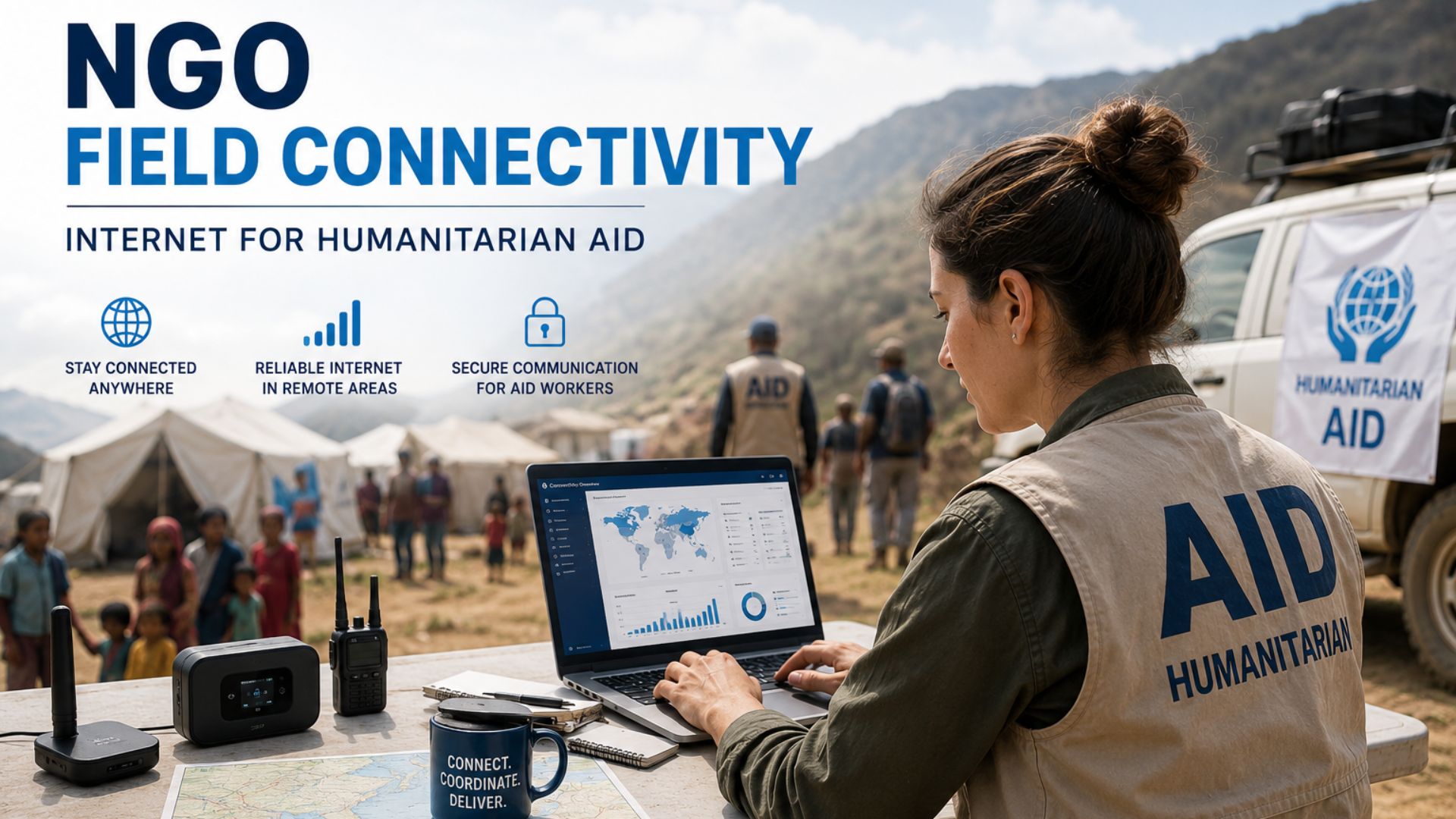
When disasters strike or humanitarian crises unfold, reliable NGO field connectivity becomes as essential as food, medicine, and shelter. Aid workers depend on uninterrupted internet access to coordinate emergency response, communicate with headquarters, monitor relief distribution, collect beneficiary data, and ensure the safety of teams operating in remote environments.
In 2026, humanitarian organisations are responding to increasingly complex emergencies, from climate-related disasters to refugee displacement and public health crises. These missions often take place in regions where traditional internet infrastructure is damaged, unavailable, or unreliable. Maintaining secure and continuous connectivity is no longer simply an operational convenience—it is a critical requirement for delivering timely humanitarian assistance.
According to the United Nations Office for the Coordination of Humanitarian Affairs (UNOCHA), hundreds of millions of people require humanitarian assistance every year. As aid programmes expand across borders, NGOs need connectivity solutions that can be rapidly deployed, centrally managed, and capable of functioning across multiple countries without depending on local SIM card procurement.
This is where modern connectivity technologies, including global eSIM platforms, managed cellular data services, satellite backup, and IoT-enabled monitoring, are transforming humanitarian operations. Rather than relying on fragmented mobile contracts in each country, NGOs can now equip teams with a single connectivity solution that works across multiple regions while maintaining visibility, security, and cost control.
This guide explains everything NGOs need to know about field connectivity in 2026, including the biggest operational challenges, essential connectivity technologies, security considerations, deployment strategies, and how organisations can build resilient communication systems that support life-saving missions.
Why Reliable Internet Matters for Humanitarian Organisations?
Every humanitarian operation depends on the movement of information. Whether an NGO is delivering medical aid after an earthquake or supporting refugee camps over several years, field teams constantly exchange information with programme managers, logistics coordinators, healthcare providers, donors, and government agencies.
Without reliable internet, even routine activities become difficult.
Field connectivity supports critical tasks such as:
- Emergency response coordination
- Digital beneficiary registration
- Supply chain management
- GPS navigation
- Telemedicine consultations
- Volunteer communication
- Secure document sharing
- Real-time reporting
- Cash assistance programmes
- Monitoring and evaluation
Modern NGOs increasingly use cloud-based platforms including Microsoft 365, Google Workspace, KoboToolbox, DHIS2, ArcGIS, Power BI, and CRM systems. These platforms require continuous internet access to synchronise information between field offices and headquarters. When connectivity fails, organisations experience delayed reporting, incomplete beneficiary records, slower decision-making, and increased operational costs. Reliable internet enables aid teams to make informed decisions while improving transparency and accountability for donors.

Keep Humanitarian Teams Connected
Reliable global connectivity for every humanitarian mission.
The Biggest Connectivity Challenges NGOs Face
Although connectivity technology has improved significantly, humanitarian organisations still face unique operational challenges that commercial businesses rarely encounter.
1. Remote Operating Locations
Many humanitarian projects are located in rural villages, conflict zones, mountainous regions, forests, islands, or disaster-affected communities where mobile infrastructure is limited.
Traditional broadband is often unavailable.
Aid teams must depend on cellular networks or satellite communications.
2. Cross-Border Operations
International NGOs frequently deploy staff across several countries during a single mission.
Managing multiple local SIM cards creates challenges including:
- Different carriers
- Separate invoices
- Roaming restrictions
- Manual activation
- Language barriers
- Procurement delays
A unified global connectivity platform simplifies deployment considerably.
3. Disaster-Damaged Infrastructure
Earthquakes, floods, hurricanes, and armed conflicts often damage communication infrastructure.
Field teams require resilient connectivity that can automatically switch between available networks while supporting backup communication methods when necessary.
4. Security Risks
Humanitarian organisations handle highly sensitive information including:
- Personal identities
- Medical records
- Refugee registrations
- Financial assistance
- Child protection records
- Staff movement data
Weak connectivity increases cybersecurity risks.
Encrypted communications, secure mobile management, VPN access, and centralised monitoring are increasingly becoming standard requirements.
5. Budget Constraints
Unlike commercial enterprises, NGOs operate under strict funding limitations.
Connectivity solutions must balance:
- Reliability
- Global coverage
- Predictable pricing
- Central management
- Scalability
Reducing administrative overhead is just as important as lowering data costs.
Essential Connectivity Technologies for NGOs
Modern humanitarian organisations rarely rely on a single communication method. Instead, they combine multiple technologies to ensure resilience under different operating conditions.
Global eSIM Connectivity
Global eSIM technology enables organisations to activate mobile connectivity digitally without distributing physical SIM cards.
Advantages include:
- Instant remote deployment
- Multi-country coverage
- No SIM replacement
- Central administration
- Simplified onboarding
- Lower logistics costs
For international NGOs, this significantly reduces deployment time during emergency response operations.
Multi-Network Cellular Access
Rather than depending on a single operator, multi-network connectivity automatically connects to the strongest available carrier.
Benefits include:
- Higher availability
- Better rural coverage
- Reduced downtime
- Improved roaming performance
- Greater operational resilience
This is especially valuable in regions where network performance varies significantly.
Satellite Backup Connectivity
In extremely remote or disaster-stricken locations, satellite internet provides an additional communication layer when terrestrial infrastructure is unavailable.
Many NGOs use hybrid connectivity combining:
- Cellular
- Satellite
- Wi-Fi
- Local broadband
This layered approach improves operational continuity.
Digital Transformation Is Changing Humanitarian Operations
The humanitarian sector has rapidly embraced digital tools to improve efficiency, transparency, and accountability. In 2026, NGOs are increasingly relying on cloud-based platforms, mobile applications, GIS mapping, and real-time analytics to manage relief efforts across multiple regions.
Digital transformation allows field teams to:
- Register beneficiaries digitally instead of using paper forms
- Monitor relief distribution in real time
- Track medical supplies and inventory
- Share reports instantly with headquarters
- Coordinate volunteers across different locations
- Improve donor reporting through live dashboards
However, these systems are only effective when reliable internet is available. Poor connectivity can delay data synchronisation, interrupt communication, and reduce the accuracy of operational reporting.
Strong field connectivity ensures that critical information reaches decision-makers without delay, enabling faster and more informed humanitarian responses.
How Global eSIM Technology Supports NGO Field Connectivity?
Traditional mobile connectivity often requires NGOs to purchase local SIM cards whenever staff travel to a new country. This process can be time-consuming and difficult to manage, especially during emergency deployments.
Global eSIM technology simplifies connectivity by allowing mobile data plans to be activated digitally without replacing physical SIM cards.
For humanitarian organisations, this offers several operational advantages:
Faster Emergency Deployment
When a disaster occurs, response teams can be connected before they even arrive in the affected country. There is no need to locate local telecom providers or wait for SIM card distribution.
Simplified Cross-Border Operations
International NGOs frequently operate across neighbouring countries. A global eSIM solution allows personnel to remain connected while travelling between regions without manually switching mobile services.
Centralised Connectivity Management
IT teams can activate, suspend, or monitor connections remotely through a single management platform. This reduces administrative work and provides better visibility into data usage.
Reduced Logistics
Physical SIM cards can be lost, damaged, or delayed during shipping. Digital provisioning removes this dependency and simplifies device deployment.
Improved Cost Control
Instead of managing multiple carrier contracts, NGOs can consolidate connectivity into one platform, making budgeting and reporting easier.
The Role of IoT in Humanitarian Connectivity
Many humanitarian organisations are expanding beyond smartphones and laptops by using Internet of Things (IoT) devices to improve field operations.
Reliable connectivity allows these devices to transmit data continuously, even from remote locations.
Common humanitarian IoT applications include:
Environmental Monitoring
Sensors monitor:
- Water quality
- Temperature
- Humidity
- Flood levels
- Air quality
This information helps organisations respond more quickly to changing environmental conditions.
Cold Chain Monitoring
Vaccines, medicines, and blood supplies require strict temperature control.
Connected IoT sensors provide:
- Real-time alerts
- Continuous temperature tracking
- Compliance reporting
- Reduced medical waste
Asset Tracking
NGOs transport thousands of valuable assets during humanitarian missions.
Connected tracking devices improve visibility for:
- Medical equipment
- Relief supplies
- Emergency vehicles
- Portable communication equipment
- Solar power systems
Stay Online in Remote Locations
Enable uninterrupted communication for field teams worldwide.
Smart Energy Monitoring
Remote humanitarian camps increasingly rely on solar-powered infrastructure.
Connected monitoring systems help optimise:
- Battery performance
- Generator usage
- Fuel consumption
- Energy availability
Connectivity for Mobile Medical Teams
Healthcare organisations frequently deploy medical professionals into underserved communities where traditional internet services are unavailable.
Reliable connectivity enables:
- Electronic medical records
- Telemedicine consultations
- Prescription verification
- Laboratory reporting
- Disease surveillance
- Emergency referrals
Medical teams can securely access patient information while maintaining continuity of care across multiple locations.
Supporting Cash Assistance Programmes
Many NGOs now provide digital cash assistance instead of distributing physical goods.
These programmes depend on secure internet access for:
- Identity verification
- Mobile wallet transactions
- Banking integrations
- Fraud prevention
- Payment confirmations
Reliable connectivity helps ensure beneficiaries receive support without unnecessary delays.
Improving Team Safety Through Connected Communications
Aid workers often operate in unstable environments where maintaining communication is essential.
Reliable connectivity supports staff safety through:
- GPS location sharing
- Emergency communication channels
- Real-time weather alerts
- Incident reporting
- Secure messaging
- Travel monitoring
Continuous communication allows organisations to respond quickly if personnel encounter security risks or medical emergencies.
Cybersecurity Considerations for NGOs
As humanitarian organisations collect increasing amounts of digital information, cybersecurity has become a critical priority.
Sensitive information may include:
- Beneficiary identities
- Medical records
- Financial assistance data
- Child protection information
- Internal operational documents
- Staff travel details
A secure connectivity strategy should include:
End-to-End Encryption
Protects information while it is transmitted between devices and cloud services.
VPN Access
Provides secure communication for staff working from remote locations.
Mobile Device Management (MDM)
Allows organisations to:
- Configure devices remotely
- Enforce security policies
- Lock lost devices
- Wipe compromised devices
Access Controls
Role-based permissions help ensure employees only access the information required for their responsibilities.
Continuous Monitoring
Monitoring connectivity usage helps identify unusual activity before it becomes a serious security issue.
Building a Resilient Connectivity Strategy
Rather than depending on one communication method, leading NGOs build layered connectivity strategies.
A resilient approach typically combines:
- Global eSIM connectivity
- Multi-network cellular coverage
- Local Wi-Fi where available
- Satellite backup
- Secure VPN access
- Cloud-based management
- IoT monitoring
This reduces the risk of complete communication failure during emergencies.
Connectivity Trends Shaping Humanitarian Work in 2026
Technology continues to reshape humanitarian operations. Several trends are expected to influence NGO connectivity throughout 2026:
AI-Assisted Field Operations
Artificial intelligence is helping organisations analyse field reports, identify urgent needs, and prioritise resource allocation more efficiently.
Edge Computing
Processing data closer to where it is collected reduces latency and supports operations in areas with intermittent connectivity.
Smarter IoT Networks
Connected devices are becoming more energy-efficient, enabling longer deployments in remote environments.
Integrated Connectivity Platforms
Rather than managing multiple providers, NGOs are increasingly adopting unified platforms that combine connectivity management, analytics, and security in one interface.
Sustainable Technology
Energy-efficient devices and optimised data usage help reduce operational costs while supporting environmentally responsible humanitarian programmes.
Why Voye Data Pool Is a Smart Connectivity Partner for NGOs?
Humanitarian organisations need connectivity that is simple to deploy, easy to manage, and reliable across multiple countries. Voye Data Pool is designed to support globally distributed teams with secure and scalable mobile connectivity, making it well suited for NGOs operating in challenging environments.
Key benefits include:
Global Coverage Across 130+ Countries
Support international relief efforts with consistent mobile connectivity across multiple regions using a single platform.
Digital eSIM Deployment
Activate connectivity remotely without shipping physical SIM cards, reducing setup time during emergency responses.
Centralised Management
Monitor data usage, manage connections, and control deployments from one dashboard, helping IT teams reduce administrative overhead.
Flexible Scalability
Whether deploying a small assessment team or coordinating a large humanitarian mission, connectivity can scale with operational needs.
Secure Connectivity
Support secure communication with encrypted data transmission and centralised management, helping organisations protect sensitive operational information.
For NGOs responding to emergencies, these capabilities help minimise downtime and keep field teams connected when communication matters most.
Best Practices for Improving NGO Field Connectivity
A reliable connectivity strategy involves more than selecting a mobile provider. Consider these best practices when planning humanitarian operations:
Assess Coverage Before Deployment
Review mobile network availability, terrain, and infrastructure in operational areas before field teams are deployed.
Use Multi-Network Connectivity
Select solutions that can connect to multiple mobile operators, increasing reliability in remote or disaster-affected regions.
Prepare Backup Communication Methods
Combine cellular connectivity with satellite or other backup options for high-risk deployments.
Monitor Usage Centrally
Use a management platform to track data usage, identify unusual activity, and optimise operational costs.
Train Field Teams
Provide staff with guidance on secure device usage, connectivity troubleshooting, and data protection practices.
Plan for Growth
Choose connectivity solutions that can scale as projects expand into new regions or involve additional personnel.
The Future of Humanitarian Connectivity
Humanitarian operations are becoming increasingly digital. As NGOs adopt AI-powered analytics, IoT sensors, electronic health records, and cloud-based collaboration tools, dependable internet access will become even more important.
In the coming years, organisations that invest in scalable, secure, and globally managed connectivity will be better positioned to:
- Respond faster to emergencies
- Improve collaboration across countries
- Protect sensitive beneficiary data
- Reduce operational complexity
- Increase programme efficiency
- Deliver greater impact with available resources
Reliable connectivity is no longer just an IT requirement—it is an essential part of modern humanitarian response.
Conclusion
Every humanitarian mission depends on timely communication, accurate data, and coordinated action. Whether responding to natural disasters, supporting refugee communities, delivering healthcare, or managing long-term development programmes, dependable NGO field connectivity enables teams to work more efficiently and safely.
As humanitarian operations continue to evolve in 2026, organisations need connectivity solutions that are secure, flexible, and capable of supporting teams wherever their work takes them. By adopting technologies such as global eSIM, multi-network connectivity, IoT-enabled monitoring, and centralised management, NGOs can reduce operational challenges and focus on delivering meaningful support to the communities they serve.
Power Every Relief Mission
Secure mobile connectivity for NGOs operating across borders.