

Connectivity for Diplomatic Missions and Embassies
Reliable diplomat mobile data is essential for embassies, consulates, and diplomatic missions operating across borders. This guide explains how enterprise eSIM solutions improve secure communications, simplify global connectivity management, reduce roaming complexity, and support mission-critical operations. Learn why centralized mobile data management is becoming the preferred choice for government agencies and diplomatic teams in 2026, helping officials stay connected wherever international assignments and diplomatic responsibilities take them.


 13 min read
 Share
Share
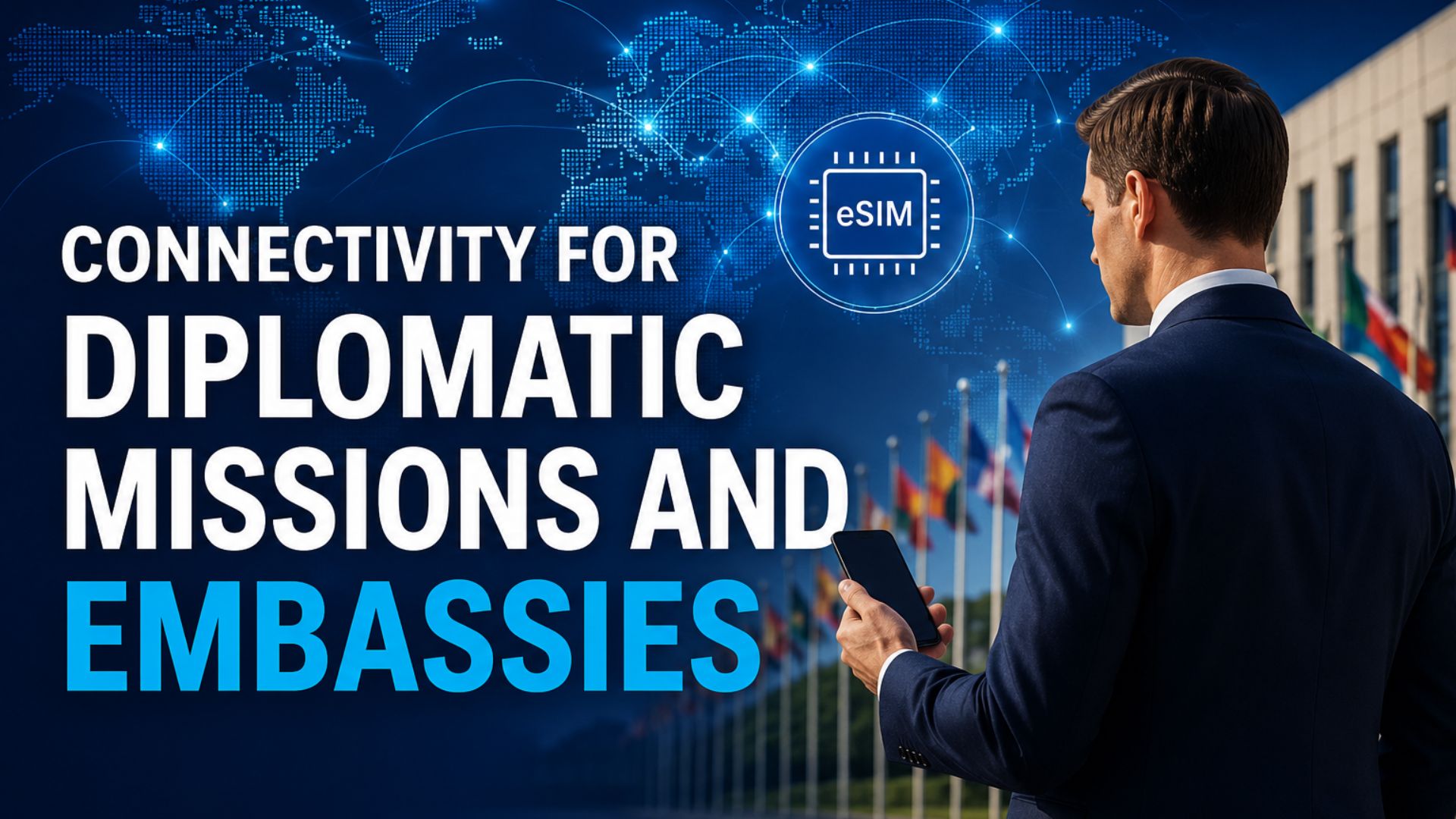
Reliable diplomat mobile data has become a mission-critical requirement for embassies, consulates, and diplomatic missions operating across the globe. Whether diplomats are attending international summits, responding to emergencies, negotiating bilateral agreements, or supporting citizens abroad, uninterrupted mobile connectivity ensures secure communication, real-time collaboration, and operational continuity.
In 2026, diplomatic teams face an increasingly complex communications landscape. Traditional roaming plans often lead to high costs, inconsistent network performance, and administrative challenges across multiple countries. Modern enterprise eSIM platforms are changing how governments manage global connectivity by enabling centralized deployment, remote provisioning, stronger security controls, and predictable data usage.
For ministries of foreign affairs, embassies, and international organizations, investing in reliable mobile connectivity is no longer just an IT decision-it is a strategic component of diplomatic operations, crisis response, and international cooperation.

Stay Connected Worldwide
Reliable enterprise eSIM connectivity for embassies and diplomatic missions.
Why Mobile Connectivity Is Critical for Diplomatic Missions?
Diplomatic missions operate in environments where communication cannot fail. Staff frequently travel between countries, participate in international conferences, conduct field visits, and coordinate with headquarters under varying network conditions.
Mobile data enables diplomats to:
- Access secure government applications remotely
- Communicate through encrypted messaging platforms
- Participate in video conferences
- Receive intelligence and policy updates
- Coordinate emergency responses
- Support citizens during crises
- Access cloud-based diplomatic systems
- Maintain business continuity while traveling internationally
Unlike commercial travelers, diplomats often work in regions with changing infrastructure, multiple network operators, and evolving security risks. Their connectivity requirements extend far beyond simple internet access.
The Growing Digital Transformation of Diplomacy
Diplomacy has undergone significant digital transformation over the last decade. Governments increasingly rely on cloud collaboration platforms, secure document management systems, encrypted communications, and digital identity verification.
Today’s embassies use connected technologies for:
- Secure document exchange
- Remote policy coordination
- Visa processing systems
- Consular services
- Crisis management
- Emergency communications
- Intelligence sharing
- International collaboration
As digital government initiatives continue expanding worldwide, dependable mobile connectivity has become a foundational requirement for diplomatic success.
Common Connectivity Challenges Faced by Embassies
Although connectivity technology has improved dramatically, diplomatic organizations still encounter several operational challenges.
1. Expensive International Roaming
Traditional roaming agreements often produce unpredictable costs across different countries.
Challenges include:
- Multiple carrier contracts
- Variable pricing
- Roaming surcharges
- Budget uncertainty
- Limited visibility into data consumption
For government departments managing hundreds of traveling officials, these expenses can quickly escalate.
2. Multiple SIM Card Management
Diplomatic personnel frequently travel between countries in a short period.
Using physical SIM cards creates administrative overhead:
- Purchasing local SIMs
- Shipping SIM cards internationally
- Activating services manually
- Managing inventories
- Replacing lost cards
- Updating device configurations
This process consumes valuable administrative resources.
3. Network Availability
Not every operator delivers consistent performance across every country.
Embassies require:
- Strong signal coverage
- Automatic carrier switching
- Reliable network redundancy
- Consistent mobile performance
Connectivity interruptions can delay mission-critical communication.
4. Security Risks
Diplomatic communications often involve sensitive government information.
Mobile connectivity must support:
- Secure authentication
- Encrypted connections
- VPN compatibility
- Device management policies
- Controlled network access
- Remote provisioning
A poorly managed mobile environment increases operational risk.
5. Lack of Centralized Visibility
Many ministries struggle to monitor global mobile usage.
Without centralized management, organizations face:
- Unknown data consumption
- Duplicate subscriptions
- Inefficient procurement
- Difficult reporting
- Delayed troubleshooting
A centralized management platform significantly improves operational oversight.
What Modern Diplomatic Connectivity Looks Like?
The connectivity model for diplomatic organizations has evolved beyond traditional telecom contracts.
Modern diplomatic mobility focuses on:
- Global coverage
- Enterprise eSIM deployment
- Centralized management
- Secure provisioning
- Flexible data plans
- Real-time monitoring
- Automated policy enforcement
- Simplified administration
Rather than managing dozens of local operators individually, government organizations increasingly seek unified connectivity solutions.
Key Connectivity Requirements for Diplomatic Missions
Every embassy has unique operational requirements, but several connectivity capabilities are universally important.
| Requirement | Why It Matters |
| Global coverage | Supports diplomatic travel across multiple countries |
| Secure mobile access | Protects government communications |
| Centralized management | Simplifies administration |
| Remote provisioning | Eliminates physical SIM distribution |
| Usage reporting | Improves budget planning |
| Multi-network access | Enhances reliability |
| Policy controls | Supports compliance |
| Fast deployment | Keeps diplomats connected immediately |
These capabilities reduce operational complexity while improving service reliability.
How Enterprise eSIM Technology Is Changing Government Mobility?
Enterprise eSIM technology is transforming how organizations deploy mobile connectivity.
Instead of replacing physical SIM cards whenever employees travel internationally, administrators can provision connectivity remotely.
Benefits include:
- Instant activation
- Faster deployment
- Lower logistics costs
- Simplified device management
- Improved security
- Flexible carrier selection
- Reduced operational downtime
For diplomatic missions managing personnel across multiple continents, this creates substantial operational efficiencies.
Diplomatic Missions Need More Than Internet Access
Connectivity supports almost every aspect of diplomatic operations.
Examples include:
International Negotiations
Officials require uninterrupted access to briefing documents, secure messaging, and collaboration tools before and during negotiations.
Consular Services
Embassy staff rely on mobile connectivity to support:
- Passport services
- Emergency travel documents
- Citizen assistance
- Visa operations
- Appointment systems
Crisis Response
Natural disasters, political instability, and humanitarian emergencies demand immediate communication.
Reliable mobile connectivity enables:
- Rapid coordination
- Situation monitoring
- Emergency reporting
- Citizen support
- Resource deployment
International Events
Diplomats frequently attend:
- G20 meetings
- UN conferences
- Trade missions
- Bilateral summits
- Cultural exchanges
Stable connectivity helps officials remain connected with headquarters while working internationally.
Why Connectivity Reliability Matters More Than Ever in 2026?
Global diplomatic activity continues to become more mobile, digital, and data-driven.
In 2026, embassies increasingly depend on:
- Cloud-based collaboration
- Digital documentation
- Secure communications
- Real-time intelligence sharing
- Mobile workforce management
- Cross-border coordination
Reliable diplomat mobile data supports these evolving operational demands while reducing complexity for IT and administrative teams.
Why Enterprise eSIM Is the Future of Diplomatic Connectivity?
Diplomatic organizations operate differently from most enterprises. Officials travel frequently, missions are established in diverse regions, and communications often involve highly sensitive information. Traditional mobile connectivity models-based on physical SIM cards, local carrier contracts, and manual provisioning-struggle to meet these operational demands.
Enterprise eSIM technology offers a more flexible and scalable alternative. Instead of replacing SIM cards whenever personnel travel or relocate, IT administrators can remotely provision and manage mobile connectivity from a centralized platform.
For embassies and ministries of foreign affairs, this means faster deployments, simplified administration, and greater operational resilience.
Simplify Diplomat Mobile Data
Manage global connectivity with one secure platform and centralized control.
How Enterprise eSIM Benefits Diplomatic Missions?
Enterprise eSIM is transforming how diplomatic missions manage global mobile connectivity. Here, you’ll learn how enterprise eSIM helps embassies and government agencies simplify international communications, reduce roaming complexity, strengthen security, improve operational efficiency, and keep diplomats connected across multiple countries without relying on physical SIM cards.
1. Instant Connectivity Across Multiple Countries
Diplomatic staff often move between countries with little notice. Enterprise eSIM enables devices to connect automatically to supported mobile networks without requiring a new physical SIM.
This allows officials to:
- Stay connected during international travel
- Reduce downtime between destinations
- Eliminate dependence on local SIM purchases
- Maintain consistent access to government systems
2. Centralized Connectivity Management
Managing hundreds of mobile devices across embassies can quickly become complex.
A centralized connectivity platform helps administrators:
- Activate or suspend data plans remotely
- Allocate data based on roles or departments
- Track usage across missions
- Generate reports for budgeting and compliance
- Simplify operational oversight
Instead of coordinating with multiple regional carriers, IT teams can manage connectivity through a single interface.
3. Improved Cost Control
International roaming costs remain a challenge for many government organizations.
Enterprise connectivity solutions can help by:
- Consolidating multiple mobile contracts
- Reducing unexpected roaming charges
- Providing predictable data plans
- Offering detailed usage reporting
- Improving procurement efficiency
This supports better budget planning without compromising connectivity.
Security Considerations for Diplomatic Mobile Data
Embassies handle confidential communications, policy discussions, and sensitive citizen information. As a result, mobile connectivity should be designed with security in mind.
Key considerations include:
Secure Remote Provisioning
Provisioning eSIM profiles remotely reduces the need to distribute physical SIM cards, lowering logistical risks and improving administrative control.
Multi-Layer Authentication
Mobile devices should integrate with secure authentication methods, including multi-factor authentication (MFA), to help protect access to government applications.
VPN Compatibility
Virtual Private Networks (VPNs) allow encrypted communication between mobile devices and government infrastructure, reducing exposure on public networks.
Mobile Device Management (MDM)
MDM solutions enable administrators to:
- Enforce security policies
- Configure approved applications
- Remotely lock or wipe lost devices
- Monitor device compliance
When combined with enterprise eSIM, MDM helps maintain a secure mobile environment.
Network Redundancy
Access to multiple mobile network operators increases resilience if one network experiences outages or reduced performance.
Traditional SIM vs. Enterprise eSIM for Diplomatic Missions
| Feature | Traditional SIM Cards | Enterprise eSIM |
| Physical replacement required | Yes | No |
| Remote activation | No | Yes |
| Multi-country deployment | Limited | Excellent |
| Centralized management | Difficult | Easy |
| Real-time usage monitoring | Limited | Available |
| Logistics and shipping | Required | Not required |
| Scalability | Moderate | High |
| Support for frequent travelers | Limited | Excellent |
| Administrative workload | High | Lower |
| Deployment speed | Slow | Fast |
For diplomatic organizations with globally distributed personnel, enterprise eSIM offers clear operational advantages.
Real-World Use Cases for Diplomatic Missions
Every diplomatic mission operates in unique circumstances, but the need for secure and reliable mobile connectivity remains consistent. From official international travel to emergency response and consular services, diplomat mobile data supports a wide range of day-to-day operations. The following real-world use cases show how modern connectivity solutions help embassies, consulates, and diplomatic teams stay connected, improve operational efficiency, and maintain secure communications across borders.
Embassy Staff on Official Travel
Officials attending bilateral meetings, international conferences, or trade missions require uninterrupted access to secure communication channels.
Reliable mobile connectivity ensures they can:
- Join encrypted video meetings
- Access policy documents
- Communicate with headquarters
- Receive real-time updates
- Coordinate logistics
Consular Operations
Consular officers often provide services outside embassy premises during outreach programs or emergency situations.
Reliable connectivity supports:
- Passport verification
- Appointment systems
- Citizen assistance
- Emergency documentation
- Secure database access
Crisis Response Teams
Natural disasters, political unrest, and humanitarian emergencies require immediate coordination.
Enterprise mobile connectivity enables teams to:
- Share live updates
- Coordinate with emergency agencies
- Track field personnel
- Communicate securely across borders
- Maintain operational continuity
Diplomatic Delegations
Large delegations attending international summits often require connectivity for multiple officials across several devices.
Centralized provisioning simplifies deployment while reducing administrative overhead.
Best Practices for Managing Diplomat Mobile Data
Organizations can improve connectivity performance by following several best practices.
Standardize Connected Devices
Using approved smartphones, tablets, and laptops simplifies support and strengthens security.
Define Usage Policies
Establish clear guidelines covering:
- International roaming
- Acceptable use
- Data limits
- Application access
- Device security
Monitor Usage Continuously
Real-time reporting helps identify:
- Unusual data consumption
- Idle devices
- Cost optimization opportunities
- Potential security concerns
Automate Provisioning
Automated deployment reduces manual configuration and accelerates onboarding for new staff.
Review Carrier Performance Regularly
Monitoring network quality across different countries helps ensure reliable connectivity wherever diplomats operate.
Why Multi-Network Connectivity Matters?
No single mobile operator provides the strongest coverage in every country.
Enterprise connectivity platforms that support multiple carrier partnerships can help devices connect to the best available network based on location and availability.
Benefits include:
- Improved signal quality
- Better data speeds
- Increased reliability
- Reduced service interruptions
- Greater flexibility during international travel
For diplomatic missions operating in remote or politically sensitive regions, network redundancy is especially valuable.
Supporting Government Digital Transformation
Governments around the world continue to invest in digital public services and secure cross-border collaboration. Mobile connectivity plays an important role in this transformation.
A modern connectivity strategy can support:
- Digital diplomacy initiatives
- Cloud-based collaboration
- Remote workforce management
- Secure international communication
- Data-driven decision-making
- Operational efficiency
As digital infrastructure evolves, reliable mobile connectivity becomes an essential enabler of diplomatic operations.
How Voye Data Pool Supports Global Diplomatic Connectivity?
For organizations managing international teams, Voye Data Pool provides a centralized approach to enterprise eSIM connectivity.
The platform is designed to simplify global mobile data management through features such as:
- Coverage across 130+ countries
- Centralized eSIM provisioning
- Remote activation and management
- Flexible global data plans
- Usage monitoring and reporting
- Multi-country connectivity
- Simplified administration for distributed teams
For embassies, consulates, and government agencies managing officials across multiple regions, a centralized enterprise connectivity platform can reduce operational complexity while improving visibility and control.
Note: Government organizations should always evaluate connectivity providers based on their internal security, procurement, and compliance requirements.
The Future of Diplomat Mobile Data Beyond 2026
Diplomatic operations are becoming increasingly digital. Secure mobile connectivity is no longer limited to smartphones-it now supports tablets, laptops, IoT devices, emergency communication systems, and portable workstations used by diplomatic staff worldwide.
Beyond 2026, embassies and government agencies are expected to prioritize connectivity solutions that offer:
- AI-powered network optimization
- Wider adoption of 5G where available
- Multi-network resilience for uninterrupted service
- Satellite connectivity in remote or disaster-affected regions
- Zero-touch eSIM provisioning
- Stronger cybersecurity integration
- Unified management for mobile devices and IoT assets
As governments modernize digital infrastructure, mobile connectivity will continue to play a central role in supporting diplomacy, crisis response, and international collaboration.
Global Mobile Connectivity by the Numbers
Several industry trends highlight why reliable connectivity is becoming more important for government organizations.
- According to the GSMA, mobile internet users continue to grow globally, with billions of people relying on mobile broadband for communication and digital services.
- ITU reports that mobile broadband coverage now reaches the vast majority of the world’s population, though quality and availability still vary by region.
- The OECD has noted that governments are accelerating digital transformation to improve service delivery, cybersecurity, and international cooperation.
- Global eSIM adoption continues to increase as enterprises seek more flexible and scalable methods of managing international mobile connectivity.
For diplomatic organizations, these trends reinforce the need for connectivity strategies that are secure, adaptable, and capable of supporting operations across multiple countries.
Best Practices for Choosing a Diplomatic Connectivity Solution
Before selecting a provider, government agencies and diplomatic organizations should evaluate several key factors.
Global Coverage
Choose a platform that supports the countries where diplomatic personnel regularly travel or are stationed.
Enterprise Management
A centralized dashboard should allow administrators to provision, monitor, and manage connectivity remotely.
Security Features
Look for solutions that integrate with existing security policies, VPNs, identity management systems, and mobile device management platforms.
Flexible Data Plans
Usage requirements vary between embassies, consulates, and traveling officials. Flexible plans help organizations optimize costs while maintaining reliable service.
Reporting and Analytics
Detailed reporting supports budgeting, auditing, and operational planning.
Scalability
The platform should accommodate growing numbers of users, devices, and international locations without increasing administrative complexity.
Why Organizations Are Moving Toward Enterprise eSIM?
The shift from physical SIM cards to enterprise eSIM is driven by operational efficiency rather than convenience alone.
Organizations benefit from:
- Faster onboarding of diplomatic staff
- Reduced logistics and shipping costs
- Simplified international deployment
- Improved visibility into data usage
- Better control over mobile assets
- Consistent connectivity across borders
For diplomatic missions operating in dynamic environments, these advantages can contribute to smoother day-to-day operations and improved resilience during critical situations.
Power Global Diplomatic Mobility
Secure, scalable mobile data for diplomats, embassies, and international teams.
Conclusion
Reliable diplomat mobile data has become an essential component of modern diplomatic operations. From supporting secure communication and consular services to enabling crisis response and international collaboration, dependable mobile connectivity helps embassies and government agencies remain productive wherever their work takes them.
As diplomatic missions continue their digital transformation in 2026 and beyond, enterprise eSIM solutions offer a practical way to simplify connectivity management, improve operational visibility, and reduce the administrative burden associated with international mobile services.
Organizations that adopt centralized, secure, and scalable connectivity strategies will be better positioned to support global operations while maintaining the flexibility required in today’s rapidly changing geopolitical environment.