Get 5% Discount using the code VOYE15 Buy eSIM close

Agriculture IoT: Data for Smart Farming

Learn how agricultural IoT data is transforming modern farming through real-time monitoring, smart irrigation, livestock tracking, and automated operations. Discover why reliable eSIM connectivity is essential for keeping agricultural IoT devices connected across remote locations. See how Voye Data Pool helps agricultural businesses maintain seamless connectivity to improve productivity, optimise resources, and support smarter farming decisions with scalable global IoT connectivity solutions.

Voye Data Pool Team
July 14, 2026 dot Read 6 min read
share Share
agricultural IoT data

Modern agriculture is no longer driven by experience alone. Farmers today rely on technology to monitor crops, manage resources, and improve productivity with greater accuracy. As agricultural operations become more connected, access to reliable agricultural IoT data has become essential for making informed decisions in the field.

From monitoring soil moisture and weather conditions to tracking livestock and controlling irrigation systems remotely, IoT technology is transforming the way farms operate. However, the effectiveness of these smart farming solutions depends on uninterrupted, secure, and scalable connectivity. This is where Voye Data Pool helps businesses by providing dependable global IoT connectivity designed for agricultural applications.

What Is Agricultural IoT Data?

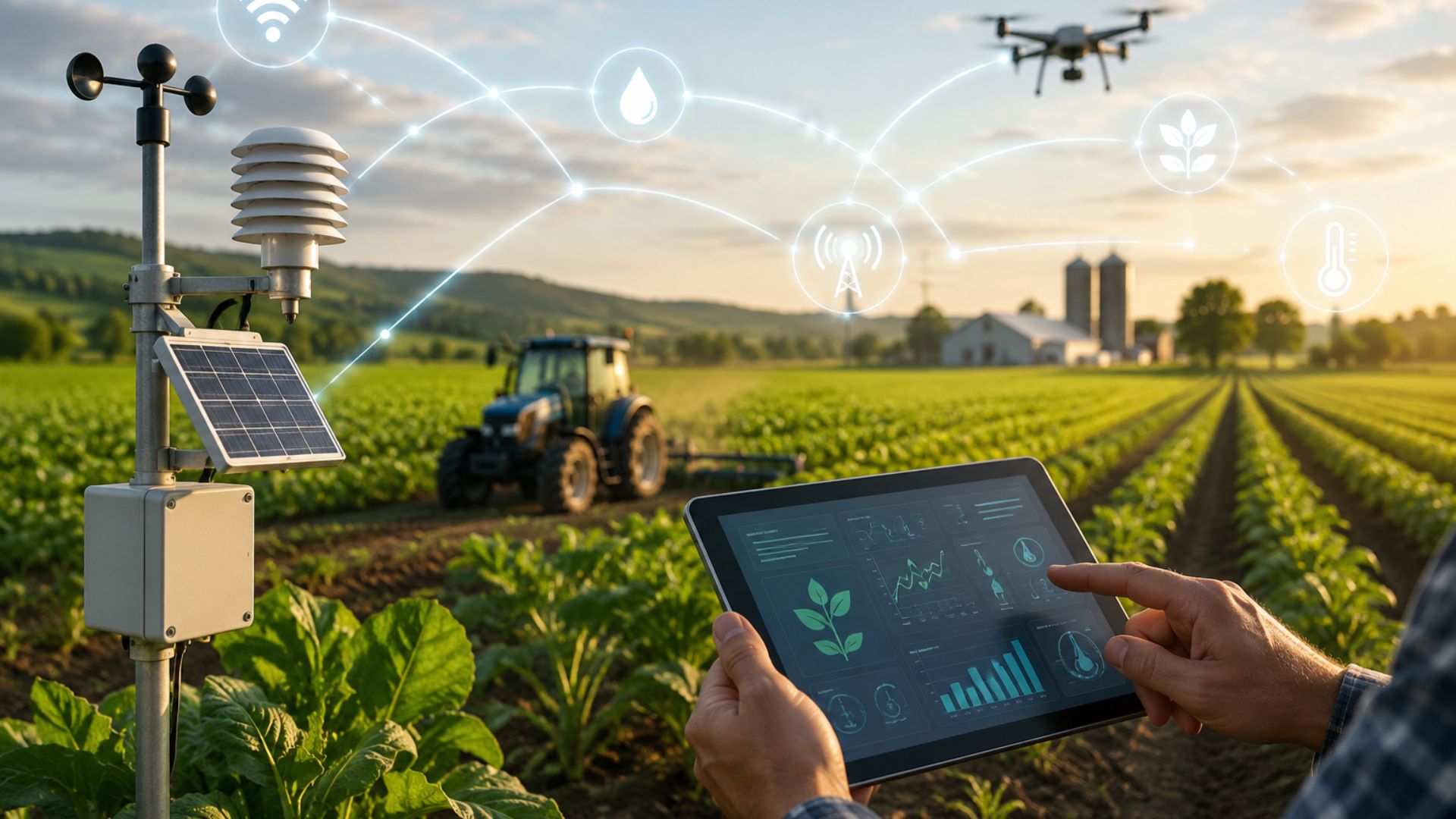
Agricultural IoT data refers to the information collected by connected devices and sensors deployed across farms. These devices continuously gather real-time insights that help farmers understand field conditions and respond quickly to changing situations.

Typical agricultural IoT devices collect data such as:

  • Soil moisture levels
  • Soil temperature
  • Weather conditions
  • Crop health
  • Water consumption
  • Livestock movement
  • Equipment performance
  • Fertiliser application
  • Greenhouse climate conditions

Instead of relying on manual inspections, farmers receive accurate information instantly, allowing them to make smarter operational decisions.

Why Reliable Connectivity Matters in Smart Farming?

IoT devices generate valuable information only when they remain connected. Farms are often located in rural or remote areas where traditional connectivity options may be unreliable.

Without stable connectivity, farms may experience:

  • Missing sensor readings
  • Delayed irrigation schedules
  • Poor livestock tracking
  • Equipment downtime
  • Reduced operational visibility

Reliable agricultural IoT data requires uninterrupted communication between field devices and cloud platforms. Stable cellular IoT connectivity ensures that information reaches farmers whenever it is needed.

Key Applications of Agricultural IoT Data

This section explores the key applications of agricultural IoT data and how it is used across different farming activities. Understanding these applications helps demonstrate the role of connected technologies in improving productivity, resource management, and overall farm efficiency.

Precision Farming

Precision agriculture uses connected sensors to monitor field conditions at a highly detailed level.

Real-time data helps farmers:

  • Identify dry areas
  • Apply fertilisers more efficiently
  • Monitor crop growth
  • Detect early signs of disease
  • Improve harvest planning

This targeted approach helps maximise yields while reducing unnecessary resource usage.

Smart Irrigation Systems

Water management remains one of the biggest challenges in agriculture.

Connected moisture sensors can automatically trigger irrigation only when soil conditions require it. This helps reduce water waste while ensuring crops receive the right amount of moisture.

Automated irrigation powered by agricultural IoT data also reduces manual labour and improves overall efficiency.

Livestock Monitoring

IoT devices are increasingly used to monitor animal health and movement.

Connected trackers can monitor:

  • Location
  • Activity levels
  • Body temperature
  • Feeding behaviour
  • Health alerts

Farm managers can respond quickly if animals show unusual behaviour or leave designated grazing areas.

Greenhouse Automation

Greenhouses require continuous monitoring to maintain ideal growing conditions.

IoT sensors help automate:

  • Temperature control
  • Humidity levels
  • Ventilation
  • Lighting
  • Irrigation

Real-time monitoring helps improve crop quality while reducing operational costs.

Farm Equipment Monitoring

Modern agricultural machinery includes connected sensors that monitor equipment performance.

Operators receive alerts about:

  • Engine health
  • Fuel consumption
  • Maintenance schedules
  • Operating hours
  • Equipment location

Predictive maintenance reduces unexpected breakdowns and extends equipment life.

Benefits of Agricultural IoT Data

Agricultural IoT data offers several benefits that help modern farms operate more efficiently and productively. From improving decision-making and reducing resource waste to increasing crop yields and lowering operational costs, these advantages are transforming the future of smart farming.

  • Better Decision Making

Access to real-time information allows farmers to respond faster to changing conditions instead of relying on assumptions.

  • Increased Crop Productivity

Continuous monitoring helps optimise growing conditions, resulting in healthier crops and improved yields.

  • Reduced Resource Waste

Smart farming helps minimise the unnecessary use of:

  • Water
  • Fertilisers
  • Pesticides
  • Fuel
  • Labour

This supports both operational efficiency and sustainability goals.

  • Lower Operating Costs

Automation reduces manual work while improving the accuracy of farm operations.

  • Improved Sustainability

Efficient resource management contributes to environmentally responsible farming practices without compromising productivity.

Connectivity Challenges in Agriculture

Although IoT adoption continues to grow, agricultural businesses often face connectivity challenges.

Common issues include:

  • Remote Farm Locations

Many agricultural operations are located far from urban infrastructure, making consistent network coverage difficult.

  • Multiple Device Management

Large farms may operate thousands of connected sensors simultaneously, requiring scalable connectivity solutions.

  • Cross-Border Farming Operations

Agricultural companies operating across different regions require seamless connectivity without changing network providers.

  • Data Security

Sensitive operational information must remain protected while devices communicate with cloud platforms. Selecting the right IoT connectivity provider helps overcome these challenges.

How Voye Data Pool Supports Smart Agriculture?

Reliable connectivity forms the foundation of every successful smart farming operation. Voye Data Pool provides IoT connectivity solutions designed to support connected agricultural environments across multiple regions.

Its global connectivity enables businesses to:

  • Connect agricultural sensors across large farming areas
  • Maintain uninterrupted data transmission
  • Support scalable IoT deployments
  • Enable remote monitoring of equipment and livestock
  • Simplify connectivity management across multiple locations

Whether monitoring irrigation systems, greenhouse environments, or agricultural machinery, dependable connectivity ensures that every device continues delivering valuable insights.

Choosing the Right IoT Connectivity for Agriculture

Before deploying connected farming solutions, businesses should evaluate several important factors.

  • Network Coverage

Choose a provider with extensive global and regional coverage that supports rural farming environments.

  • Scalability

The platform should easily support growth from a handful of sensors to thousands of connected devices.

  • Reliable Performance

Consistent uptime ensures continuous access to agricultural IoT data.

  • Centralised Management

Managing all IoT connections through a single platform simplifies administration and monitoring.

  • Security

Secure data transmission helps protect valuable agricultural information from unauthorised access.

The Future of Smart Farming

Agriculture continues to evolve through advances in artificial intelligence, machine learning, drone technology, robotics, and connected sensors.

Future farms will increasingly rely on automated systems capable of making intelligent decisions based on real-time agricultural IoT data. Predictive analytics will help forecast crop diseases, optimise harvesting schedules, improve livestock health, and enhance resource planning.

As IoT adoption expands, reliable connectivity will become even more critical. Businesses investing in smart farming today are positioning themselves for greater efficiency, sustainability, and long-term productivity.

Conclusion

The future of agriculture depends on accurate, real-time information delivered through connected technologies. From precision farming and irrigation management to livestock monitoring and equipment tracking, agricultural IoT data empowers farmers to improve productivity while reducing operational costs.

However, these benefits can only be achieved with dependable IoT connectivity. Voye Data Pool provides scalable global connectivity solutions that support agricultural businesses as they modernise their operations. By ensuring reliable communication between IoT devices and cloud platforms, businesses can confidently embrace smart farming and unlock the full potential of connected agriculture.


Modern agriculture is no longer driven by experience alone. Farmers today rely on technology to monitor crops, manage resources, and improve productivity with greater accuracy. As agricultural operations become more connected, access to reliable agricultural IoT data has become essential for making informed decisions in the field.

From monitoring soil moisture and weather conditions to tracking livestock and controlling irrigation systems remotely, IoT technology is transforming the way farms operate. However, the effectiveness of these smart farming solutions depends on uninterrupted, secure, and scalable connectivity. This is where Voye Data Pool helps businesses by providing dependable global IoT connectivity designed for agricultural applications.

What Is Agricultural IoT Data?

Agricultural IoT data refers to the information collected by connected devices and sensors deployed across farms. These devices continuously gather real-time insights that help farmers understand field conditions and respond quickly to changing situations.

Typical agricultural IoT devices collect data such as:

  • Soil moisture levels
  • Soil temperature
  • Weather conditions
  • Crop health
  • Water consumption
  • Livestock movement
  • Equipment performance
  • Fertiliser application
  • Greenhouse climate conditions

Instead of relying on manual inspections, farmers receive accurate information instantly, allowing them to make smarter operational decisions.

Why Reliable Connectivity Matters in Smart Farming?

IoT devices generate valuable information only when they remain connected. Farms are often located in rural or remote areas where traditional connectivity options may be unreliable.

Without stable connectivity, farms may experience:

  • Missing sensor readings
  • Delayed irrigation schedules
  • Poor livestock tracking
  • Equipment downtime
  • Reduced operational visibility

Reliable agricultural IoT data requires uninterrupted communication between field devices and cloud platforms. Stable cellular IoT connectivity ensures that information reaches farmers whenever it is needed.

Key Applications of Agricultural IoT Data

This section explores the key applications of agricultural IoT data and how it is used across different farming activities. Understanding these applications helps demonstrate the role of connected technologies in improving productivity, resource management, and overall farm efficiency.

Precision Farming

Precision agriculture uses connected sensors to monitor field conditions at a highly detailed level.

Real-time data helps farmers:

  • Identify dry areas
  • Apply fertilisers more efficiently
  • Monitor crop growth
  • Detect early signs of disease
  • Improve harvest planning

This targeted approach helps maximise yields while reducing unnecessary resource usage.

Smart Irrigation Systems

Water management remains one of the biggest challenges in agriculture.

Connected moisture sensors can automatically trigger irrigation only when soil conditions require it. This helps reduce water waste while ensuring crops receive the right amount of moisture.

Automated irrigation powered by agricultural IoT data also reduces manual labour and improves overall efficiency.

Livestock Monitoring

IoT devices are increasingly used to monitor animal health and movement.

Connected trackers can monitor:

  • Location
  • Activity levels
  • Body temperature
  • Feeding behaviour
  • Health alerts

Farm managers can respond quickly if animals show unusual behaviour or leave designated grazing areas.

Greenhouse Automation

Greenhouses require continuous monitoring to maintain ideal growing conditions.

IoT sensors help automate:

  • Temperature control
  • Humidity levels
  • Ventilation
  • Lighting
  • Irrigation

Real-time monitoring helps improve crop quality while reducing operational costs.

Farm Equipment Monitoring

Modern agricultural machinery includes connected sensors that monitor equipment performance.

Operators receive alerts about:

  • Engine health
  • Fuel consumption
  • Maintenance schedules
  • Operating hours
  • Equipment location

Predictive maintenance reduces unexpected breakdowns and extends equipment life.

Benefits of Agricultural IoT Data

Agricultural IoT data offers several benefits that help modern farms operate more efficiently and productively. From improving decision-making and reducing resource waste to increasing crop yields and lowering operational costs, these advantages are transforming the future of smart farming.

  • Better Decision Making

Access to real-time information allows farmers to respond faster to changing conditions instead of relying on assumptions.

  • Increased Crop Productivity

Continuous monitoring helps optimise growing conditions, resulting in healthier crops and improved yields.

  • Reduced Resource Waste

Smart farming helps minimise the unnecessary use of:

  • Water
  • Fertilisers
  • Pesticides
  • Fuel
  • Labour

This supports both operational efficiency and sustainability goals.

  • Lower Operating Costs

Automation reduces manual work while improving the accuracy of farm operations.

  • Improved Sustainability

Efficient resource management contributes to environmentally responsible farming practices without compromising productivity.

Connectivity Challenges in Agriculture

Although IoT adoption continues to grow, agricultural businesses often face connectivity challenges.

Common issues include:

  • Remote Farm Locations

Many agricultural operations are located far from urban infrastructure, making consistent network coverage difficult.

  • Multiple Device Management

Large farms may operate thousands of connected sensors simultaneously, requiring scalable connectivity solutions.

  • Cross-Border Farming Operations

Agricultural companies operating across different regions require seamless connectivity without changing network providers.

  • Data Security

Sensitive operational information must remain protected while devices communicate with cloud platforms. Selecting the right IoT connectivity provider helps overcome these challenges.

How Voye Data Pool Supports Smart Agriculture?

Reliable connectivity forms the foundation of every successful smart farming operation. Voye Data Pool provides IoT connectivity solutions designed to support connected agricultural environments across multiple regions.

Its global connectivity enables businesses to:

  • Connect agricultural sensors across large farming areas
  • Maintain uninterrupted data transmission
  • Support scalable IoT deployments
  • Enable remote monitoring of equipment and livestock
  • Simplify connectivity management across multiple locations

Whether monitoring irrigation systems, greenhouse environments, or agricultural machinery, dependable connectivity ensures that every device continues delivering valuable insights.

Choosing the Right IoT Connectivity for Agriculture

Before deploying connected farming solutions, businesses should evaluate several important factors.

  • Network Coverage

Choose a provider with extensive global and regional coverage that supports rural farming environments.

  • Scalability

The platform should easily support growth from a handful of sensors to thousands of connected devices.

  • Reliable Performance

Consistent uptime ensures continuous access to agricultural IoT data.

  • Centralised Management

Managing all IoT connections through a single platform simplifies administration and monitoring.

  • Security

Secure data transmission helps protect valuable agricultural information from unauthorised access.

The Future of Smart Farming

Agriculture continues to evolve through advances in artificial intelligence, machine learning, drone technology, robotics, and connected sensors.

Future farms will increasingly rely on automated systems capable of making intelligent decisions based on real-time agricultural IoT data. Predictive analytics will help forecast crop diseases, optimise harvesting schedules, improve livestock health, and enhance resource planning.

As IoT adoption expands, reliable connectivity will become even more critical. Businesses investing in smart farming today are positioning themselves for greater efficiency, sustainability, and long-term productivity.

Conclusion

The future of agriculture depends on accurate, real-time information delivered through connected technologies. From precision farming and irrigation management to livestock monitoring and equipment tracking, agricultural IoT data empowers farmers to improve productivity while reducing operational costs.

However, these benefits can only be achieved with dependable IoT connectivity. Voye Data Pool provides scalable global connectivity solutions that support agricultural businesses as they modernise their operations. By ensuring reliable communication between IoT devices and cloud platforms, businesses can confidently embrace smart farming and unlock the full potential of connected agriculture.

Related Articles

  • How to Onboard Remote Employees with Instant Internet?

    Remote employee onboarding requires reliable internet access, secure systems, and structured workflows to improve productivity and communication from day one. This blog explains how businesses can streamline onboarding with instant connectivity, automated provisioning, centralized support, and scalable connectivity management solutions. It also covers onboarding strategies, employee engagement practices, security considerations, and operational planning to help organizations build efficient and productive remote teams while reducing onboarding delays and connectivity disruptions.

  • How to Keep Your Sales Team Connected on the Road?

    Keeping sales teams connected while traveling is essential for maintaining productivity, customer communication, and operational efficiency. This blog explains how businesses can improve mobile connectivity through secure communication systems, flexible mobile data access, centralized collaboration tools, and custom data pool solutions. It also highlights how Voye Data Pool supports traveling sales professionals with scalable mobile connectivity, better international coverage, and cost-efficient data management. Sales Directors can use these strategies to strengthen team collaboration, improve customer engagement, and support seamless business operations globally.

  • The Future of Business Roaming: Trends to Watch

    The future of business roaming is being shaped by eSIM technology, AI-driven automation, IoT connectivity, private 5G, and advanced telecom infrastructure. Businesses are adopting scalable and secure roaming solutions to support global operations, remote teams, and connected devices. From custom data pool models to intelligent network optimization, enterprises are prioritizing flexible connectivity strategies that improve operational efficiency, reduce roaming costs, and enhance international communication across rapidly evolving digital ecosystems.

  • Smart Vending Machines: Keeping Them Online Globally

    Learn how reliable smart vending machine data, powered by global eSIM connectivity, helps businesses keep vending machines online across multiple countries. Discover how real-time monitoring, secure payment processing, remote device management, and scalable IoT connectivity improve operational efficiency and customer experience. Explore how Voye Data Pool enables seamless global connectivity for smart vending networks with flexible eSIM and IoT data solutions designed for modern retail operations.

  • Medical Device Connectivity: Secure Data for Healthcare

    Medical device connectivity is transforming healthcare by enabling secure, real-time data exchange between connected devices and healthcare systems. Reliable eSIM connectivity helps support remote patient monitoring, connected medical equipment, and seamless communication across hospitals and clinics. Learn how secure IoT connectivity improves operational efficiency, protects sensitive healthcare data, and ensures uninterrupted connectivity for critical medical applications with scalable eSIM solutions from Voye Data Pool.

  • Reducing Connectivity Volatility in Budget Planning for 2026

    Connectivity volatility is becoming one of the biggest challenges for enterprise financial planning in 2026.
    With global teams, hybrid work, and rising network demand, costs are harder to forecast.
    This guide explains how to stabilize your connectivity expenses using data-driven forecasting, real-time monitoring, governance controls, and modern eSIM data pool solutions.
    Enterprises can reduce risk, improve cost predictability, and build a resilient connectivity strategy for 2026.
    Learn how to turn unpredictable network spending into stable, controlled, future-ready budgeting.