

Medical Device Connectivity: Secure Data for Healthcare
Medical device connectivity is transforming healthcare by enabling secure, real-time data exchange between connected devices and healthcare systems. Reliable eSIM connectivity helps support remote patient monitoring, connected medical equipment, and seamless communication across hospitals and clinics. Learn how secure IoT connectivity improves operational efficiency, protects sensitive healthcare data, and ensures uninterrupted connectivity for critical medical applications with scalable eSIM solutions from Voye Data Pool.


 8 min read
 Share
Share
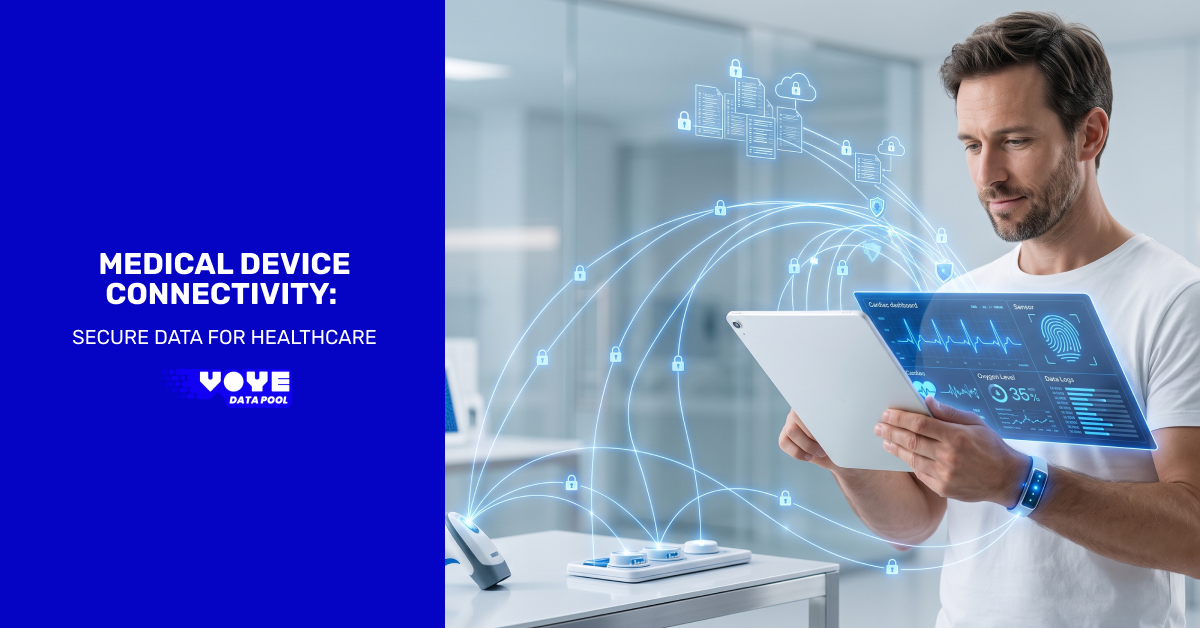
Healthcare is becoming increasingly connected. From patient monitors and infusion pumps to wearable health trackers and diagnostic equipment, medical devices now generate and exchange critical information every second. This digital transformation helps healthcare providers make faster decisions, improve patient outcomes, and streamline hospital operations. However, as the number of connected devices grows, so does the need for secure, reliable, and uninterrupted communication.
Medical device connectivity plays a vital role in modern healthcare by enabling devices to transmit data safely between hospitals, clinics, cloud platforms, and healthcare professionals. Reliable connectivity not only supports real-time patient monitoring but also ensures that sensitive medical information remains protected throughout its journey.
Whether it’s a hospital managing hundreds of connected devices or a healthcare provider monitoring patients remotely, secure connectivity is now an essential part of delivering quality care. In this article, we’ll explore why medical device connectivity matters, the challenges healthcare organizations face, and how secure IoT connectivity solutions help build a smarter and safer healthcare ecosystem.
What Is Medical Device Connectivity?
Medical device connectivity refers to the ability of healthcare devices to communicate with each other, hospital information systems, electronic health records (EHR), cloud applications, and healthcare professionals through secure networks.
Connected medical devices include:
- Patient monitoring systems
- Wearable health devices
- Portable diagnostic equipment
- Infusion pumps
- Smart insulin pens
- ECG and ECG monitoring devices
- Imaging systems
- Connected ventilators
- Home healthcare devices
Instead of relying on manual data entry, connected devices automatically transmit patient information in real time. This reduces human error, improves workflow efficiency, and gives healthcare professionals immediate access to accurate clinical data.

Maintain Secure Medical Device Connectivity
Secure eSIM connectivity for reliable healthcare data.
Why Medical Device Connectivity Matters?
Healthcare decisions often depend on accurate, real-time information. Delays in receiving patient data can impact treatment, emergency response, and overall patient safety.
Secure medical device connectivity provides several important benefits.
- Real-Time Patient Monitoring
Connected devices continuously collect and transmit patient health information such as heart rate, oxygen levels, blood pressure, glucose readings, and body temperature. Healthcare providers can monitor patients remotely and receive instant alerts if readings fall outside normal ranges. This enables faster intervention and better patient care.
- Improved Clinical Efficiency
Automatic data transmission eliminates repetitive manual documentation. Doctors, nurses, and specialists can access updated patient information immediately, allowing them to spend more time on patient care rather than administrative tasks.
- Better Patient Experience
Patients increasingly receive healthcare outside traditional hospital settings. Connected medical devices allow physicians to monitor recovery, chronic conditions, and post-operative care without requiring frequent hospital visits. This improves convenience while maintaining high-quality healthcare services.
- Data Accuracy
Manual recording can introduce errors that affect diagnosis and treatment. Medical device connectivity reduces transcription mistakes by securely transferring information directly from devices into healthcare systems.
Security Challenges in Connected Healthcare
While connected healthcare offers significant advantages, it also introduces new security risks. Healthcare organizations handle highly sensitive patient information, making them attractive targets for cybercriminals. Every connected device becomes a potential entry point if connectivity is not properly secured.
Some of the most common challenges include:
- Unauthorized Device Access
Poor authentication methods may allow unauthorized users to gain access to connected devices or healthcare networks.
- Data Breaches
Medical records contain valuable personal information. Unencrypted communication can expose patient data during transmission.
- Network Downtime
Hospitals require continuous connectivity. If medical devices lose network access, patient monitoring and treatment may be disrupted, potentially affecting critical care.
- Device Management Complexity
Large hospitals often operate thousands of connected devices across multiple departments and locations. Managing secure connectivity for every device becomes increasingly challenging without centralized management.
- Regulatory Compliance
Healthcare organizations must comply with regulations designed to protect patient information and privacy. Secure connectivity solutions help organizations maintain compliance by supporting encrypted communication, secure authentication, and controlled access to healthcare data.
Key Features of Secure Medical Device Connectivity
A reliable connectivity solution should provide more than internet access. It must support security, scalability, and consistent performance across healthcare environments.
- End-to-End Encryption
Encryption protects patient information while it travels between medical devices, cloud platforms, and healthcare systems. Even if data is intercepted, encryption prevents unauthorized users from reading sensitive information.
- Reliable Global Connectivity
Healthcare providers may operate across multiple facilities, regions, or countries. Reliable connectivity ensures medical devices remain connected regardless of location, supporting continuous patient monitoring and uninterrupted healthcare services.
- Remote Device Management
Healthcare IT teams need visibility into every connected device. Centralized management allows administrators to monitor connectivity, manage SIM or eSIM deployments, troubleshoot issues remotely, and maintain consistent performance across the entire device network.
- Scalable Connectivity
Healthcare organizations continue adding new connected devices every year. A scalable connectivity platform makes it easy to activate, manage, and monitor thousands of devices without increasing operational complexity.
Power Connected Healthcare with eSIM
Enable seamless connectivity for connected medical devices.
The Role of IoT SIMs and eSIMs in Healthcare
As healthcare organizations expand their connected device networks, traditional connectivity solutions may not always meet the demands of modern medical environments. IoT SIMs and eSIM technology provide a more flexible and reliable way to keep medical devices connected.
Unlike standard SIM cards, IoT SIMs are designed to support machine-to-machine (M2M) communication. They offer stable connectivity, remote management capabilities, and support for devices deployed across multiple locations. eSIM technology takes this a step further by allowing network profiles to be updated remotely, eliminating the need for physical SIM replacements.
For healthcare providers, these technologies simplify device deployment, reduce maintenance efforts, and help ensure continuous connectivity for critical medical equipment.
Benefits of Secure Medical Device Connectivity
Implementing secure medical device connectivity offers long-term advantages for healthcare providers, patients, and medical technology companies.
- Faster Clinical Decision-Making
Real-time access to patient data enables healthcare professionals to respond quickly to changing medical conditions. Early detection of health issues can improve treatment outcomes and reduce emergency situations.
- Enhanced Remote Patient Monitoring
Remote healthcare has become an important part of modern medicine. Connected devices allow physicians to monitor patients recovering at home or managing chronic conditions without requiring frequent in-person visits. This approach improves patient convenience while helping healthcare facilities optimize resources.
- Reduced Operational Costs
Automated data collection, remote device management, and predictive maintenance help reduce manual work and minimize equipment downtime. Healthcare organizations can improve operational efficiency while lowering maintenance costs.
- Improved Device Reliability
Reliable connectivity ensures medical devices remain operational even in demanding healthcare environments. Consistent communication between devices and healthcare systems helps maintain uninterrupted patient care.
- Better Scalability
As hospitals and healthcare networks continue to adopt digital health technologies, secure connectivity solutions make it easier to add new devices without disrupting existing operations.
Why Reliable Connectivity Is Essential for Healthcare?
Healthcare environments cannot afford unreliable network performance. A disconnected patient monitor or delayed transmission of diagnostic information could impact patient safety and clinical decision-making.
Reliable connectivity supports:
- Continuous patient monitoring
- Secure transmission of medical records
- Connected ambulance services
- Telemedicine consultations
- Smart hospital infrastructure
- Mobile diagnostic equipment
- Home healthcare solutions
- Connected wearable devices
Healthcare providers need connectivity that performs consistently across different locations, network conditions, and device types.
How Voye Data Pool Supports Connected Healthcare?
As healthcare becomes increasingly digital, organizations require connectivity solutions that are secure, scalable, and easy to manage. Voye Data Pool provides global IoT connectivity designed to support businesses operating connected devices across multiple industries, including healthcare.
With flexible IoT SIM and eSIM solutions, healthcare providers can:
- Connect medical devices across multiple countries
- Manage connectivity through a centralized platform
- Monitor device usage in real time
- Simplify large-scale device deployments
- Improve network reliability for mission-critical applications
- Scale connectivity as healthcare operations grow
Whether supporting remote patient monitoring, connected diagnostic equipment, or smart healthcare infrastructure, reliable IoT connectivity helps healthcare organizations maintain continuous communication between devices and healthcare systems.
Best Practices for Secure Medical Device Connectivity
Healthcare organizations can strengthen device security by following a few essential practices:
- Use encrypted communication for all connected devices.
- Implement strong authentication and access controls.
- Regularly update device firmware and software.
- Monitor network activity for unusual behaviour.
- Segment healthcare networks to reduce cybersecurity risks.
- Choose trusted connectivity providers with reliable global coverage.
- Maintain centralized visibility over connected devices.
Combining these best practices with dependable IoT connectivity creates a strong foundation for secure digital healthcare.
Ensure Continuous Healthcare Connectivity
Keep healthcare devices connected with a reliable eSIM.
Conclusion
The future of healthcare depends on connected technology. As hospitals, clinics, and remote care providers continue adopting smart medical devices, secure and reliable medical device connectivity becomes essential for delivering safe, efficient, and high-quality patient care.
From real-time patient monitoring and remote healthcare to connected diagnostics and smart hospital systems, reliable connectivity enables healthcare professionals to access critical information whenever and wherever it’s needed.
By investing in secure IoT connectivity solutions, healthcare organizations can protect sensitive patient data, improve operational efficiency, and confidently scale their connected healthcare ecosystem.