

Shared Roaming Bundles: The Future of Business Travel
Reliable connectivity has become essential for modern business travel. Employees are expected to respond to messages, join meetings, and access company platforms the moment they arrive in another country, yet traditional roaming options often create delays, high costs, and operational challenges. With centralized eSIM connectivity, organizations can keep teams connected, productive, and secure wherever work takes them, while maintaining visibility and control over usage and expenses.


 7 min read
 Share
Share
Business travel today is no longer limited to flights, hotels, and meetings. It now depends heavily on digital connectivity. Every traveling employee carries cloud applications, communication tools, security authentication systems, and business workflows inside their smartphone or laptop.
Whether an employee lands in Singapore, London, Dubai, or New York, they are expected to immediately respond to emails, attend video meetings, upload documents, and access internal company platforms. Connectivity is now a business requirement, not a convenience.
However, traditional international roaming systems were not designed for modern organizations. Companies still struggle with expensive roaming bills, physical SIM card distribution, reimbursement claims, and a lack of real-time visibility into usage.
Organizations expanding globally or managing remote teams need a solution that works instantly, securely, and predictably across borders.
The Connectivity Challenges Faced by Business Travelers
Corporate employees rely on mobile internet throughout their travel journey. Connectivity is required from the moment they leave their home country until they return.
Essential Activities That Require Data Access
- Video conferencing with clients and internal teams.
- Access to CRM and ERP systems.
- Cloud storage collaboration.
- Secure email communication.
- Navigation and transportation booking.
- Expense reporting and approvals.
- Multi-factor authentication and VPN login.
When connectivity fails, work stops immediately. Employees often connect to public WiFi networks at airports or cafes, which introduces serious security risks.
Problems With Traditional Roaming Plans
Traditional roaming plans were built for occasional travelers, not modern global workforces. Companies often face high charges, inconsistent network quality, and limited visibility into usage. This makes managing international connectivity difficult for both IT and finance teams.
Operational Issues
- Employees must purchase local SIM cards.
- IT teams cannot monitor usage.
- Lost or damaged SIM cards cause delays.
- Onboarding new travelers takes time.
- Multiple telecom vendors must be managed.
Financial Issues
- Unpredictable invoices.
- Expensive data charges.
- Overage fees.
- Reimbursement management.
- No centralized cost tracking.
Finance teams cannot forecast budgets, while IT departments lack control.
The Shift Toward Centralized Connectivity
Modern enterprises are moving away from individual mobile plans and adopting centralized connectivity models. Instead of assigning each employee a separate roaming plan, companies now pool data across their workforce.
In this approach, organizations deploy a shared roaming bundle that allows multiple employees to use one global data allocation, balancing usage naturally and preventing wasted capacity.
Heavy travelers use more data, occasional travelers use less, and the company pays only for the total consumption instead of multiple separate subscriptions.
Role of eSIM Technology in Business Mobility
eSIM technology replaces physical SIM cards with digital connectivity profiles that can be installed remotely.
Key Advantages:
- Remote activation.
- No shipping of SIM cards.
- Immediate international connectivity.
- Faster onboarding for new employees.
- Easy device replacement.
- Centralized management.
With Voye Data Pool, IT administrators can assign connectivity before an employee even departs for travel. The device automatically connects upon arrival in another country.
Benefits for Organizations
A centralized connectivity approach helps companies simplify operations while improving efficiency. Organizations gain better control over usage, reduce administrative effort, and support employees during international travel. The result is smoother workflows and improved operational performance.
1. Cost Optimization
Companies eliminate separate roaming plans for each employee. Data is used efficiently across teams.
Benefits include:
- Lower roaming expenses.
- Reduced billing disputes.
- Predictable budgeting.
- No unused data wastage.
2. Centralized Management
IT teams manage connectivity through a single dashboard.
They can:
- Activate or deactivate users.
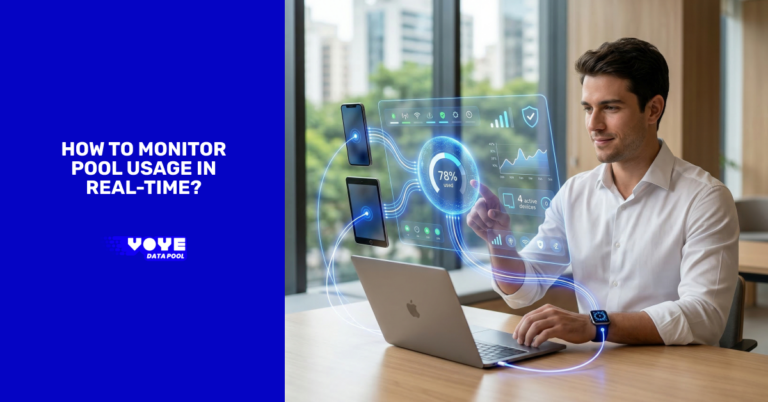
- Monitor usage in real time.
- Allocate data by department.
- Set alerts and limits.
- Restrict regions if needed.
3. Employee Productivity
Travelers do not need to search for local SIM vendors or wait at airport counters.
They land and immediately:
- Join meetings.
- Access company systems.
- Upload files.
- Contact customers.
This significantly improves work efficiency during travel.
4. Security Protection
Public WiFi networks expose company data to cyber threats. Mobile connectivity provides a safer communication channel.
Security advantages:
- Encrypted connections.
- Secure authentication.
- Reliable VPN access.
- Controlled provisioning.
5. Simplified Travel Operations
Corporate travel managers no longer handle telecom arrangements. Connectivity becomes part of employee onboarding instead of a travel checklist.

Connect Your Global Workforce
Activate secure connectivity for traveling employees without SIM card hassles.
Why Choose Voye Data Pool?
Managing international connectivity should not require multiple carriers, contracts, and manual processes. Voye Data Pool simplifies global mobility by providing scalable eSIM connectivity that can be deployed remotely. IT teams gain visibility and control, finance teams gain predictable billing, and employees stay connected wherever they travel.
Platform Capabilities
- Coverage in 130+ countries.
- Instant activation.
- Central admin dashboard.
- Real-time analytics.
- Multi-user management.
- Secure provisioning.
- Device-level monitoring.
The platform supports both employees and IoT devices, allowing organizations to manage workforce mobility and connected infrastructure from a single system.
Industry Use Cases
Whether employees travel frequently or devices operate remotely, dependable mobile access keeps operations running. Businesses across sectors benefit from secure and centralized connectivity during international activity.
- Consulting Firms
Consultants frequently travel between client offices and require uninterrupted access to presentations, dashboards, and collaboration tools.
- Financial Services
Banking and fintech professionals depend on secure connectivity for transactions, communication, and compliance requirements.
- Logistics and Supply Chain
Field supervisors and fleet operators use mobile data for navigation, shipment tracking, and reporting.
- Healthcare Organizations
Medical teams attending conferences or training programs need access to secure medical platforms and communication systems.
- Technology Companies
Distributed development teams collaborate across countries using cloud development and communication tools.
Implementation Process
Deploying global connectivity should not be complicated. With a centralized platform, organizations can activate users, configure policies, and monitor usage within minutes. The process removes manual telecom coordination and speeds up employee readiness.
- Step 1: Account Setup
Create an organizational admin account and add departments and users.
- Step 2: eSIM Provisioning
Employees receive a QR profile or remote installation to activate connectivity.
- Step 3: Policy Configuration
Administrators define:
- Usage limits.
- Regions.
- Alerts.
- Department allocation.
- Step 4: Monitoring
Usage analytics help optimize consumption and reduce costs.
Financial Impact
International roaming often creates unpredictable telecom expenses for businesses. Centralized connectivity helps organizations track usage in real time and avoid unnecessary charges. This improves budgeting accuracy and financial planning.
Direct Savings
- Reduced roaming charges.
- No individual plan subscriptions.
- No SIM replacement costs.
- Lower administrative overhead.
Indirect Savings
- Increased productivity.
- Faster travel readiness.
- Reduced IT workload.
- Accurate budget forecasting.
Security and Compliance
Enterprises must protect corporate data while employees travel internationally.
Voye Data Pool supports this through:
- Controlled provisioning.
- Network visibility.
- Secure connections.
- Activity monitoring.
- Regional access control.
Supporting IoT Connectivity
Businesses now deploy connected devices globally, such as trackers, sensors, kiosks, and monitoring equipment.
Benefits:
- Centralized device management.
- Global activation.
- Lower maintenance.
- Real-time monitoring.
- Reduced operational cost.
Future of Business Travel Connectivity
Business travel is becoming digital and mobile-dependent.
Upcoming developments include:
- AI-driven usage analytics.
- Real-time cost tracking.
- Growth of remote teams.
- Expansion of connected devices.
- Smart city infrastructure.
- Cloud-based collaboration growth.
Companies adopting centralized connectivity will operate more efficiently across borders.
Simplify International Team Connectivity
Manage devices, monitor usage, and control costs from one dashboard.
Best Practices for Enterprises
- Assign connectivity ownership to IT teams.
- Integrate connectivity during onboarding.
- Monitor analytics regularly.
- Establish security policies.
- Train employees on secure usage.
Moving Beyond Traditional Roaming
Legacy telecom contracts are difficult to scale. Each traveler requires separate activation, creating operational complexity.
Centralized eSIM connectivity allows companies to scale globally without renegotiating contracts for every country.
Travel Far, Work Seamlessly
Reliable connectivity has become essential for international business operations. Companies need secure, predictable, and scalable solutions that support modern mobility.
Voye Data Pool simplifies, scales, and secures business connectivity using advanced eSIM management. Businesses can activate employees remotely, monitor usage centrally, and maintain dependable service across more than 130+ countries.
As organizations expand internationally and adopt remote collaboration, centralized connectivity ensures productivity, cost control, and security. Businesses that modernize their mobility strategy will operate faster and more efficiently without geographic limitations.
Global connectivity is no longer a travel feature. It is now a core component of business infrastructure.