

Managing Cash Flow with Predictable Travel Connectivity
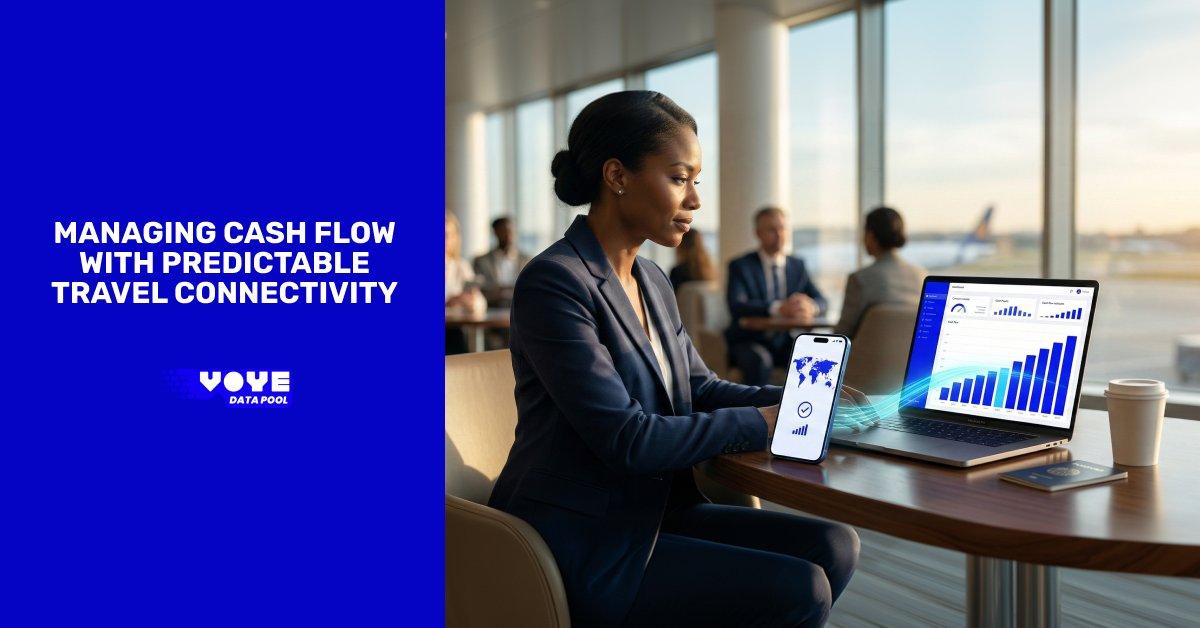
Global business travel has transformed mobile connectivity into a financial planning concern rather than a simple operational necessity. Uncontrolled roaming charges, delayed billing cycles, and reimbursement claims introduce uncertainty into monthly budgets and complicate forecasting for finance teams. By adopting centralized eSIM connectivity through Voye Data Pool, organizations can standardize communication expenses, improve reporting accuracy, and gain real time visibility into usage. The result is stronger cash flow management, reduced administrative workload, and better control over global operational spending.


 7 min read
 Share
Share
Finance departments traditionally focused on payroll, vendor payments, and capital expenditure planning. However, globalization and remote operations have introduced a new recurring expense category that directly affects working capital management: international connectivity.
Employees today depend on constant access to cloud platforms, ERP systems, authentication tools, communication software, and client portals. Without mobile data, business operations slow down immediately. Because connectivity is essential to productivity, it is now an operational expense rather than a travel convenience.
The challenge is not the need for connectivity. The challenge is its unpredictability. Roaming charges, regional pricing variations, and reimbursement claims create volatile monthly costs. When costs fluctuate, finance teams struggle to forecast operational spending accurately.
Centralized eSIM connectivity addresses this issue by turning an inconsistent expense into a manageable financial line item.
The Cash Flow Problem Behind International Roaming
International roaming introduces delayed billing and highly variable charges that make expense forecasting difficult. Finance teams often note costs only after invoices arrive, which disrupts budget planning and working capital allocation. The lack of real-time visibility turns a small operational requirement into a recurring financial uncertainty.
Irregular Billing Cycles
International roaming invoices usually arrive long after travel ends. This delay causes accounting teams to rely on estimates during monthly closing. When actual charges appear later, finance teams must adjust reports, which complicates financial accuracy.
This disrupts cash flow forecasting because expenses are recognized after operational activity has already occurred.
Wide Cost Variation
The same employee performing identical tasks in two countries may incur dramatically different data charges. Data consumption from background applications, updates, and virtual meetings increases this unpredictability.
Consequences include:
- Unexpected operational expenses.
- Budget variance.
- Approval escalations.
- Reduced forecasting reliability.
Employee Reimbursement Complications
Many employees purchase temporary data plans or local SIM cards while traveling. They later submit reimbursement claims.
This creates:
- Documentation review workload.
- Currency conversion tasks.
- Policy disputes.
- Audit complications.
Finance teams spend significant time processing relatively small but frequent claims.
eSIM: A Financial Control Tool, Not Just a Technical Upgrade
An eSIM is a digital SIM embedded in a device. Instead of physically swapping SIM cards, companies remotely assign connectivity profiles to employees or devices.
From a finance perspective, the benefits relate to structure and visibility.
Key financial characteristics:
- Standardized data plans.
- Central billing.
- Real-time usage tracking.
- Policy enforcement.
- Vendor consolidation.
Connectivity becomes centralized and measurable, allowing finance leaders to control expenses proactively.
Stabilizing Operating Expenses
Cash flow planning depends on predictable operational spending. Variable roaming charges force companies to set contingency reserves, which tie up working capital unnecessarily.
When organizations implement standardized connectivity plans, finance teams can forecast communication expenses accurately. In operational budgeting discussions, companies increasingly aim for predictable travel costs because stable connectivity spending improves treasury planning and reduces the need for emergency budget adjustments.
Stability in recurring operational expenses allows better allocation of funds toward growth initiatives.

Connect Your Global Workforce
Keep employees online anywhere without roaming bills or reimbursements complications.
Vendor Consolidation and Procurement Efficiency
Large organizations often maintain relationships with multiple telecom providers across different regions. Each provider issues separate invoices and operates under different payment terms.
Centralized eSIM platforms replace fragmented contracts with a single provider structure.
Financial benefits include:
- Reduced accounts payable workload.
- Standard payment schedules.
- Transparent pricing.
- Easier compliance documentation.
Procurement departments also gain stronger negotiating leverage due to consolidated usage volume.
Real-Time Visibility Improves Financial Decisions
Real-time usage tracking allows finance teams to monitor communication spending as it happens instead of waiting for invoices. This visibility helps prevent overages, enforce internal policies, and allocate expenses accurately across departments or projects. Better data leads to faster and more informed financial decisions.
Monitoring Usage
eSIM management platform provides dashboards that display usage by employee, department, or device. Finance teams can track expenses during the reporting period instead of after invoices arrive.
This allows early intervention:
- Adjusting plans.
- Preventing overages.
- Allocating costs to projects.
Enforcing Policies
Companies can set usage limits and restrict high data activities. Departments remain accountable for communication spending, which strengthens cost governance.
Finance moves from reactive reporting to active expense management.
Accounting and Reporting Benefits
Traditional telecom spending appears across several accounting categories, such as travel, reimbursements, and IT services. This fragmentation complicates financial reporting.
Centralized connectivity simplifies classification.
Accurate Accruals
Fixed data plans allow finance teams to record expenses precisely at the month’s end without waiting for delayed invoices.
This improves:
- Closing timelines.
- Reporting accuracy.
- Budget comparisons.
Clear Cost Allocation
Connectivity costs can be assigned to departments or client projects. Finance teams gain better visibility into operational profitability.
Protecting Margins in Project-Based Work
Consulting, engineering, and field service organizations rely on traveling employees. Connectivity is necessary for service delivery, reporting, and client communication.
When connectivity costs fluctuate, project budgets become unreliable. By standardizing connectivity plans, companies can incorporate communication expenses directly into project costing models.
Benefits:
- More accurate proposals.
- Protected margins.
- Transparent client billing.
Connectivity becomes a defined cost component rather than an uncertain overhead.
Security as a Financial Safeguard
Employees often use public WiFi when roaming costs are high. This increases exposure to cybersecurity threats.
Security incidents can create:
- Legal liabilities.
- Regulatory fines.
- Operational disruption.
- Reputational damage.
Centralized eSIM connectivity allows controlled network access and monitoring. This reduces financial risk and protects sensitive company data.
IoT Connectivity and Operational Continuity
Organizations increasingly deploy connected devices such as tracking equipment, monitoring sensors, and automated kiosks. Physical SIM replacement is expensive when devices move between regions.
eSIM enables remote activation and management.
Financial impact:
- Reduced maintenance visits.
- Continuous operations.
- Lower downtime losses.
- Scalable device deployment.
Operational uptime directly protects revenue streams.
Power International Business Operations
Ensure uninterrupted connectivity for traveling staff, consultants, and remote teams.
Administrative Cost Reduction
Processing travel connectivity reimbursements consumes time across HR, management, and accounting teams. Centralized connectivity removes reimbursement workflows.
Operational improvements include:
- Fewer expense claims.
- Faster approvals.
- Reduced manual reconciliation.
- Shorter month-end cycles.
Administrative savings significantly contribute to overall cost efficiency.
Measuring Return on Investment
Finance leaders can evaluate centralized connectivity through measurable categories:
- Lower roaming charges.
- Reduced administrative workload.
- Improved forecasting reliability.
- Protected project margins.
- Reduced cybersecurity exposure.
In many organizations, administrative and forecasting benefits equal or exceed direct telecom savings.
Implementation Framework
A structured rollout helps organizations transition smoothly from fragmented roaming practices to centralized connectivity management. By assessing mobility needs, reviewing historical expenses, and defining usage policies, finance and operations teams can deploy standardized plans with minimal disruption. This approach ensures controlled adoption and measurable financial results.
- Assess Mobility Needs
Identify all employees and devices requiring international connectivity.
- Analyze Historical Costs
Review the past 12 months of roaming invoices and reimbursements.
- Create Policies
Establish clear connectivity usage guidelines aligned with finance and IT governance.
- Deploy Central Management
Activate plans remotely and monitor usage continuously.
Why Organizations Use Voye Data Pool?
Voye Data Pool simplifies, scales, and secures global connectivity through advanced eSIM management. The platform connects teams and devices across more than 130+ countries using one centralized interface.
Key features:
- Remote activation.
- Centralized billing.
- Usage analytics.
- Secure network access.
- Scalable connectivity.
Businesses can deploy connectivity quickly without distributing physical SIM cards. Finance teams gain standardized reporting, better visibility, and improved cost control.
From Roaming Chaos to Cost Clarity
Global business operations depend on uninterrupted connectivity. However, unmanaged roaming charges create unpredictable expenses that complicate financial planning and working capital management.
Centralized eSIM connectivity transforms mobile data from an uncontrolled travel expense into a structured operational cost. Finance teams gain visibility, forecasting accuracy, and administrative efficiency.
With Voye Data Pool, organizations can support international teams and connected devices while maintaining financial discipline and operational transparency. Businesses that modernize connectivity management strengthen budgeting, protect margins, and improve overall financial stability.