Role of the Entitlement Server (ES) in Enterprise eSIM Management
Entitlement Server is a critical component of enterprise eSIM management. It enables secure authorization, policy enforcement, cost control, and instant connectivity for global teams. This article explains how Entitlement Servers work, why enterprises need them, and how they support scalable, compliant, and cost-efficient eSIM deployments.


 10 min read
 Share
Share
Enterprise mobility is undergoing a fundamental transformation. Physical SIM cards that once powered global business connectivity are quickly being replaced by eSIM technology. For organizations managing hundreds or thousands of devices across regions, eSIM brings speed, scalability, and cost control. However, behind the simplicity of eSIM activation lies a sophisticated technical framework. At the heart of this framework is the Entitlement Server, often abbreviated as ES.
The Entitlement Server plays a critical role in enabling secure, scalable, and policy driven eSIM management for enterprises. It acts as the control point that decides who gets connectivity, when it is activated, and how services are provisioned across devices. Without a properly designed ES layer, enterprise eSIM deployments struggle with security gaps, poor user experience, and operational inefficiencies.
This blog explores the role of the Entitlement Server in enterprise eSIM management in detail. It covers how ES works, why it matters, how it integrates with other eSIM components, and why modern global organizations rely on it to manage mobile connectivity at scale. The content is designed for IT leaders, mobility managers, CTOs, and enterprise architects who want a deep understanding of eSIM infrastructure.
Understanding Enterprise eSIM Management
Enterprise eSIM management is not just about replacing plastic SIM cards. It is about creating a centralized, programmable connectivity layer that aligns with business operations. Enterprises need to onboard devices instantly, control roaming costs, enforce security policies, and ensure compliance across regions.
Traditional SIM management required physical logistics, manual provisioning, and long lead times. eSIM removes these constraints by allowing profiles to be downloaded remotely. However, remote provisioning introduces complexity. Enterprises must ensure that only authorized users and devices receive access, that the correct profiles are installed, and that connectivity changes follow enterprise policies.
This is where the Entitlement Server becomes essential.
What Is an Entitlement Server in eSIM Architecture
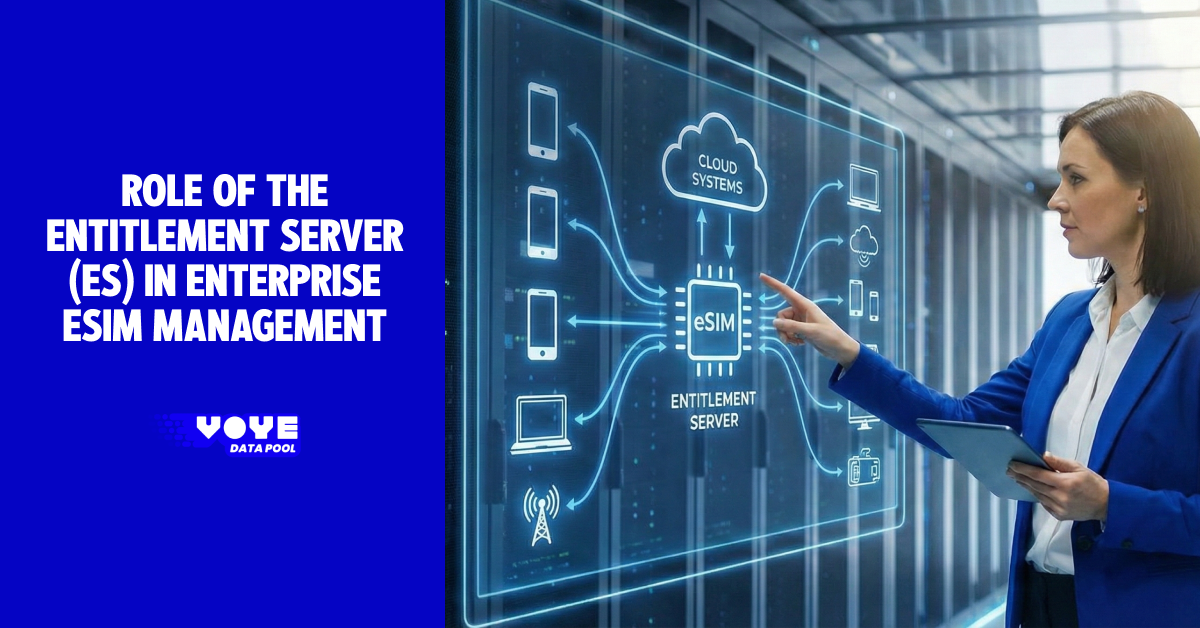
An Entitlement Server is a backend system that authorizes and manages access to eSIM services. It determines whether a device or user is entitled to receive a specific eSIM profile or connectivity service. In enterprise environments, the ES enforces rules defined by the organization, such as eligibility, usage limits, geographic access, and lifecycle management.
In simple terms, the Entitlement Server answers three critical questions:
- Who is allowed to get an eSIM profile
- Which profile or service they should receive
- When and under what conditions the service can be activated or modified
The Entitlement Server works closely with other eSIM ecosystem components defined by the GSMA. These include the SM-DP+ platform, mobile device operating systems, and enterprise management systems.
Why the Entitlement Server Is Critical for Enterprises
Consumer eSIM use cases are relatively straightforward. A user scans a QR code and downloads a profile. Enterprise eSIM use cases are far more complex. Devices may be shared, deployed globally, managed remotely, or used for mission critical operations.
Without an Entitlement Server, enterprises face several challenges:
- No centralized control over who receives connectivity
- Increased risk of unauthorized profile downloads
- Difficulty enforcing corporate mobility policies
- Limited visibility into device and user status
- Poor integration with enterprise identity and device management systems
The Entitlement Server acts as the governance layer that transforms eSIM from a consumer convenience into an enterprise grade connectivity solution.
Core Functions of the Entitlement Server
Authorization and Eligibility Management
One of the primary functions of the Entitlement Server is determining eligibility. Before a device can download an eSIM profile, the ES validates whether the request meets enterprise defined criteria.
Eligibility checks may include:
- User identity verification
- Device type and operating system validation
- Corporate role or department mapping
- Geographic location and regulatory rules
- Subscription status and usage thresholds
This ensures that only approved users and devices receive connectivity, reducing misuse and security exposure.
Secure Profile Provisioning
The Entitlement Server does not store eSIM profiles itself, but it controls access to them. Once eligibility is confirmed, the ES securely authorizes the SM-DP+ platform to deliver the appropriate profile to the device.
This process includes:
- Token based authorization
- Encrypted communication between systems
- Validation of device identifiers
- Confirmation of successful profile installation
By acting as a gatekeeper, the Entitlement Server ensures that profile downloads are secure, auditable, and compliant with enterprise standards.
Integration With Enterprise Identity Systems
Modern enterprises rely on centralized identity and access management systems. The Entitlement Server integrates with these systems to align eSIM access with corporate identity policies.
Common integrations include:
- Single sign-on platforms
- Directory services such as Active Directory
- Role based access control frameworks
- Zero trust security models
This integration enables automatic adjustment of connectivity entitlements when an employee joins, changes roles, or leaves the organization.
Policy Enforcement and Compliance
Enterprise mobility policies vary by industry and region. The Entitlement Server enforces these policies dynamically.
Examples include:
- Restricting data access in certain countries
- Enabling or disabling roaming based on project needs
- Applying usage caps to avoid bill shock
- Enforcing compliance with local telecom regulations
For global teams, this policy enforcement is essential to maintain compliance while enabling operational flexibility.
Entitlement Server and the eSIM Provisioning Flow
To understand the role of the Entitlement Server more clearly, it is helpful to examine how it fits into the overall eSIM provisioning flow.
A typical enterprise eSIM activation involves the following steps:
- A device or user initiates an eSIM activation request
- The request is sent to the Entitlement Server
- The ES validates eligibility and policy rules
- The ES authorizes the SM-DP+ platform
- The SM-DP+ securely delivers the eSIM profile
- The device installs and activates the profile
- The ES records the transaction for audit and lifecycle management
Each step relies on the Entitlement Server to maintain control and visibility.

Power Global Teams With eSIM
Deploy secure enterprise connectivity instantly while cutting roaming costs worldwide.
Role of Entitlement Server in Large Scale Deployments
Enterprise eSIM deployments often involve thousands of devices across multiple regions. Manual processes do not scale at this level. The Entitlement Server enables automation and consistency.
Key benefits include:
- Zero touch provisioning for new devices
- Bulk onboarding for global rollouts
- Centralized policy updates without device recall
- Automated deactivation when devices are retired
This scalability is essential for enterprises with distributed teams, IoT deployments, or frequent workforce mobility.
Security Advantages of Using an Entitlement Server
Security is one of the strongest reasons enterprises adopt an Entitlement Server for eSIM management.
Reduced Risk of Unauthorized Access
By requiring entitlement validation before profile delivery, the ES prevents unauthorized devices from gaining network access. This is particularly important for lost or stolen devices.
Encrypted Communication and Authentication
The Entitlement Server enforces secure authentication mechanisms between devices, platforms, and backend systems. This reduces the risk of interception or tampering during provisioning.
Centralized Revocation and Control
If a security incident occurs, enterprises can revoke entitlements instantly. This allows connectivity to be disabled without physical intervention.
Entitlement Server and Cost Optimization
One of the biggest pain points for enterprises is unpredictable roaming costs. The Entitlement Server helps address this by enabling granular control over connectivity usage.
Capabilities include:
- Assigning region specific data plans
- Automatically switching profiles based on location
- Enforcing usage limits at the entitlement level
- Preventing accidental activation of high cost networks
This level of control aligns perfectly with platforms like Voye Data Pool, which focus on reducing roaming costs and eliminating bill shock for global teams.
Supporting Multiple Device Types and Use Cases
Enterprise eSIM is not limited to smartphones. The Entitlement Server supports a wide range of devices, including:
- Laptops and tablets
- Rugged industrial devices
- Point of sale terminals
- IoT sensors and gateways
Each device type may require different entitlement rules. The ES provides the flexibility to manage diverse use cases within a single platform.
Entitlement Server in Bring Your Own Device Environments
Many enterprises support BYOD policies. Managing eSIM connectivity in BYOD environments requires careful balance between user privacy and corporate control.
The Entitlement Server enables:
- Separation of personal and corporate profiles
- Conditional access based on compliance status
- Time limited or project-based entitlements
- Easy deprovisioning without affecting personal usage
This makes BYOD programs more secure and easier to manage.
Lifecycle Management Through the Entitlement Server
eSIM management does not end with activation. Devices go through a full lifecycle that includes onboarding, usage, modification, suspension, and retirement.
The Entitlement Server supports lifecycle management by:
- Tracking entitlement status over time
- Enabling profile swaps without physical SIM changes
- Automating suspension during inactivity
- Supporting reactivation when needed
This lifecycle visibility reduces operational overhead and improves asset management.
Regulatory and Regional Considerations
Telecom regulations vary widely across countries. Enterprises operating globally must ensure compliance without slowing down deployments.
The Entitlement Server helps by:
- Enforcing country-specific provisioning rules
- Supporting lawful intercept requirements
- Aligning with data residency policies
- Ensuring compliance with local carrier agreements
This regulatory intelligence is critical for multinational organizations.
Entitlement Server and Analytics
Data driven decision making is increasingly important in enterprise mobility. The Entitlement Server generates valuable insights.
Examples include:
- Activation success rates
- Usage trends by region or team
- Cost optimization opportunities
- Security and compliance metrics
These insights help enterprises continuously improve their mobility strategy.
How Entitlement Servers Enable Instant Deployment
Speed is a key advantage of enterprise eSIM. With a properly integrated Entitlement Server, enterprises can deploy connectivity in seconds rather than weeks.
This is particularly valuable for:
- New employee onboarding
- Emergency deployments
- Temporary project teams
- Rapid market expansion
Instant deployment supports business agility and competitiveness.
Role of Entitlement Server in Unified Connectivity Platforms
Modern enterprises prefer unified platforms that manage connectivity, billing, and policy in one place. The Entitlement Server is a foundational component of such platforms.
In solutions like Voye Data Pool, the ES works behind the scenes to deliver:
- One platform for global connectivity
- Consistent policies across regions
- Seamless user experience
- Predictable and transparent costs
This integration transforms eSIM from a technical feature into a strategic business tool.
Challenges Without a Robust Entitlement Server
Enterprises that attempt to manage eSIM without a dedicated Entitlement Server often encounter:
- Fragmented provisioning processes
- Manual interventions and delays
- Increased security risks
- Poor visibility into usage and costs
- Difficulty scaling globally
These challenges highlight why the Entitlement Server is not optional for enterprise eSIM deployments.
Future of Entitlement Servers in Enterprise Mobility
As enterprise mobility evolves, the role of the Entitlement Server will continue to expand.
Emerging trends include:
- AI driven entitlement decisions
- Deeper integration with zero trust frameworks
- Support for private 5G and hybrid networks
- Enhanced automation for IoT and edge devices
The Entitlement Server will remain central to managing complexity while enabling innovation.
Why Entitlement Servers Matter for Global Teams
Global teams need connectivity that works everywhere without complexity. They need instant activation, predictable costs, and strong security. The Entitlement Server makes this possible by providing centralized intelligence and control.
For organizations using business eSIM solutions like Voye Data Pool, the Entitlement Server ensures that global connectivity is not just available, but optimized, secure, and aligned with business goals.
Conclusion
The Entitlement Server is the backbone of enterprise eSIM management. It enables secure authorization, policy enforcement, cost control, and scalable deployment across global teams. Without it, eSIM remains a fragmented and risky solution. With it, enterprises gain a powerful platform for managing mobile connectivity with confidence.
As businesses continue to embrace remote work, global operations, and digital transformation, the importance of the Entitlement Server will only grow. Organizations that invest in robust entitlement infrastructure position themselves to deploy connectivity faster, operate more securely, and reduce costs across their mobile workforce.
For enterprises seeking instant, secure, and hassle-free connectivity across borders, understanding and leveraging the role of the Entitlement Server is not just a technical requirement. It is a strategic advantage.
Simplify Enterprise Mobile Connectivity
Manage global eSIMs from one platform with full visibility and control.