Get 5% Discount using the code VOYE15 Buy eSIM close

Wholesale Data Rates: Accessing Enterprise Pricing for SMBs

Wholesale data rates are transforming global connectivity for SMBs by providing access to enterprise level telecom pricing. This guide explains how wholesale connectivity works, its benefits for growing businesses, and how Voye Data Pool delivers secure, scalable eSIM data management across 130+ countries through a single centralized platform.

Voye Data Pool Team
February 5, 2026 dot Read 10 min read
share Share
Wholesale Data Rates: Accessing Enterprise Pricing for SMBs

Reliable internet connectivity has become one of the most critical resources for modern businesses. From cloud based collaboration tools to customer relationship management systems and IoT devices, nearly every operational function now depends on seamless data access. While large enterprises typically enjoy competitive telecom pricing through bulk contracts, small and medium sized businesses often face higher data costs and limited flexibility. This pricing imbalance can restrict growth, increase operational expenses, and slow digital transformation.

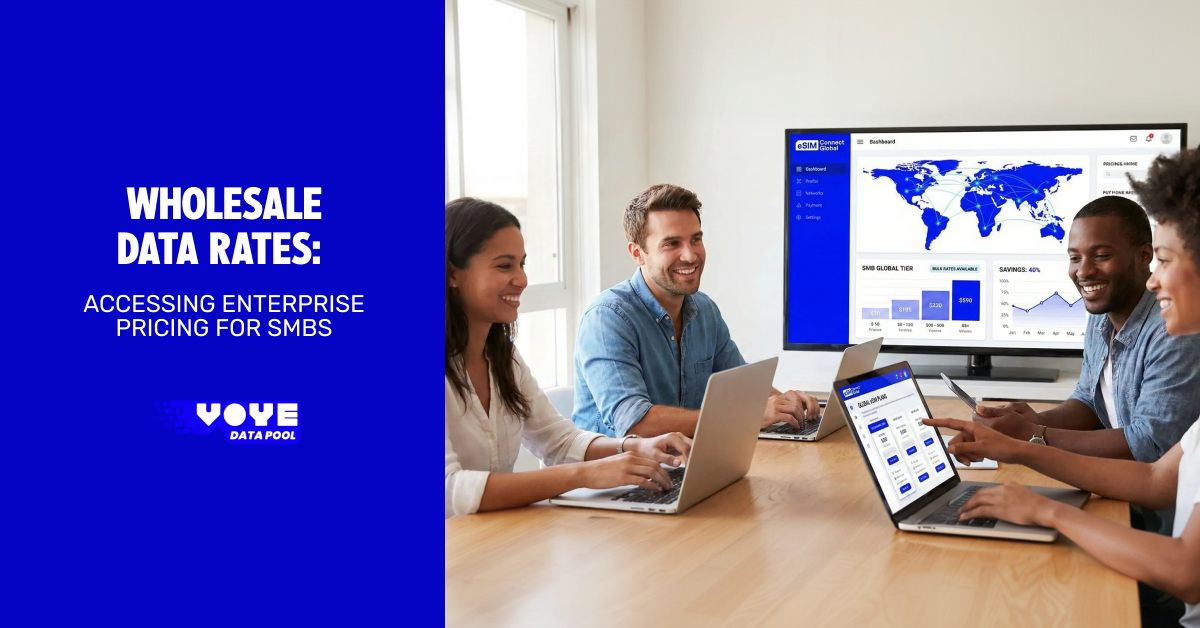
Wholesale data rates are changing this landscape by making enterprise level connectivity pricing accessible to SMBs. By purchasing data in bulk and leveraging centralized connectivity platforms, businesses can significantly reduce costs while maintaining global network reliability. Solutions like Voye Data Pool are helping SMBs unlock these benefits by offering secure, scalable eSIM connectivity across more than 130 countries through a single unified platform.

This detailed guide explains wholesale data rates, how they work, why they matter for SMBs, and how businesses can leverage modern connectivity platforms to gain a competitive advantage.

Understanding Wholesale Data Rates

What Are Wholesale Data Rates?

Wholesale data rates refer to bulk data pricing models offered by telecom carriers and connectivity providers. Instead of selling data plans individually to end users, providers sell large volumes of data at discounted rates to organizations that distribute or manage connectivity across multiple users or devices.

Traditionally, wholesale data access was limited to:

  • Large multinational corporations
  • Mobile virtual network operators
  • Global telecom resellers
  • Enterprise level technology providers

However, advancements in eSIM technology and connectivity management platforms have made wholesale data pricing accessible to SMBs without requiring complex telecom negotiations.

How Wholesale Data Pricing Works

Wholesale data pricing operates on a volume based purchasing structure. Businesses or connectivity providers negotiate contracts with telecom carriers that allow them to purchase data in large quantities. These large scale agreements reduce the cost per unit of data significantly.

The pricing structure typically includes:

  • Tier Based Data Pricing

Telecom providers often offer pricing tiers where costs decrease as data consumption increases. For example, purchasing 500 GB of data typically costs less per gigabyte compared to purchasing 50 GB.

  • Shared Data Pools

Wholesale plans often include shared data pools that allow businesses to distribute connectivity across multiple devices, teams, or geographic locations. This approach reduces unused data and improves overall efficiency.

  • Multi Network Agreements

Wholesale providers frequently partner with multiple carriers. This allows devices to connect to the strongest available network, improving reliability and coverage.

Why SMBs Face Challenges with Traditional Data Pricing

Higher Connectivity Costs

Most SMBs purchase connectivity through retail data plans designed for individual users. These plans typically include higher per gigabyte costs because they do not benefit from bulk pricing discounts.

For businesses managing multiple employees, devices, or remote operations, these costs can increase significantly over time.

Limited Bargaining Power

Large enterprises often negotiate customized telecom contracts based on high volume data usage. SMBs typically lack the scale required to secure similar pricing or service customization. As a result, they must rely on standard pricing packages that may not align with their operational needs.

Fragmented Connectivity Management

SMBs expanding across regions frequently manage multiple telecom providers. This creates challenges such as:

  • Multiple billing cycles and invoices
  • Inconsistent network quality across regions
  • Complex contract management
  • Increased administrative workload

Expensive International Roaming

Businesses with international operations or remote teams often face high roaming charges. Traditional roaming agreements may also limit data speeds or network reliability, affecting productivity and customer experience.

How Wholesale Data Rates Benefit SMBs

  • Significant Cost Reduction

Wholesale data pricing lowers the cost per gigabyte by distributing data consumption across multiple devices and users. This reduction allows SMBs to allocate resources more efficiently and invest in other growth initiatives.

  • Improved Budget Predictability

Wholesale data agreements often include predictable pricing structures. Businesses can forecast connectivity costs more accurately, improving financial planning and operational stability.

  • Centralized Connectivity Control

Wholesale data solutions typically include management dashboards that allow businesses to monitor usage, allocate data resources, and control connectivity across teams and devices. This centralized approach simplifies telecom management and reduces administrative burden.

  • Enhanced Global Connectivity

Wholesale connectivity platforms provide seamless international network access through partnerships with multiple telecom carriers. Businesses can maintain consistent performance across regions without managing separate roaming agreements.

The Role of eSIM Technology in Wholesale Connectivity

What Is eSIM Technology?

eSIM, or embedded SIM, is a digital SIM technology that allows devices to connect to mobile networks without using physical SIM cards. Instead of manually inserting or replacing SIM cards, businesses can remotely provision connectivity profiles through software platforms.

How eSIM Enhances Wholesale Data Access

  • Simplified Deployment

eSIM technology enables businesses to activate connectivity instantly across multiple devices without shipping physical SIM cards. This is particularly beneficial for remote teams or global IoT deployments.

  • Flexible Network Switching

Devices equipped with eSIM can switch between multiple network carriers automatically. This ensures stronger signal strength and improved connectivity performance.

  • Reduced Operational Complexity

Managing physical SIM cards involves logistics, inventory management, and potential replacement costs. eSIM eliminates these challenges by allowing remote configuration and updates.

  • Improved Security

Digital SIM provisioning reduces risks associated with SIM theft, unauthorized usage, and physical damage. Businesses can also deactivate connectivity remotely if devices are lost or compromised.

Voye Data Pool: Empowering SMB Connectivity

Overview of Voye Data Pool

Voye Data Pool powers global teams and devices with secure, scalable eSIM connectivity. The platform simplifies connectivity management through a centralized interface while offering reliable access across more than 130 countries.

By leveraging wholesale data agreements with global telecom providers, Voye Data Pool allows SMBs to access enterprise level pricing and network reliability without negotiating complex telecom contracts.

Key Features of Voye Data Pool

  • Global Coverage Across 130+ Countries

Voye Data Pool partners with multiple telecom operators worldwide to deliver consistent connectivity across international markets. Businesses can deploy devices globally without worrying about network compatibility or roaming limitations.

  • Centralized Connectivity Dashboard

The platform provides a unified interface that allows businesses to manage all connectivity operations in one place. Features include:

  • Real time data usage monitoring
  • Device level connectivity control
  • Data allocation across departments and teams
  • Usage alerts and performance insights
  • Scalable Data Pooling

Voye Data Pool enables businesses to share data allowances across multiple devices and users. This ensures that unused data from one device can be utilized by another, improving cost efficiency and reducing wastage.

  • Enterprise Grade Security

Security features within the platform include encrypted data transmission, remote device management, and compliance with international telecom regulations. These capabilities ensure secure connectivity across business operations.

Business Advantages of Wholesale Data Connectivity

Supporting Remote and Hybrid Workforces

Modern businesses rely heavily on remote collaboration tools, cloud platforms, and virtual communication systems. Wholesale connectivity ensures employees remain connected regardless of location without facing excessive roaming or connectivity interruptions.

Enabling Global Business Expansion

SMBs entering international markets require reliable connectivity for customer support, sales operations, and partner communications. Wholesale data platforms simplify global expansion by providing seamless multi country network access.

Enhancing IoT and Smart Device Deployments

Industries such as logistics, manufacturing, healthcare, and retail depend on connected devices for automation and data analytics. Wholesale data solutions provide scalable connectivity for IoT deployments while maintaining cost control.

Common Use Cases for Wholesale Data Solutions

  • Logistics and Transportation

Logistics companies use connected devices for shipment tracking, fleet monitoring, and route optimization. Wholesale connectivity reduces operational costs while improving real time visibility across transportation networks.

  • Retail and Payment Processing

Retail businesses require reliable connectivity for point of sale systems, inventory management, and customer engagement platforms. Shared data pools allow efficient connectivity distribution across multiple store locations.

  • Healthcare and Remote Monitoring

Healthcare providers use connected devices for patient monitoring, telemedicine services, and medical data transmission. Wholesale connectivity ensures uninterrupted communication between healthcare professionals and patients.

  • Travel and Hospitality Industry

Travel companies and hospitality providers rely on connectivity for reservation systems, customer service platforms, and global workforce communication. Wholesale connectivity improves operational efficiency and customer experience.

Retail Data Pricing vs Wholesale Data Pricing

Retail Data Pricing Model

Retail connectivity plans are designed for individual users and typically include:

  • Fixed data allocations per device
  • Higher pricing per gigabyte
  • Limited flexibility for scaling
  • Separate billing for each connection

Wholesale Data Pricing Model

Wholesale connectivity solutions provide:

  • Bulk data purchasing discounts
  • Shared data pools across multiple devices
  • Centralized connectivity management
  • Flexible scalability aligned with business growth

How SMBs Can Access Wholesale Data Rates

Partner with Connectivity Platforms

Connectivity platforms like Voye Data Pool act as intermediaries between telecom providers and businesses. They negotiate bulk data agreements and offer simplified management tools that eliminate telecom complexity.

Analyze Business Connectivity Requirements

Before adopting wholesale data solutions, businesses should evaluate:

  • Number of connected devices
  • Monthly data consumption trends
  • Geographic coverage requirements
  • Security and compliance needs

Implement Data Pooling Strategies

Sharing data allowances across multiple users and devices reduces unused data and improves cost optimization.

Monitor Usage Analytics

Tracking connectivity patterns helps businesses adjust data allocation strategies and reduce unnecessary consumption.

Future Trends in Wholesale Connectivity

  • Rapid Growth of eSIM Adoption

eSIM technology is expected to become the standard for enterprise connectivity due to its flexibility and simplified deployment process.

  • Expansion of IoT Ecosystems

As industries adopt automation and connected device technologies, demand for scalable wholesale data connectivity will continue to grow.

  • Integration with Cloud Infrastructure

Connectivity platforms are increasingly integrating with cloud systems to provide real time analytics, automation, and predictive connectivity optimization.

  • Multi Carrier Network Solutions

Future connectivity solutions will rely on multiple carrier partnerships to improve reliability and reduce downtime across global operations.

Why Voye Data Pool Is an Ideal Solution for SMBs

  • Simplified Telecom Management

Voye Data Pool eliminates the complexity of managing multiple network providers through a single unified platform.

  • Access to Enterprise Level Pricing

Through wholesale data agreements, SMBs can benefit from competitive pricing traditionally reserved for large enterprises.

  • Flexible and Scalable Connectivity

Businesses can scale connectivity based on operational growth without renegotiating contracts or changing infrastructure.

  • Reliable Global Performance

With coverage across more than 130 countries, Voye Data Pool supports seamless global operations with consistent network quality.

Best Practices for Implementing Wholesale Data Connectivity

  • Conduct Regular Connectivity Audits

Audits help businesses identify inefficiencies, reduce unused data, and improve connectivity performance.

  • Train Internal Teams

Ensuring IT and operations teams understand connectivity management platforms improves implementation success and operational efficiency.

  • Establish Data Usage Policies

Clear usage guidelines help control connectivity costs and maintain efficient resource allocation.

  • Use Advanced Analytics Tools

Analytics provide insights into consumption patterns and help businesses optimize connectivity strategies.

Conclusion

Wholesale data rates are transforming how small and medium sized businesses access global connectivity. By providing enterprise-level pricing, centralized management, and scalable network access, wholesale connectivity solutions enable SMBs to compete effectively in an increasingly digital business environment.

Voye Data Pool simplifies this transformation by offering secure, scalable eSIM connectivity across more than 130 countries through a single platform. By leveraging wholesale data agreements, centralized management tools, and advanced security features, businesses can reduce connectivity costs while improving operational efficiency and global reach.

As businesses continue to adopt digital transformation strategies and expand internationally, wholesale data connectivity will become an essential component of sustainable growth. SMBs that adopt solutions like Voye Data Pool will be better positioned to scale operations, support remote teams, and deliver superior customer experiences in a connected global marketplace.

Reliable internet connectivity has become one of the most critical resources for modern businesses. From cloud based collaboration tools to customer relationship management systems and IoT devices, nearly every operational function now depends on seamless data access. While large enterprises typically enjoy competitive telecom pricing through bulk contracts, small and medium sized businesses often face higher data costs and limited flexibility. This pricing imbalance can restrict growth, increase operational expenses, and slow digital transformation.

Wholesale data rates are changing this landscape by making enterprise level connectivity pricing accessible to SMBs. By purchasing data in bulk and leveraging centralized connectivity platforms, businesses can significantly reduce costs while maintaining global network reliability. Solutions like Voye Data Pool are helping SMBs unlock these benefits by offering secure, scalable eSIM connectivity across more than 130 countries through a single unified platform.

This detailed guide explains wholesale data rates, how they work, why they matter for SMBs, and how businesses can leverage modern connectivity platforms to gain a competitive advantage.

Understanding Wholesale Data Rates

What Are Wholesale Data Rates?

Wholesale data rates refer to bulk data pricing models offered by telecom carriers and connectivity providers. Instead of selling data plans individually to end users, providers sell large volumes of data at discounted rates to organizations that distribute or manage connectivity across multiple users or devices.

Traditionally, wholesale data access was limited to:

  • Large multinational corporations
  • Mobile virtual network operators
  • Global telecom resellers
  • Enterprise level technology providers

However, advancements in eSIM technology and connectivity management platforms have made wholesale data pricing accessible to SMBs without requiring complex telecom negotiations.

How Wholesale Data Pricing Works

Wholesale data pricing operates on a volume based purchasing structure. Businesses or connectivity providers negotiate contracts with telecom carriers that allow them to purchase data in large quantities. These large scale agreements reduce the cost per unit of data significantly.

The pricing structure typically includes:

  • Tier Based Data Pricing

Telecom providers often offer pricing tiers where costs decrease as data consumption increases. For example, purchasing 500 GB of data typically costs less per gigabyte compared to purchasing 50 GB.

  • Shared Data Pools

Wholesale plans often include shared data pools that allow businesses to distribute connectivity across multiple devices, teams, or geographic locations. This approach reduces unused data and improves overall efficiency.

  • Multi Network Agreements

Wholesale providers frequently partner with multiple carriers. This allows devices to connect to the strongest available network, improving reliability and coverage.

Why SMBs Face Challenges with Traditional Data Pricing

Higher Connectivity Costs

Most SMBs purchase connectivity through retail data plans designed for individual users. These plans typically include higher per gigabyte costs because they do not benefit from bulk pricing discounts.

For businesses managing multiple employees, devices, or remote operations, these costs can increase significantly over time.

Limited Bargaining Power

Large enterprises often negotiate customized telecom contracts based on high volume data usage. SMBs typically lack the scale required to secure similar pricing or service customization. As a result, they must rely on standard pricing packages that may not align with their operational needs.

Fragmented Connectivity Management

SMBs expanding across regions frequently manage multiple telecom providers. This creates challenges such as:

  • Multiple billing cycles and invoices
  • Inconsistent network quality across regions
  • Complex contract management
  • Increased administrative workload

Expensive International Roaming

Businesses with international operations or remote teams often face high roaming charges. Traditional roaming agreements may also limit data speeds or network reliability, affecting productivity and customer experience.

How Wholesale Data Rates Benefit SMBs

  • Significant Cost Reduction

Wholesale data pricing lowers the cost per gigabyte by distributing data consumption across multiple devices and users. This reduction allows SMBs to allocate resources more efficiently and invest in other growth initiatives.

  • Improved Budget Predictability

Wholesale data agreements often include predictable pricing structures. Businesses can forecast connectivity costs more accurately, improving financial planning and operational stability.

  • Centralized Connectivity Control

Wholesale data solutions typically include management dashboards that allow businesses to monitor usage, allocate data resources, and control connectivity across teams and devices. This centralized approach simplifies telecom management and reduces administrative burden.

  • Enhanced Global Connectivity

Wholesale connectivity platforms provide seamless international network access through partnerships with multiple telecom carriers. Businesses can maintain consistent performance across regions without managing separate roaming agreements.

The Role of eSIM Technology in Wholesale Connectivity

What Is eSIM Technology?

eSIM, or embedded SIM, is a digital SIM technology that allows devices to connect to mobile networks without using physical SIM cards. Instead of manually inserting or replacing SIM cards, businesses can remotely provision connectivity profiles through software platforms.

How eSIM Enhances Wholesale Data Access

  • Simplified Deployment

eSIM technology enables businesses to activate connectivity instantly across multiple devices without shipping physical SIM cards. This is particularly beneficial for remote teams or global IoT deployments.

  • Flexible Network Switching

Devices equipped with eSIM can switch between multiple network carriers automatically. This ensures stronger signal strength and improved connectivity performance.

  • Reduced Operational Complexity

Managing physical SIM cards involves logistics, inventory management, and potential replacement costs. eSIM eliminates these challenges by allowing remote configuration and updates.

  • Improved Security

Digital SIM provisioning reduces risks associated with SIM theft, unauthorized usage, and physical damage. Businesses can also deactivate connectivity remotely if devices are lost or compromised.

Voye Data Pool: Empowering SMB Connectivity

Overview of Voye Data Pool

Voye Data Pool powers global teams and devices with secure, scalable eSIM connectivity. The platform simplifies connectivity management through a centralized interface while offering reliable access across more than 130 countries.

By leveraging wholesale data agreements with global telecom providers, Voye Data Pool allows SMBs to access enterprise level pricing and network reliability without negotiating complex telecom contracts.

Key Features of Voye Data Pool

  • Global Coverage Across 130+ Countries

Voye Data Pool partners with multiple telecom operators worldwide to deliver consistent connectivity across international markets. Businesses can deploy devices globally without worrying about network compatibility or roaming limitations.

  • Centralized Connectivity Dashboard

The platform provides a unified interface that allows businesses to manage all connectivity operations in one place. Features include:

  • Real time data usage monitoring
  • Device level connectivity control
  • Data allocation across departments and teams
  • Usage alerts and performance insights
  • Scalable Data Pooling

Voye Data Pool enables businesses to share data allowances across multiple devices and users. This ensures that unused data from one device can be utilized by another, improving cost efficiency and reducing wastage.

  • Enterprise Grade Security

Security features within the platform include encrypted data transmission, remote device management, and compliance with international telecom regulations. These capabilities ensure secure connectivity across business operations.

Business Advantages of Wholesale Data Connectivity

Supporting Remote and Hybrid Workforces

Modern businesses rely heavily on remote collaboration tools, cloud platforms, and virtual communication systems. Wholesale connectivity ensures employees remain connected regardless of location without facing excessive roaming or connectivity interruptions.

Enabling Global Business Expansion

SMBs entering international markets require reliable connectivity for customer support, sales operations, and partner communications. Wholesale data platforms simplify global expansion by providing seamless multi country network access.

Enhancing IoT and Smart Device Deployments

Industries such as logistics, manufacturing, healthcare, and retail depend on connected devices for automation and data analytics. Wholesale data solutions provide scalable connectivity for IoT deployments while maintaining cost control.

Common Use Cases for Wholesale Data Solutions

  • Logistics and Transportation

Logistics companies use connected devices for shipment tracking, fleet monitoring, and route optimization. Wholesale connectivity reduces operational costs while improving real time visibility across transportation networks.

  • Retail and Payment Processing

Retail businesses require reliable connectivity for point of sale systems, inventory management, and customer engagement platforms. Shared data pools allow efficient connectivity distribution across multiple store locations.

  • Healthcare and Remote Monitoring

Healthcare providers use connected devices for patient monitoring, telemedicine services, and medical data transmission. Wholesale connectivity ensures uninterrupted communication between healthcare professionals and patients.

  • Travel and Hospitality Industry

Travel companies and hospitality providers rely on connectivity for reservation systems, customer service platforms, and global workforce communication. Wholesale connectivity improves operational efficiency and customer experience.

Retail Data Pricing vs Wholesale Data Pricing

Retail Data Pricing Model

Retail connectivity plans are designed for individual users and typically include:

  • Fixed data allocations per device
  • Higher pricing per gigabyte
  • Limited flexibility for scaling
  • Separate billing for each connection

Wholesale Data Pricing Model

Wholesale connectivity solutions provide:

  • Bulk data purchasing discounts
  • Shared data pools across multiple devices
  • Centralized connectivity management
  • Flexible scalability aligned with business growth

How SMBs Can Access Wholesale Data Rates

Partner with Connectivity Platforms

Connectivity platforms like Voye Data Pool act as intermediaries between telecom providers and businesses. They negotiate bulk data agreements and offer simplified management tools that eliminate telecom complexity.

Analyze Business Connectivity Requirements

Before adopting wholesale data solutions, businesses should evaluate:

  • Number of connected devices
  • Monthly data consumption trends
  • Geographic coverage requirements
  • Security and compliance needs

Implement Data Pooling Strategies

Sharing data allowances across multiple users and devices reduces unused data and improves cost optimization.

Monitor Usage Analytics

Tracking connectivity patterns helps businesses adjust data allocation strategies and reduce unnecessary consumption.

Future Trends in Wholesale Connectivity

  • Rapid Growth of eSIM Adoption

eSIM technology is expected to become the standard for enterprise connectivity due to its flexibility and simplified deployment process.

  • Expansion of IoT Ecosystems

As industries adopt automation and connected device technologies, demand for scalable wholesale data connectivity will continue to grow.

  • Integration with Cloud Infrastructure

Connectivity platforms are increasingly integrating with cloud systems to provide real time analytics, automation, and predictive connectivity optimization.

  • Multi Carrier Network Solutions

Future connectivity solutions will rely on multiple carrier partnerships to improve reliability and reduce downtime across global operations.

Why Voye Data Pool Is an Ideal Solution for SMBs

  • Simplified Telecom Management

Voye Data Pool eliminates the complexity of managing multiple network providers through a single unified platform.

  • Access to Enterprise Level Pricing

Through wholesale data agreements, SMBs can benefit from competitive pricing traditionally reserved for large enterprises.

  • Flexible and Scalable Connectivity

Businesses can scale connectivity based on operational growth without renegotiating contracts or changing infrastructure.

  • Reliable Global Performance

With coverage across more than 130 countries, Voye Data Pool supports seamless global operations with consistent network quality.

Best Practices for Implementing Wholesale Data Connectivity

  • Conduct Regular Connectivity Audits

Audits help businesses identify inefficiencies, reduce unused data, and improve connectivity performance.

  • Train Internal Teams

Ensuring IT and operations teams understand connectivity management platforms improves implementation success and operational efficiency.

  • Establish Data Usage Policies

Clear usage guidelines help control connectivity costs and maintain efficient resource allocation.

  • Use Advanced Analytics Tools

Analytics provide insights into consumption patterns and help businesses optimize connectivity strategies.

Conclusion

Wholesale data rates are transforming how small and medium sized businesses access global connectivity. By providing enterprise-level pricing, centralized management, and scalable network access, wholesale connectivity solutions enable SMBs to compete effectively in an increasingly digital business environment.

Voye Data Pool simplifies this transformation by offering secure, scalable eSIM connectivity across more than 130 countries through a single platform. By leveraging wholesale data agreements, centralized management tools, and advanced security features, businesses can reduce connectivity costs while improving operational efficiency and global reach.

As businesses continue to adopt digital transformation strategies and expand internationally, wholesale data connectivity will become an essential component of sustainable growth. SMBs that adopt solutions like Voye Data Pool will be better positioned to scale operations, support remote teams, and deliver superior customer experiences in a connected global marketplace.

Related Articles

  • Carrier Grade NAT vs. Public IP: What’s Best for Business?

    Carrier-grade NAT and public IPs both play important roles in modern business networking, but choosing the right option depends on scalability, security, remote access, and performance needs. This blog explains the differences between shared NAT environments and dedicated public IP deployment, including their impact on VPN stability, VoIP communication, cloud infrastructure, and enterprise connectivity. It also highlights how flexible solutions like a custom data pool and Voye Data Pool can support growing businesses with smarter bandwidth and connectivity management.

  • Construction Site Internet: Rapid Deployment Solutions

    Reliable internet is essential for today’s connected construction sites. This guide explores the best construction site internet solutions for 2026, including 5G, satellite, hybrid networks, and enterprise eSIM connectivity. Learn how rapid deployment improves communication, supports IoT devices, enables cloud-based project management, and keeps teams productive across temporary and remote job sites. Discover practical tips for choosing the right connectivity solution to minimise downtime, improve efficiency, and keep construction projects running smoothly from start to finish.

  • The Future of Business Roaming: Trends to Watch

    The future of business roaming is being shaped by eSIM technology, AI-driven automation, IoT connectivity, private 5G, and advanced telecom infrastructure. Businesses are adopting scalable and secure roaming solutions to support global operations, remote teams, and connected devices. From custom data pool models to intelligent network optimization, enterprises are prioritizing flexible connectivity strategies that improve operational efficiency, reduce roaming costs, and enhance international communication across rapidly evolving digital ecosystems.

  • Converting Your Fleet from Plastic SIMs to eSIMs

    Fleet connectivity is evolving rapidly as businesses shift to smarter, scalable solutions. The move to convert SIM to eSIM helps fleet managers improve operational efficiency, reduce downtime, and gain better control over data usage. With features like remote provisioning, multi-network access, and integration with a custom data pool and Voye Data Pool, fleets can streamline connectivity management. This transition supports cost optimization, enhances security, and prepares fleet operations for future technologies and expansion across regions with seamless network performance.

  • Micromobility: Data Plans for Scooter and Bike Rentals

    Reliable connectivity powers every successful micromobility service. Learn how eSIM-enabled IoT data plans help scooter and bike rental operators deliver real-time tracking, seamless vehicle access, secure cloud communication, and efficient fleet management. Discover how scalable global connectivity improves rider experiences, supports business growth, and simplifies multi-city deployments. See how Voye Data Pool provides dependable eSIM solutions designed to keep scooter and bike rental fleets connected wherever they operate.

  • Providing Connectivity as an Incentive Travel Reward

    Modern incentive travel programs succeed when they combine recognition with practical value. Providing connectivity as an incentive travel reward helps employees and sales professionals stay connected, productive, and stress-free while traveling internationally. By leveraging incentive travel data, organizations can better understand traveler needs and create more personalized reward experiences. Seamless mobile connectivity enhances convenience, safety, and engagement, making incentive trips more memorable while supporting business goals, employee satisfaction, and long-term performance.