Get 5% Discount using the code VOYE15 Buy eSIM close

Micromobility: Data Plans for Scooter and Bike Rentals

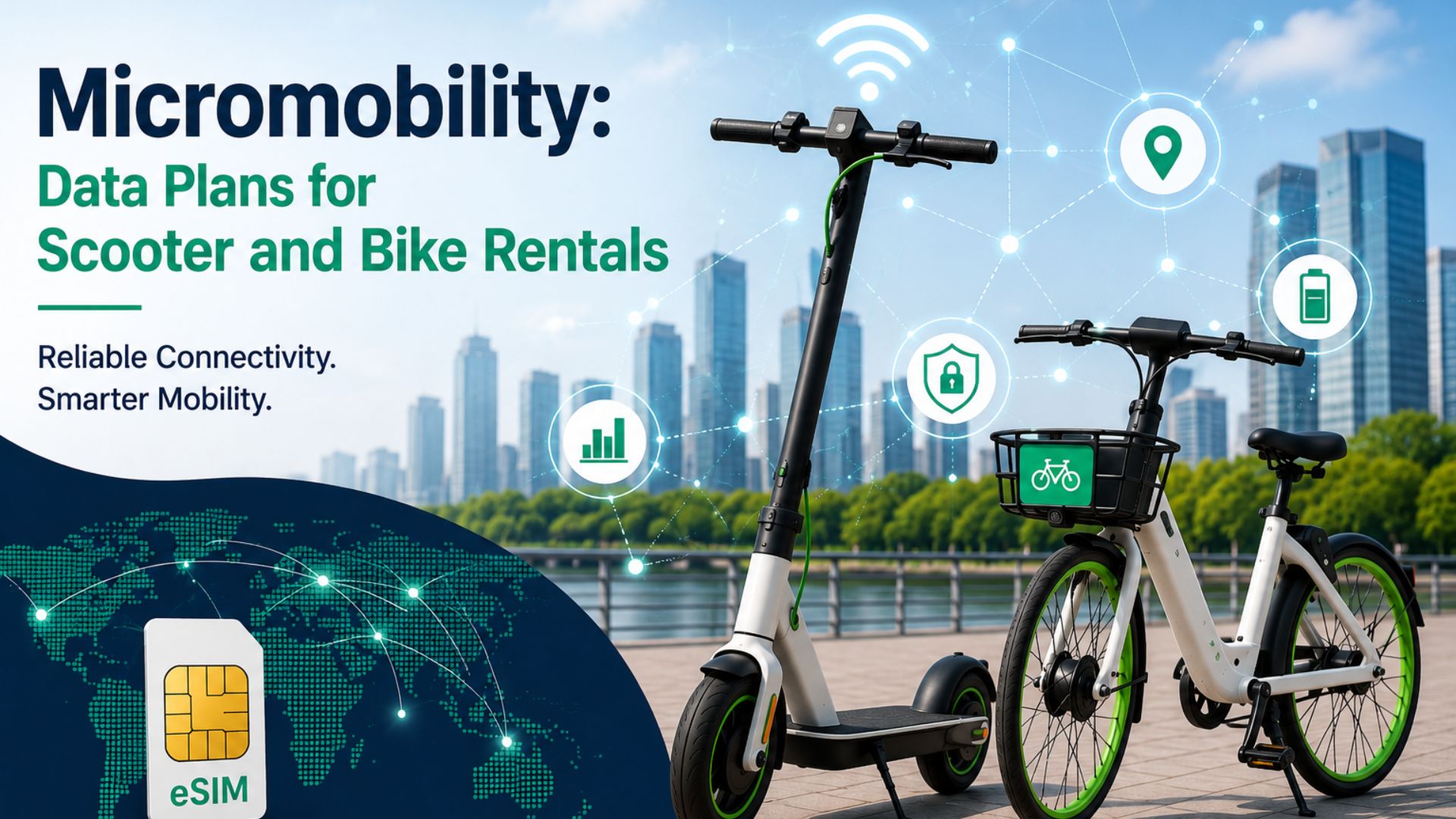
Reliable connectivity powers every successful micromobility service. Learn how eSIM-enabled IoT data plans help scooter and bike rental operators deliver real-time tracking, seamless vehicle access, secure cloud communication, and efficient fleet management. Discover how scalable global connectivity improves rider experiences, supports business growth, and simplifies multi-city deployments. See how Voye Data Pool provides dependable eSIM solutions designed to keep scooter and bike rental fleets connected wherever they operate.

Voye Data Pool Team
July 24, 2026 dot Read 6 min read
share Share
scooter rental app

Urban transportation is changing rapidly. More people are choosing shared scooters and bikes for short-distance travel because they are convenient, affordable, and environmentally friendly. From daily commuting to tourism and campus transportation, micromobility services continue to expand across cities worldwide.

Behind every successful shared mobility platform is seamless connectivity. Every scooter or bike must communicate with the cloud, share location updates, monitor battery levels, and process user requests in real time. Without reliable connectivity, the user experience suffers, operational costs increase, and fleet management becomes difficult.

A scooter rental app relies heavily on secure and uninterrupted data communication to provide a smooth experience for riders while helping operators manage thousands of connected vehicles efficiently. Choosing the right IoT connectivity partner is therefore an essential part of building a scalable micromobility business.

Why Connectivity Matters in Micromobility?

Scooters and bikes are no longer simple vehicles. They are connected IoT devices that constantly exchange information with cloud platforms.

Every ride generates valuable data, including:

  • GPS location
  • Battery status
  • Vehicle availability
  • Ride duration
  • Lock and unlock commands
  • Maintenance alerts
  • Usage analytics

This continuous flow of information enables operators to monitor fleets, improve customer service, and optimize business performance.

If connectivity becomes unreliable, users may experience failed unlock requests, inaccurate location information, or interrupted rides. These issues can negatively impact customer satisfaction and operational efficiency.

How a Scooter Rental App Uses Mobile Data?

A modern scooter rental app connects riders, vehicles, and backend systems through mobile networks.

The typical user journey includes:

Finding Nearby Vehicles

The application displays available scooters and bikes based on live GPS data. Every vehicle regularly sends its location to the cloud, allowing users to locate the nearest option quickly.

Instant Unlocking

Once a rider scans the QR code, the app communicates with the scooter’s onboard IoT module. The unlock command is transmitted in seconds, creating a seamless rental experience.

Live Ride Monitoring

During the ride, connected vehicles continuously transmit important information such as:

  • Speed
  • Route
  • Battery level
  • Ride duration
  • Vehicle health

This data helps operators improve safety and monitor fleet performance.

Ending the Ride

After the ride ends, the scooter securely uploads ride information, updates availability, and processes billing through cloud services.

All these steps depend on consistent mobile connectivity.

Challenges Faced by Scooter and Bike Rental Operators

As micromobility businesses expand into multiple cities and countries, maintaining reliable connectivity becomes increasingly challenging.

Some common issues include:

Network Coverage

Vehicles travel through busy city centers, residential neighborhoods, underground parking areas, and suburban locations. Poor network coverage can interrupt communication between the scooter and backend systems.

Roaming Across Regions

International operators often deploy fleets across multiple countries. Managing different SIM providers for each market increases operational complexity.

Fleet Scalability

Adding hundreds or thousands of connected vehicles requires a scalable connectivity platform capable of managing large IoT deployments.

Device Security

Every connected scooter represents an IoT endpoint. Secure communication helps protect customer information, ride data, and fleet operations from cyber threats.

Cost Control

Operators need predictable connectivity expenses while ensuring reliable performance throughout the fleet.

Benefits of Dedicated IoT Data Plans

Purpose-built IoT connectivity offers several advantages over traditional consumer SIM cards.

Reliable Global Coverage

IoT-enabled SIMs connect to multiple carrier networks, providing stronger coverage across different regions. This helps reduce connectivity interruptions as scooters move through varying network conditions.

Remote SIM Management

Fleet operators can monitor SIM performance, activate or suspend connections, and manage thousands of devices from a centralized dashboard.

Optimized Data Usage

Scooters typically transmit small but frequent data packets. IoT data plans are designed to efficiently support this communication without unnecessary costs.

Improved Fleet Visibility

Real-time connectivity enables operators to:

  • Track vehicles
  • Monitor battery health
  • Detect inactive scooters
  • Schedule maintenance
  • Improve fleet utilization

This visibility supports better operational decisions.

Enhanced Customer Experience

Reliable connectivity helps riders:

  • Find available vehicles faster
  • Unlock scooters instantly
  • Receive accurate ride information
  • Complete payments smoothly

A better user experience often translates into higher customer retention and increased ride frequency.

Supporting Smarter Fleet Operations

Data collected from connected scooters provides valuable operational insights beyond daily ride management.

Fleet managers can analyze:

  • High-demand pickup zones
  • Peak riding hours
  • Battery replacement schedules
  • Vehicle utilization rates
  • Maintenance frequency
  • Route popularity

These insights allow businesses to optimize fleet distribution, reduce downtime, and maximize vehicle availability.

Predictive maintenance also becomes possible by identifying unusual performance patterns before mechanical failures occur.

Why Global Connectivity Matters?

Many mobility providers now operate across multiple cities and international markets.

Instead of managing separate connectivity providers in every country, businesses increasingly prefer a unified IoT connectivity solution that simplifies deployment while maintaining consistent performance.

Global connectivity offers:

  • Easier fleet expansion
  • Centralized SIM management
  • Consistent data services
  • Reduced operational complexity
  • Faster deployment into new regions

This flexibility allows businesses to scale confidently without rebuilding their connectivity infrastructure for every new market.

How Voye Data Pool Supports Connected Mobility?

As micromobility continues to evolve, dependable IoT connectivity becomes the foundation of successful fleet operations.

Voye Data Pool provides scalable global connectivity solutions designed to support connected devices across diverse industries, including transportation and mobility.

With reliable IoT data services, mobility providers can:

  • Connect scooters and bikes across multiple regions
  • Maintain real-time fleet visibility
  • Enable secure cloud communication
  • Support scalable IoT deployments
  • Simplify global connectivity management

Whether launching a new shared mobility platform or expanding an existing fleet, reliable connectivity helps operators deliver a seamless experience while improving operational efficiency.

Future of Connected Micromobility

Micromobility is expected to become even smarter with technologies such as artificial intelligence, predictive maintenance, edge computing, and connected infrastructure.

Future scooter rental platforms may support:

  • AI-powered fleet optimization
  • Smart parking detection
  • Automated maintenance scheduling
  • Advanced rider safety features
  • Integrated smart city infrastructure

Each innovation will rely on secure, fast, and dependable IoT connectivity.

Businesses investing in reliable data solutions today will be better prepared to meet future mobility demands while delivering safer, more efficient transportation services.

Conclusion

A successful scooter rental app depends on more than an intuitive user interface. Reliable connectivity enables real-time tracking, secure communication, fleet management, and smooth customer experiences.

As shared mobility continues to expand globally, choosing the right IoT connectivity partner becomes a strategic advantage. Scalable data plans help operators improve fleet efficiency, reduce downtime, and support seamless expansion into new markets.

With trusted global IoT connectivity from Voye Data Pool, mobility providers can confidently power connected scooter and bike rental services while building smarter, more reliable transportation networks.


Urban transportation is changing rapidly. More people are choosing shared scooters and bikes for short-distance travel because they are convenient, affordable, and environmentally friendly. From daily commuting to tourism and campus transportation, micromobility services continue to expand across cities worldwide.

Behind every successful shared mobility platform is seamless connectivity. Every scooter or bike must communicate with the cloud, share location updates, monitor battery levels, and process user requests in real time. Without reliable connectivity, the user experience suffers, operational costs increase, and fleet management becomes difficult.

A scooter rental app relies heavily on secure and uninterrupted data communication to provide a smooth experience for riders while helping operators manage thousands of connected vehicles efficiently. Choosing the right IoT connectivity partner is therefore an essential part of building a scalable micromobility business.

Why Connectivity Matters in Micromobility?

Scooters and bikes are no longer simple vehicles. They are connected IoT devices that constantly exchange information with cloud platforms.

Every ride generates valuable data, including:

  • GPS location
  • Battery status
  • Vehicle availability
  • Ride duration
  • Lock and unlock commands
  • Maintenance alerts
  • Usage analytics

This continuous flow of information enables operators to monitor fleets, improve customer service, and optimize business performance.

If connectivity becomes unreliable, users may experience failed unlock requests, inaccurate location information, or interrupted rides. These issues can negatively impact customer satisfaction and operational efficiency.

How a Scooter Rental App Uses Mobile Data?

A modern scooter rental app connects riders, vehicles, and backend systems through mobile networks.

The typical user journey includes:

Finding Nearby Vehicles

The application displays available scooters and bikes based on live GPS data. Every vehicle regularly sends its location to the cloud, allowing users to locate the nearest option quickly.

Instant Unlocking

Once a rider scans the QR code, the app communicates with the scooter’s onboard IoT module. The unlock command is transmitted in seconds, creating a seamless rental experience.

Live Ride Monitoring

During the ride, connected vehicles continuously transmit important information such as:

  • Speed
  • Route
  • Battery level
  • Ride duration
  • Vehicle health

This data helps operators improve safety and monitor fleet performance.

Ending the Ride

After the ride ends, the scooter securely uploads ride information, updates availability, and processes billing through cloud services.

All these steps depend on consistent mobile connectivity.

Challenges Faced by Scooter and Bike Rental Operators

As micromobility businesses expand into multiple cities and countries, maintaining reliable connectivity becomes increasingly challenging.

Some common issues include:

Network Coverage

Vehicles travel through busy city centers, residential neighborhoods, underground parking areas, and suburban locations. Poor network coverage can interrupt communication between the scooter and backend systems.

Roaming Across Regions

International operators often deploy fleets across multiple countries. Managing different SIM providers for each market increases operational complexity.

Fleet Scalability

Adding hundreds or thousands of connected vehicles requires a scalable connectivity platform capable of managing large IoT deployments.

Device Security

Every connected scooter represents an IoT endpoint. Secure communication helps protect customer information, ride data, and fleet operations from cyber threats.

Cost Control

Operators need predictable connectivity expenses while ensuring reliable performance throughout the fleet.

Benefits of Dedicated IoT Data Plans

Purpose-built IoT connectivity offers several advantages over traditional consumer SIM cards.

Reliable Global Coverage

IoT-enabled SIMs connect to multiple carrier networks, providing stronger coverage across different regions. This helps reduce connectivity interruptions as scooters move through varying network conditions.

Remote SIM Management

Fleet operators can monitor SIM performance, activate or suspend connections, and manage thousands of devices from a centralized dashboard.

Optimized Data Usage

Scooters typically transmit small but frequent data packets. IoT data plans are designed to efficiently support this communication without unnecessary costs.

Improved Fleet Visibility

Real-time connectivity enables operators to:

  • Track vehicles
  • Monitor battery health
  • Detect inactive scooters
  • Schedule maintenance
  • Improve fleet utilization

This visibility supports better operational decisions.

Enhanced Customer Experience

Reliable connectivity helps riders:

  • Find available vehicles faster
  • Unlock scooters instantly
  • Receive accurate ride information
  • Complete payments smoothly

A better user experience often translates into higher customer retention and increased ride frequency.

Supporting Smarter Fleet Operations

Data collected from connected scooters provides valuable operational insights beyond daily ride management.

Fleet managers can analyze:

  • High-demand pickup zones
  • Peak riding hours
  • Battery replacement schedules
  • Vehicle utilization rates
  • Maintenance frequency
  • Route popularity

These insights allow businesses to optimize fleet distribution, reduce downtime, and maximize vehicle availability.

Predictive maintenance also becomes possible by identifying unusual performance patterns before mechanical failures occur.

Why Global Connectivity Matters?

Many mobility providers now operate across multiple cities and international markets.

Instead of managing separate connectivity providers in every country, businesses increasingly prefer a unified IoT connectivity solution that simplifies deployment while maintaining consistent performance.

Global connectivity offers:

  • Easier fleet expansion
  • Centralized SIM management
  • Consistent data services
  • Reduced operational complexity
  • Faster deployment into new regions

This flexibility allows businesses to scale confidently without rebuilding their connectivity infrastructure for every new market.

How Voye Data Pool Supports Connected Mobility?

As micromobility continues to evolve, dependable IoT connectivity becomes the foundation of successful fleet operations.

Voye Data Pool provides scalable global connectivity solutions designed to support connected devices across diverse industries, including transportation and mobility.

With reliable IoT data services, mobility providers can:

  • Connect scooters and bikes across multiple regions
  • Maintain real-time fleet visibility
  • Enable secure cloud communication
  • Support scalable IoT deployments
  • Simplify global connectivity management

Whether launching a new shared mobility platform or expanding an existing fleet, reliable connectivity helps operators deliver a seamless experience while improving operational efficiency.

Future of Connected Micromobility

Micromobility is expected to become even smarter with technologies such as artificial intelligence, predictive maintenance, edge computing, and connected infrastructure.

Future scooter rental platforms may support:

  • AI-powered fleet optimization
  • Smart parking detection
  • Automated maintenance scheduling
  • Advanced rider safety features
  • Integrated smart city infrastructure

Each innovation will rely on secure, fast, and dependable IoT connectivity.

Businesses investing in reliable data solutions today will be better prepared to meet future mobility demands while delivering safer, more efficient transportation services.

Conclusion

A successful scooter rental app depends on more than an intuitive user interface. Reliable connectivity enables real-time tracking, secure communication, fleet management, and smooth customer experiences.

As shared mobility continues to expand globally, choosing the right IoT connectivity partner becomes a strategic advantage. Scalable data plans help operators improve fleet efficiency, reduce downtime, and support seamless expansion into new markets.

With trusted global IoT connectivity from Voye Data Pool, mobility providers can confidently power connected scooter and bike rental services while building smarter, more reliable transportation networks.

Related Articles

  • Backup Internet for Retail Stores and Kiosks

    Internet outages can disrupt payment systems, inventory management, and customer experiences in retail stores and kiosks. This blog explains how backup internet for retail powered by eSIM technology helps maintain continuous connectivity, supports business continuity, and minimizes downtime. Learn how Voye Data Pool delivers reliable, scalable connectivity solutions that keep retail operations running smoothly across single locations and multi-store networks, ensuring seamless transactions and uninterrupted access to critical business applications.

  • How HR Can Support Traveling Employees with Seamless Connectivity

    Supporting employees on the move is more than just a convenience—it’s a necessity. This blog explores how HR can ensure traveling employees stay connected seamlessly, maintaining productivity and effective communication. From leveraging modern connectivity solutions to practical tips for managing remote work on the go, discover strategies that keep your team connected anytime, anywhere.

  • How to Handle “Shadow IT” in Mobile Data Usage?

    Shadow IT in mobile data usage can create significant security, compliance, visibility, and cost management challenges for organizations. This blog explores practical strategies IT managers can use to identify unauthorized applications, strengthen mobile governance, improve security controls, and increase operational visibility. Learn how proactive monitoring, employee education, centralized oversight, and effective mobile data management can help organizations reduce risk, improve compliance, and maintain productivity in increasingly mobile and distributed work environments.

  • Staying Connected: A Guide for Relocating Employees

    Relocating employees often face challenges in staying connected and productive during a move. This blog explains how reliable internet access, smart planning, and flexible connectivity solutions can support smooth transitions for remote and hybrid professionals. It highlights the importance of maintaining communication, avoiding work disruptions, and preparing a dependable relocation internet setup before moving day. Readers will also learn practical strategies to reduce relocation stress, improve productivity, and ensure uninterrupted digital access while adapting comfortably to a new home and work environment.

  • Managing Digital Nomads: A Guide for HR Directors

    Managing digital nomads requires HR directors to balance workforce flexibility, compliance, cybersecurity, employee engagement, and operational efficiency. This guide covers essential strategies for supporting globally distributed teams through structured remote work policies, secure connectivity solutions, workforce mobility planning, and scalable management practices. Learn how businesses can improve productivity, maintain employee well-being, strengthen remote work culture, and optimize global workforce operations while supporting digital nomads with reliable communication and connectivity infrastructure across multiple regions.