Get 5% Discount using the code VOYE15 Buy eSIM close

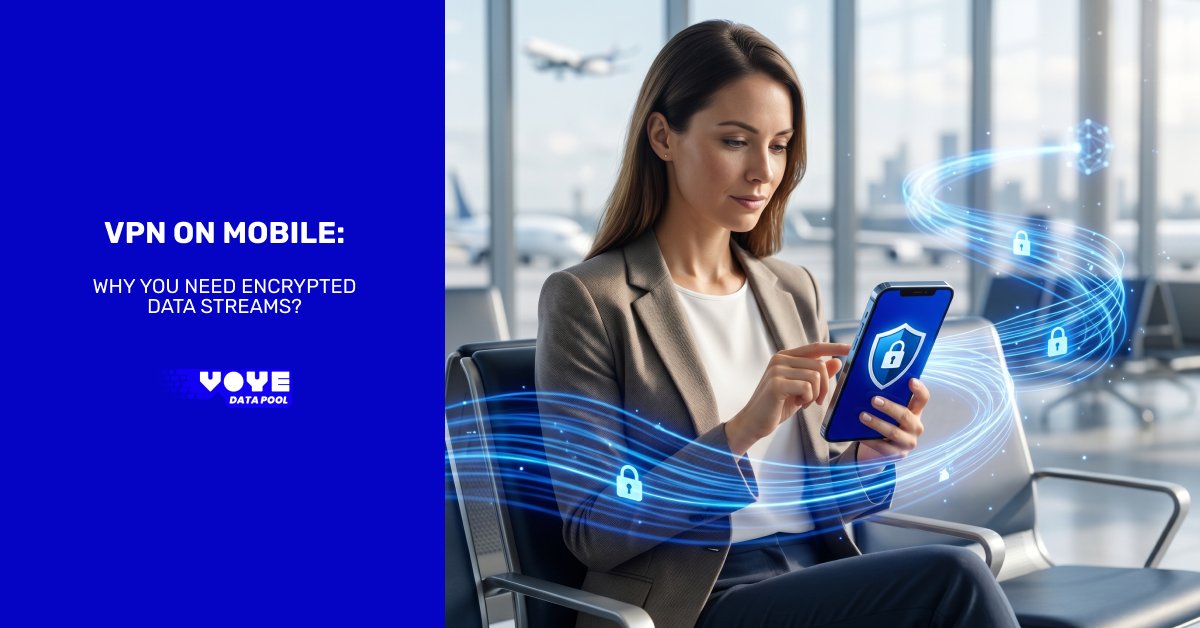
VPN on Mobile: Why You Need Encrypted Data Streams?

Mobile VPNs have become essential for securing enterprise data in an increasingly connected world. By encrypting data streams, they protect sensitive business information from cyber threats, especially across public and unstable networks. Combined with strategies like custom data pool management and solutions such as Voye Data Pool, organizations can enhance both security and operational efficiency. This approach enables safe remote work, ensures compliance, and strengthens overall IT infrastructure, making mobile VPNs a critical component of modern enterprise security frameworks.

Voye Data Pool Team
March 26, 2026 dot Read 6 min read
share Share
VPN on Mobile: Why You Need Encrypted Data Streams?

Mobile devices have become the backbone of enterprise productivity. From financial transactions to confidential communications, smartphones and tablets now handle critical business operations daily. However, this increased reliance on mobile connectivity also exposes organizations to a growing range of cyber threats. Securing mobile data streams is no longer optional. It is a foundational requirement for enterprise IT and security teams.

A Virtual Private Network, commonly known as a VPN, plays a crucial role in protecting mobile data by encrypting internet traffic. For organizations managing distributed teams, remote workforces, and cloud-driven systems, understanding how VPNs safeguard mobile environments is essential.

What Is a Mobile VPN?

A mobile VPN is a security solution that encrypts internet traffic transmitted from a mobile device, ensuring that data remains private and protected from unauthorized access. Unlike traditional VPNs designed for static environments, mobile VPNs are optimized for fluctuating network conditions, such as switching between Wi-Fi and cellular data.

Key Characteristics of Mobile VPNs

  • Persistent connections even when network changes occur
  • Efficient handling of unstable connectivity
  • Strong encryption protocols tailored for mobile devices
  • Optimized power consumption through modern protocols like WireGuard, reducing the traditional battery drain associated with encrypted tunnels.

These features make mobile VPNs particularly valuable for enterprise users who rely on seamless and secure connectivity across different environments.

Why Encrypted Data Streams Matter?

Data transmitted over mobile networks is inherently vulnerable. Public Wi-Fi networks, unsecured hotspots, and even compromised cellular connections can expose sensitive information to cybercriminals.

Risks of Unencrypted Mobile Data

  • Data interception through man-in-the-middle attacks
  • Credential theft and unauthorized access
  • Exposure of financial and transactional data
  • Leakage of proprietary business information

Beyond standard app-level encryption (HTTPS), a Mobile VPN provides network-level obfuscation. It hides metadata and prevents attackers from identifying the destination of your traffic, effectively neutralizing DNS hijacking and targeted tracking. This is critical for industries dealing with financial data, intellectual property, and regulatory compliance.

How Mobile VPNs Work?

Mobile VPNs create a secure tunnel between the device and a remote server. All data passing through this tunnel is encrypted, ensuring confidentiality and integrity.

The Encryption Process

  1. Data is encrypted on the mobile device
  2. Encrypted data is transmitted through a secure tunnel
  3. VPN server decrypts the data before forwarding it
  4. Responses follow the same encrypted path back to the device

Common Encryption Protocols

  • OpenVPN
  • IKEv2/IPSec
  • WireGuard

Each protocol offers a balance between speed, security, and reliability, allowing enterprises to choose based on their operational needs.

Enterprise Benefits of Mobile VPNs

For enterprise IT and management teams, mobile VPNs provide more than just security. They enable operational efficiency and regulatory compliance.

Enhanced Security Posture

  • Protects sensitive business communications
  • Secures remote access to corporate networks
  • Reduces risk of data breaches

Improved Workforce Mobility

  • Enables secure remote work from any location
  • Supports bring-your-own-device policies
  • Maintains productivity without compromising security

Regulatory Compliance

Industries such as finance and healthcare require strict data protection measures. Mobile VPNs help organizations meet compliance requirements by ensuring encrypted data transmission.

Mobile VPN and Financial Data Protection

In finance-driven environments, mobile devices often handle transactions, approvals, and real-time analytics. Without proper encryption, these activities are exposed to significant risks.

Critical Security Needs in Finance

  • Secure transaction processing
  • Protection of client data
  • Prevention of fraud and unauthorized access

Mobile VPNs act as a safeguard, ensuring that financial data remains protected across all communication channels.

Role of VPNs in IT Security Strategy

A mobile VPN should not be viewed as a standalone solution. It is a key component of a broader IT security framework.

Integration with Security Systems

  • Works alongside firewalls and endpoint security
  • Supports zero-trust architecture
  • Enhances identity and access management

Supporting Secure Cloud Access

With businesses increasingly relying on cloud platforms, VPNs ensure that data traveling between mobile devices and cloud services remains secure.

Challenges Without Mobile VPN Protection

Organizations that do not implement mobile VPN solutions face several operational and security challenges.

Key Challenges

  • Increased vulnerability to cyberattacks
  • Difficulty securing remote work environments
  • Higher risk of compliance violations
  • Potential financial losses due to data breaches

These challenges highlight the importance of adopting encrypted data streams as a standard practice.

Optimizing Mobile Data Security with Custom Data Pools

A custom data pool allows enterprises to manage and allocate mobile data resources efficiently while maintaining security. When combined with mobile VPNs, this approach enhances both performance and protection.

Benefits of a Custom Data Pool

  • Centralized control over data usage
  • Improved cost management
  • Enhanced visibility into network activity
  • Seamless integration with security solutions

This approach ensures that organizations can scale their mobile operations without compromising on security or efficiency.

The Role of API for Mobile Data in Secure Connectivity

Modern enterprises rely on automation and integration to manage complex mobile ecosystems. Using an API for mobile data enables organizations to monitor, control, and optimize data usage programmatically.

Key Advantages

  • Real-time data usage insights
  • Automated security policy enforcement
  • Integration with enterprise systems
  • Enhanced operational efficiency

When combined with mobile VPNs, APIs provide a powerful framework for managing secure and scalable mobile networks.

Voye Data Pool for Secure Mobile Operations

Voye Data Pool offers a robust solution for enterprises seeking secure and efficient mobile data management. By combining advanced data pooling capabilities with security-focused features, it supports organizations in maintaining an encrypted data stream across all devices.

Key Features of Voye Data Pool

  • Centralized data management for multiple devices
  • Scalable architecture for growing enterprises
  • Integration with mobile VPN solutions
  • Enhanced visibility and control over data usage

How does it strengthen security?

  • Supports encrypted communication channels
  • Reduces exposure to unsecured networks
  • Enables better monitoring of data activity

By aligning with enterprise security strategies, Voye Data Pool helps organizations maintain a strong defense against evolving cyber threats.

Best Practices for Implementing Mobile VPNs

To maximize the benefits of mobile VPNs, organizations should follow structured implementation strategies.

Deployment Guidelines

  • Choose the right encryption protocol
  • Ensure compatibility with existing systems
  • Implement multi-factor authentication
  • Regularly update VPN software

Ongoing Management

  • Monitor network activity continuously
  • Conduct periodic security audits
  • Train employees on secure mobile usage
  • Optimize performance to minimize latency

Adopting these practices ensures that mobile VPNs deliver consistent security and performance.

Future of Mobile Data Security

As mobile usage continues to grow, the importance of encrypted data streams will only increase. Emerging technologies and evolving cyber threats will shape the future of mobile security.

Key Trends

  • Increased adoption of zero-trust security models
  • Integration of AI-driven threat detection
  • Expansion of secure mobile data management solutions
  • Greater reliance on cloud-based security infrastructure

Organizations that proactively invest in mobile VPNs and secure data management solutions will be better positioned to navigate these changes.

Conclusion

Mobile devices are no longer just communication tools. They are gateways to critical business operations. Without encrypted data streams, organizations leave themselves exposed to risks that can impact finances, reputation, and compliance.

Mobile VPNs, combined with intelligent solutions by Voye Data Pool and custom data pool strategies, create a secure and efficient ecosystem for modern enterprises. The focus is no longer just connectivity. It is secure, scalable, and smart connectivity that drives business forward.
Mobile devices have become the backbone of enterprise productivity. From financial transactions to confidential communications, smartphones and tablets now handle critical business operations daily. However, this increased reliance on mobile connectivity also exposes organizations to a growing range of cyber threats. Securing mobile data streams is no longer optional. It is a foundational requirement for enterprise IT and security teams.

A Virtual Private Network, commonly known as a VPN, plays a crucial role in protecting mobile data by encrypting internet traffic. For organizations managing distributed teams, remote workforces, and cloud-driven systems, understanding how VPNs safeguard mobile environments is essential.

What Is a Mobile VPN?

A mobile VPN is a security solution that encrypts internet traffic transmitted from a mobile device, ensuring that data remains private and protected from unauthorized access. Unlike traditional VPNs designed for static environments, mobile VPNs are optimized for fluctuating network conditions, such as switching between Wi-Fi and cellular data.

Key Characteristics of Mobile VPNs

  • Persistent connections even when network changes occur
  • Efficient handling of unstable connectivity
  • Strong encryption protocols tailored for mobile devices
  • Optimized power consumption through modern protocols like WireGuard, reducing the traditional battery drain associated with encrypted tunnels.

These features make mobile VPNs particularly valuable for enterprise users who rely on seamless and secure connectivity across different environments.

Why Encrypted Data Streams Matter?

Data transmitted over mobile networks is inherently vulnerable. Public Wi-Fi networks, unsecured hotspots, and even compromised cellular connections can expose sensitive information to cybercriminals.

Risks of Unencrypted Mobile Data

  • Data interception through man-in-the-middle attacks
  • Credential theft and unauthorized access
  • Exposure of financial and transactional data
  • Leakage of proprietary business information

Beyond standard app-level encryption (HTTPS), a Mobile VPN provides network-level obfuscation. It hides metadata and prevents attackers from identifying the destination of your traffic, effectively neutralizing DNS hijacking and targeted tracking. This is critical for industries dealing with financial data, intellectual property, and regulatory compliance.

How Mobile VPNs Work?

Mobile VPNs create a secure tunnel between the device and a remote server. All data passing through this tunnel is encrypted, ensuring confidentiality and integrity.

The Encryption Process

  1. Data is encrypted on the mobile device
  2. Encrypted data is transmitted through a secure tunnel
  3. VPN server decrypts the data before forwarding it
  4. Responses follow the same encrypted path back to the device

Common Encryption Protocols

  • OpenVPN
  • IKEv2/IPSec
  • WireGuard

Each protocol offers a balance between speed, security, and reliability, allowing enterprises to choose based on their operational needs.

Enterprise Benefits of Mobile VPNs

For enterprise IT and management teams, mobile VPNs provide more than just security. They enable operational efficiency and regulatory compliance.

Enhanced Security Posture

  • Protects sensitive business communications
  • Secures remote access to corporate networks
  • Reduces risk of data breaches

Improved Workforce Mobility

  • Enables secure remote work from any location
  • Supports bring-your-own-device policies
  • Maintains productivity without compromising security

Regulatory Compliance

Industries such as finance and healthcare require strict data protection measures. Mobile VPNs help organizations meet compliance requirements by ensuring encrypted data transmission.

Mobile VPN and Financial Data Protection

In finance-driven environments, mobile devices often handle transactions, approvals, and real-time analytics. Without proper encryption, these activities are exposed to significant risks.

Critical Security Needs in Finance

  • Secure transaction processing
  • Protection of client data
  • Prevention of fraud and unauthorized access

Mobile VPNs act as a safeguard, ensuring that financial data remains protected across all communication channels.

Role of VPNs in IT Security Strategy

A mobile VPN should not be viewed as a standalone solution. It is a key component of a broader IT security framework.

Integration with Security Systems

  • Works alongside firewalls and endpoint security
  • Supports zero-trust architecture
  • Enhances identity and access management

Supporting Secure Cloud Access

With businesses increasingly relying on cloud platforms, VPNs ensure that data traveling between mobile devices and cloud services remains secure.

Challenges Without Mobile VPN Protection

Organizations that do not implement mobile VPN solutions face several operational and security challenges.

Key Challenges

  • Increased vulnerability to cyberattacks
  • Difficulty securing remote work environments
  • Higher risk of compliance violations
  • Potential financial losses due to data breaches

These challenges highlight the importance of adopting encrypted data streams as a standard practice.

Optimizing Mobile Data Security with Custom Data Pools

A custom data pool allows enterprises to manage and allocate mobile data resources efficiently while maintaining security. When combined with mobile VPNs, this approach enhances both performance and protection.

Benefits of a Custom Data Pool

  • Centralized control over data usage
  • Improved cost management
  • Enhanced visibility into network activity
  • Seamless integration with security solutions

This approach ensures that organizations can scale their mobile operations without compromising on security or efficiency.

The Role of API for Mobile Data in Secure Connectivity

Modern enterprises rely on automation and integration to manage complex mobile ecosystems. Using an API for mobile data enables organizations to monitor, control, and optimize data usage programmatically.

Key Advantages

  • Real-time data usage insights
  • Automated security policy enforcement
  • Integration with enterprise systems
  • Enhanced operational efficiency

When combined with mobile VPNs, APIs provide a powerful framework for managing secure and scalable mobile networks.

Voye Data Pool for Secure Mobile Operations

Voye Data Pool offers a robust solution for enterprises seeking secure and efficient mobile data management. By combining advanced data pooling capabilities with security-focused features, it supports organizations in maintaining an encrypted data stream across all devices.

Key Features of Voye Data Pool

  • Centralized data management for multiple devices
  • Scalable architecture for growing enterprises
  • Integration with mobile VPN solutions
  • Enhanced visibility and control over data usage

How does it strengthen security?

  • Supports encrypted communication channels
  • Reduces exposure to unsecured networks
  • Enables better monitoring of data activity

By aligning with enterprise security strategies, Voye Data Pool helps organizations maintain a strong defense against evolving cyber threats.

Best Practices for Implementing Mobile VPNs

To maximize the benefits of mobile VPNs, organizations should follow structured implementation strategies.

Deployment Guidelines

  • Choose the right encryption protocol
  • Ensure compatibility with existing systems
  • Implement multi-factor authentication
  • Regularly update VPN software

Ongoing Management

  • Monitor network activity continuously
  • Conduct periodic security audits
  • Train employees on secure mobile usage
  • Optimize performance to minimize latency

Adopting these practices ensures that mobile VPNs deliver consistent security and performance.

Future of Mobile Data Security

As mobile usage continues to grow, the importance of encrypted data streams will only increase. Emerging technologies and evolving cyber threats will shape the future of mobile security.

Key Trends

  • Increased adoption of zero-trust security models
  • Integration of AI-driven threat detection
  • Expansion of secure mobile data management solutions
  • Greater reliance on cloud-based security infrastructure

Organizations that proactively invest in mobile VPNs and secure data management solutions will be better positioned to navigate these changes.

Conclusion

Mobile devices are no longer just communication tools. They are gateways to critical business operations. Without encrypted data streams, organizations leave themselves exposed to risks that can impact finances, reputation, and compliance.

Mobile VPNs, combined with intelligent solutions by Voye Data Pool and custom data pool strategies, create a secure and efficient ecosystem for modern enterprises. The focus is no longer just connectivity. It is secure, scalable, and smart connectivity that drives business forward.
Related Articles

  • The “Bleisure” Travel Trend: Handling Data for Business & Leisure

    Bleisure travel is transforming corporate travel by blending business responsibilities with personal experiences. As this trend continues to grow, travel managers must effectively manage traveler data, maintain compliance, strengthen duty of care, and improve expense visibility. This blog explores how organizations can use data-driven strategies to support employee flexibility while maintaining operational control. Learn the importance of traveler insights, security, risk management, and efficient travel data practices in today’s evolving business travel landscape.

  • How to Secure Remote Access to Company Servers from Abroad?

    Securing remote access to company servers from abroad is essential for modern global businesses. This guide outlines proven strategies, including Zero Trust architecture, strong authentication, encrypted networks, and endpoint protection. It also highlights how a custom data pool and Voye Data Pool improve visibility, control, and compliance for distributed teams. By implementing these measures, organizations can secure remote access while minimizing risks, ensuring safe connectivity, and maintaining operational efficiency across international locations.

  • Reducing Connectivity Volatility in Budget Planning for 2026

    Connectivity volatility is becoming one of the biggest challenges for enterprise financial planning in 2026.
    With global teams, hybrid work, and rising network demand, costs are harder to forecast.
    This guide explains how to stabilize your connectivity expenses using data-driven forecasting, real-time monitoring, governance controls, and modern eSIM data pool solutions.
    Enterprises can reduce risk, improve cost predictability, and build a resilient connectivity strategy for 2026.
    Learn how to turn unpredictable network spending into stable, controlled, future-ready budgeting.

  • How to Scale Your IoT Deployment to 100+ Countries?

    Expanding IoT operations internationally requires reliable, secure, and scalable connectivity. This blog explains how a global IoT SIM simplifies deployments across 100+ countries by providing seamless network access, centralized SIM management, flexible data plans, and consistent performance. Learn how businesses in logistics, manufacturing, retail, healthcare, and smart infrastructure can overcome connectivity challenges while maintaining uninterrupted operations with enterprise-grade global IoT solutions from Voye Data Pool.

  • How to Manage Multi-Country Data Plans from a Single Dashboard

    Managing data plans across multiple countries has become one of the biggest operational challenges for global enterprises. Fragmented carrier portals, roaming inefficiencies, and lack of real-time oversight create financial and compliance risks. This guide explains how a unified dashboard eliminates telecom complexity, strengthens governance, and ensures reliable connectivity for distributed teams. With platforms like Voye Data Pool, enterprises gain centralized control, actionable analytics, automated provisioning, and better cost efficiency. Learn how to transform global connectivity into a streamlined, secure, and scalable system.

  • How to Troubleshoot Common eSIM Issues Overseas?

    Managing eSIM connectivity overseas can be challenging due to network variations, device compatibility, and regional restrictions. This guide provides a structured approach to identifying and resolving common eSIM issues efficiently. It covers activation errors, network disruptions, and data usage concerns while offering practical solutions for both individuals and enterprise IT teams. With insights on optimizing performance and leveraging centralized data strategies, readers can ensure reliable global connectivity and minimize disruptions during international travel or business operations.