

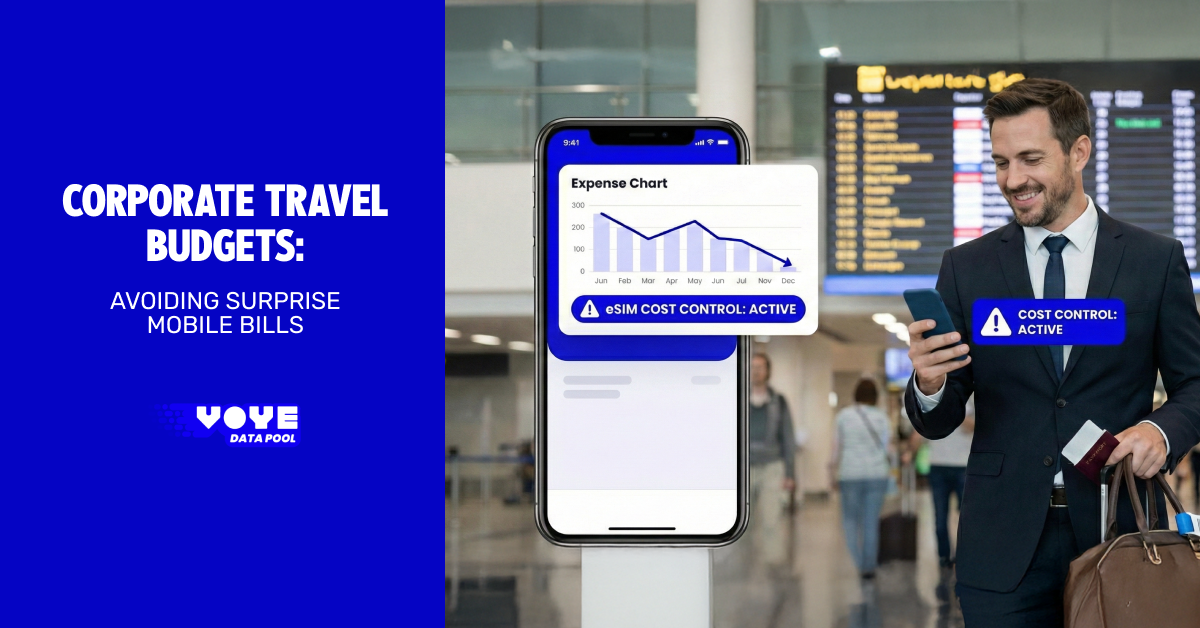
Corporate Travel Budgets: Avoiding Surprise Mobile Bills
Managing corporate travel budgets does not have to include unexpected mobile expenses. This guide is designed to help finance leaders, HR teams, IT managers, and travel coordinators gain full control over international mobile costs.


 7 min read
 Share
Share
Why Corporate Travel Budgets Are Under Pressure
In today’s globalized business environment, corporate travel is no longer optional. It is essential. From client meetings and international conferences to overseas project deployments, companies increasingly rely on employees traveling across borders to maintain growth and competitiveness.
However, one area that consistently disrupts even the most carefully planned corporate travel budgets is mobile communication costs. Surprise mobile bills caused by international roaming, excessive data usage, and unclear telecom policies can quietly drain thousands of dollars from a company’s travel spend.
Despite advances in digital communication, business travelers remain heavily dependent on mobile connectivity for emails, video calls, navigation, cloud applications, and collaboration tools. Without proper controls, these necessities can turn into unexpected financial liabilities.
This blog explores why surprise mobile bills occur, how they impact corporate travel budgets, and how organizations can proactively prevent them using smart policies, technology, and cost management strategies.
Understanding Corporate Travel Budgets
A corporate travel budget is more than just flights and hotels. It is a comprehensive financial framework that accounts for all expenses associated with employee travel.
Key Components of a Corporate Travel Budget
Most corporate travel budgets include:
- Airfare and ground transportation
- Accommodation
- Meals and per diem expenses
- Conference or event fees
- Travel insurance
- Communication costs, including mobile, data, and internet
While airfare and hotels are usually negotiated in advance, mobile expenses are often unpredictable, making them one of the most volatile budget categories.
The Hidden Cost of Mobile Usage During Business Travel
Mobile expenses rarely receive the same scrutiny as flights or accommodation. Yet, they can be one of the biggest sources of budget overruns.
What Are Surprise Mobile Bills?
Surprise mobile bills refer to unexpectedly high telecom charges incurred during international travel. These typically appear after the trip, leaving finance teams scrambling to understand and justify the costs.
Common Causes of Unexpected Mobile Charges
- International Roaming Fees
Roaming charges for voice, SMS, and data can be significantly higher than domestic rates. - Background Data Consumption
Apps syncing emails, cloud files, or system updates can consume large amounts of data without the user realizing it. - Video Conferencing on Mobile Networks
Tools such as Zoom, Microsoft Teams, and Google Meet use substantial data, especially on roaming networks. - Lack of Awareness Among Employees
Many travelers assume their corporate plan works the same abroad as it does at home. - Inconsistent Telecom Policies
Without standardized guidelines, employees may use personal judgment, leading to uncontrolled spending.
Why Surprise Mobile Bills Are a Serious Corporate Risk
Financial Impact
A single international trip can generate roaming charges running into hundreds or even thousands of dollars. Multiply that by dozens or hundreds of employees, and the impact on the corporate travel budget becomes substantial.
Budget Forecasting Challenges
Unexpected telecom costs distort travel expense forecasting, making it harder for finance teams to plan accurately.
Administrative Burden
Finance and HR teams spend valuable time reviewing, disputing, and explaining inflated mobile bills.
Employee Frustration
Employees may be reluctant to travel or may limit necessary communication due to fear of incurring personal liability or additional scrutiny.
The Role of Mobile Connectivity in Modern Business Travel
Mobile connectivity is no longer optional. It is mission critical.
Business travelers rely on mobile networks for:
- Real time communication with global teams
- Access to cloud based enterprise systems
- Navigation and logistics management
- Security and authentication, including MFA and VPNs
- Emergency communication
The challenge is not reducing mobile usage, but controlling and optimizing it.
Why Traditional Roaming Plans Are Failing Businesses
Many companies still rely on legacy roaming solutions offered by domestic telecom providers. While convenient, these plans often lack transparency and cost efficiency.
Limitations of Traditional Roaming Plans
- High per MB data charges
- Limited country coverage
- Complex pricing structures
- Delayed billing visibility
- Poor network performance in certain regions
These shortcomings make traditional roaming plans unsuitable for modern, data heavy business travel.
Building a Corporate Policy to Control Mobile Travel Expenses
A well defined policy is the foundation of avoiding surprise mobile bills.
Key Elements of an Effective Corporate Mobile Travel Policy
- Approved Connectivity Options
Clearly specify whether employees should use roaming, local SIMs, eSIMs, or corporate issued devices. - Data Usage Guidelines
Define acceptable use, including restrictions on streaming, personal browsing, and large downloads. - Expense Reimbursement Rules
Clarify what mobile expenses are reimbursable and under what conditions. - Pre Travel Approval Process
Ensure connectivity solutions are arranged before departure. - Compliance and Monitoring
Establish accountability for policy adherence.
Leveraging Technology to Avoid Surprise Mobile Bills
Technology plays a crucial role in managing corporate travel budgets effectively.
1. eSIM Solutions for Business Travel
eSIM technology allows employees to activate international data plans digitally without changing physical SIM cards.
Benefits of eSIMs for Corporate Travel:
- Transparent, prepaid pricing
- Coverage across multiple countries
- No physical SIM handling
- Real time usage tracking
- Reduced dependency on roaming
eSIMs are rapidly becoming a preferred solution for companies seeking predictable mobile expenses.
2. Mobile Device Management Systems
MDM platforms allow IT teams to manage and monitor mobile devices remotely.
Key Features:
- Data usage alerts
- App restrictions
- Remote configuration
- Security enforcement
By controlling device behavior, companies can prevent excessive data usage before it happens.
3. Expense Management Software
Integrating mobile expenses into corporate expense management platforms provides better visibility and control.
Advantages:
- Automated expense categorization
- Policy enforcement
- Faster reimbursement cycles
- Improved financial reporting
Pre Trip Planning: The Most Effective Cost Control Strategy
Proactive planning is the most reliable way to prevent surprise mobile bills.
Pre Travel Checklist for Mobile Cost Control
- Destination specific connectivity assessment
- Selection of the most cost effective data plan
- Employee briefing on usage guidelines
- Installation of required apps and security tools
- Activation of usage alerts
Companies that invest time in pre trip planning see significantly fewer post trip billing issues.
Educating Employees: A Critical Yet Overlooked Step
Even the best policies and tools fail without employee awareness.
What Employees Should Know Before Traveling
- How roaming charges work
- How to monitor data usage
- Which apps consume the most data
- When to use Wi Fi versus mobile data
- Who to contact in case of connectivity issues
Short training sessions or digital travel guides can dramatically reduce unnecessary expenses.

Control Travel Mobile Costs
Reduce roaming expenses and protect corporate travel budgets worldwide.
The Role of Finance and HR Teams in Cost Control
Avoiding surprise mobile bills is not solely an IT responsibility.
Finance Team Responsibilities
- Analyzing mobile expense trends
- Setting realistic budget thresholds
- Negotiating corporate connectivity contracts
HR Team Responsibilities
- Communicating policies clearly
- Ensuring employee compliance
- Supporting travelers during international assignments
Cross department collaboration is essential for sustainable cost control.
Measuring ROI on Corporate Mobile Solutions
To justify investments in alternative connectivity solutions, companies must track return on investment.
Key Metrics to Monitor
- Average mobile cost per trip
- Roaming versus alternative data usage
- Policy compliance rates
- Employee satisfaction scores
- Reduction in expense disputes
Data driven insights help refine strategies and demonstrate tangible value.
Industry Best Practices for Avoiding Surprise Mobile Bills
Leading organizations follow these best practices:
- Shift from postpaid roaming to prepaid connectivity solutions
- Centralize mobile expense management
- Standardize travel connectivity policies
- Use analytics to identify cost anomalies
- Continuously educate traveling employees
These practices ensure long term control over corporate travel budgets.
Future Trends in Corporate Travel and Mobile Cost Management
The corporate travel landscape is evolving rapidly.
Emerging Trends
- Global adoption of eSIM first strategies
- AI driven expense anomaly detection
- Integrated travel and telecom platforms
- Increased focus on employee experience
- Sustainability driven travel optimization
Companies that adapt early will gain a competitive advantage in cost efficiency and operational agility.
Conclusion: Turning Mobile Connectivity into a Strategic Asset
Surprise mobile bills are not an unavoidable cost of doing business internationally. They are a symptom of outdated policies, insufficient planning, and lack of visibility.
By rethinking how mobile connectivity fits into corporate travel budgets, organizations can transform a persistent financial risk into a predictable and manageable expense.
The combination of clear policies, modern connectivity solutions, proactive planning, and employee education empowers businesses to maintain seamless communication while keeping costs firmly under control.
In an era where every dollar matters, avoiding surprise mobile bills is no longer just good practice. It is a strategic necessity for sustainable corporate travel management.
Seamless eSIM Connectivity for Enterprises
Activate, manage, and scale eSIMs with ease.