


Construction Site Internet: Rapid Deployment Solutions
Reliable internet is essential for today’s connected construction sites. This guide explores the best construction site internet solutions for 2026, including 5G, satellite, hybrid networks, and enterprise eSIM connectivity. Learn how rapid deployment improves communication, supports IoT devices, enables cloud-based project management, and keeps teams productive across temporary and remote job sites. Discover practical tips for choosing the right connectivity solution to minimise downtime, improve efficiency, and keep construction projects running smoothly from start to finish.


 6 min read
 Share
Share
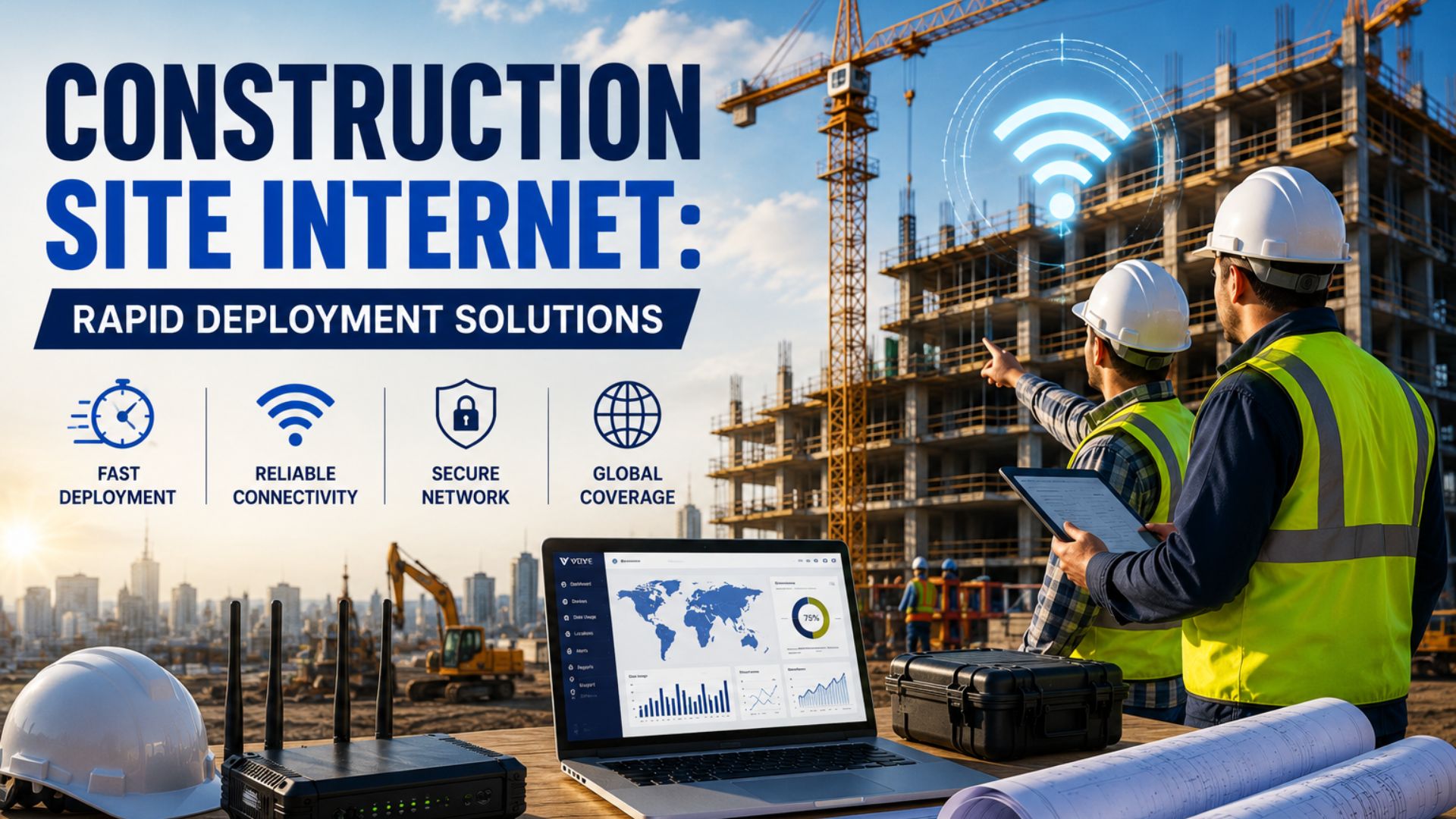
Construction projects move fast, but connectivity often falls behind. Construction site internet has become as essential as heavy machinery, safety equipment, and skilled workers. From cloud-based project management software to AI-powered surveying drones, nearly every modern construction workflow depends on reliable internet access.
Whether a project lasts two weeks or two years, companies need internet that can be deployed quickly, scales easily, and keeps teams connected without lengthy installations. In 2026, construction firms increasingly rely on wireless connectivity solutions that can be activated within hours rather than waiting weeks for traditional wired services. Industry adoption of digital construction technologies-including IoT sensors, cloud collaboration, and connected equipment-continues to grow as firms pursue greater productivity and real-time visibility.
This guide explains the best rapid deployment internet solutions, compares available technologies, and shows how construction companies can maintain uninterrupted connectivity across every stage of a project.
Why Every Construction Site Needs Reliable Internet?
Construction is no longer paper-based. Today’s projects rely on digital workflows that connect workers, equipment, and management teams in real time.
Reliable internet supports:
- Digital blueprints
- BIM (Building Information Modeling)
- Cloud document sharing
- Video meetings
- CCTV surveillance
- GPS equipment tracking
- Drone inspections
- Time and attendance systems
- Safety monitoring
- Inventory management
Without dependable connectivity, even small delays can affect productivity, communication, and project costs.

Deploy Construction Site Internet in Hours
Get fast, secure connectivity for every jobsite.
Common Connectivity Challenges on Construction Sites
Every project has unique networking challenges.
Remote Locations
Many construction sites begin before local internet infrastructure exists.
Examples include:
- Highways
- Wind farms
- Solar installations
- Industrial plants
- Mining operations
- Residential developments
Traditional fiber may not be available.
Temporary Project Duration
Projects often last only a few months. Waiting several weeks for broadband installation isn’t practical. Businesses need internet that arrives when the project begins and leaves when construction ends.
Multiple Moving Teams
Workers frequently relocate across different sections of the site. Connectivity must move with them.
Harsh Environments
- Dust
- Rain
- Heat
- Heavy machinery
- Large metal structures
These conditions make reliable networking more difficult than in a traditional office.
What Makes a Good Construction Site Internet Solution?
The ideal solution should provide:
- Rapid deployment
- Wide coverage
- High reliability
- Secure business-grade networking
- Easy relocation
- Centralized management
- Scalability across multiple projects
The faster connectivity is available, the sooner teams can begin productive work.
Best Construction Site Internet Options in 2026
Before choosing a connectivity solution, it’s important to understand how each option performs in terms of deployment speed, coverage, reliability, and flexibility. Below, you’ll find the best construction site internet solutions in 2026, along with their key benefits, ideal use cases, and factors to consider when selecting the right option for your project.
1. 5G Wireless Internet
5G has become one of the fastest deployment methods.
Advantages include:
- Installation within hours
- High download speeds
- Low latency
- Portable equipment
- Supports hundreds of connected devices
Best for:
- Urban projects
- Commercial buildings
- Residential developments
2. Enterprise eSIM Connectivity
Enterprise eSIM solutions eliminate the need to physically replace SIM cards whenever equipment moves between regions or countries.
Construction companies operating multiple projects benefit from:
- Instant activation
- Centralized connectivity management
- Remote provisioning
- Multi-country coverage
- Flexible deployment
Instead of sourcing local mobile plans for every new project, businesses can manage connectivity from a single platform.
This is especially valuable for:
- International contractors
- Infrastructure companies
- Engineering firms
- Equipment rental providers
3. Satellite Internet
Satellite remains important for extremely remote locations.
Suitable for:
- Mining
- Oil and gas
- Rural infrastructure
- Mountain projects
- Offshore construction
Advantages:
- Works almost anywhere
- Independent of local infrastructure
Limitations:
- Higher costs
- Weather sensitivity
- Higher latency compared with cellular networks
4. Fiber Broadband
Fiber provides:
- Excellent reliability
- Very high speeds
- Low latency
However:
Installation often requires permits, trenching, and long lead times. Fiber is most suitable for long-term construction headquarters.
5. Hybrid Connectivity
Many enterprises combine:
- Fiber
- 5G
- Satellite
If one network fails, another automatically maintains operations. Hybrid networking offers the highest business continuity for critical projects.
Keep Every Jobsite Connected
Reliable internet for teams, devices, and operations.
Comparison of Construction Site Internet Solutions
| Solution | Deployment Speed | Mobility | Best For |
| 5G Wireless | Hours | Excellent | Temporary projects |
| Enterprise eSIM | Minutes to Hours | Excellent | Multi-site operations |
| Fiber | Weeks | Limited | Long-term offices |
| Satellite | 1–2 Days | Good | Remote sites |
| Hybrid Network | Flexible | Excellent | Large enterprises |
Rapid Deployment Checklist
Before selecting a provider, ask:
- How quickly can service be activated?
- Can equipment be relocated?
- Is nationwide or global coverage available?
- Does it support IoT devices?
- Are multiple users supported simultaneously?
- Is centralized management available?
- Is failover included?
These questions help prevent downtime later in the project.
Supporting Connected Construction Technologies
Reliable internet powers a growing ecosystem of digital tools.
IoT Sensors
Connected sensors monitor:
- Concrete curing
- Temperature
- Humidity
- Structural movement
- Equipment performance
AI Cameras
AI-powered cameras improve:
- Safety compliance
- Equipment monitoring
- Site security
Drones
Construction drones upload:
- Progress reports
- High-resolution imagery
- Mapping data
Reliable connectivity speeds up analysis and collaboration.
Cloud Project Management
Platforms synchronize:
- Drawings
- Schedules
- RFIs
- Punch lists
- Daily reports
Every stakeholder stays informed without waiting for manual updates.
Why Enterprise eSIM is Becoming a Preferred Choice?
Construction companies increasingly manage projects across multiple cities or countries. Traditional SIM management creates operational complexity. Enterprise eSIM simplifies deployment by allowing connectivity to be provisioned remotely and managed centrally.
Key advantages include:
- Instant activation
- No physical SIM replacement
- Global coverage
- Centralized administration
- Flexible scaling
- Better visibility into data usage
These capabilities help organizations standardize connectivity across fleets, field teams, and connected devices.
Choosing the Right Internet Solution
The right option depends on:
- Project duration
- Location
- Number of connected devices
- Coverage requirements
- Mobility
- Budget
- Security requirements
Many organizations combine multiple technologies to maximize uptime and ensure uninterrupted operations throughout the construction lifecycle.
Future Trends for Construction Connectivity in 2026
Construction sites are becoming increasingly connected.
Key trends include:
- AI-assisted project management
- Private 5G networks
- Autonomous equipment
- Edge computing
- Smart wearables
- Connected heavy machinery
- Predictive maintenance
- Digital twins
Each innovation increases demand for reliable, always-on internet infrastructure.
Why Voye Data Pool Supports Modern Construction Connectivity?
For construction companies operating across regions or internationally, managing connectivity can be as challenging as managing equipment and crews.
Voye Data Pool provides enterprise-grade global eSIM connectivity designed for organizations that require rapid deployment, centralized management, and scalable connectivity. Businesses can remotely provision data plans, monitor usage across multiple projects, and keep field teams connected without relying on physical SIM replacements. This approach helps reduce deployment delays while supporting connected devices, IoT applications, and mobile workforces across more than 130+ countries.
Build with Smarter Connectivity
Power construction projects with scalable global eSIM.
Conclusion
Reliable internet is now a critical component of every successful construction project. From digital plans and connected machinery to cloud collaboration and real-time monitoring, the right connectivity solution helps reduce downtime, improve productivity, and keep projects on schedule.
As construction becomes more digital in 2026, rapid deployment technologies such as 5G, enterprise eSIM, hybrid networking, and satellite connectivity provide the flexibility that modern job sites demand. Companies that invest in scalable, resilient construction site internet solutions today will be better prepared for increasingly connected construction environments tomorrow.