Get 5% Discount using the code VOYE15 Buy eSIM close

Maritime Connectivity: Solutions for Port Logistics

Discover how maritime connectivity is transforming modern port logistics through reliable IoT and eSIM-enabled connectivity. Learn how real-time vessel tracking, smart container monitoring, connected port infrastructure, and global data solutions improve operational efficiency, cargo visibility, and communication across international shipping networks. Explore how Voye Data Pool delivers secure, scalable connectivity that helps shipping companies, logistics providers, and port authorities maintain seamless operations and support smarter maritime logistics worldwide.

Voye Data Pool Team
July 14, 2026 dot Read 8 min read
share Share
maritime connectivity

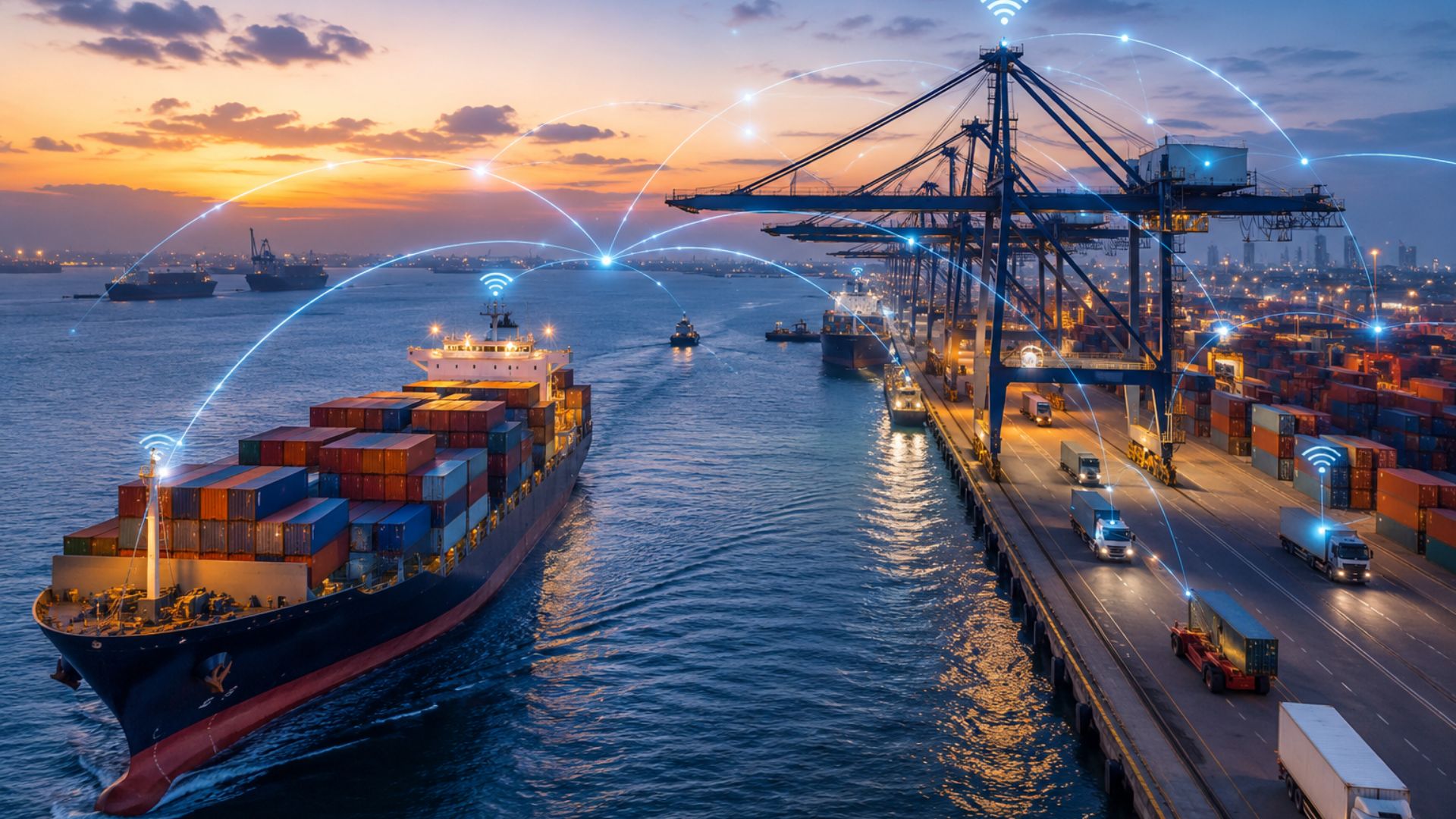
Global shipping and port operations are becoming more connected than ever before. As international trade continues to grow, ports are expected to handle larger cargo volumes while maintaining speed, accuracy, and security. To meet these demands, businesses are investing in maritime connectivity solutions that enable real-time communication, intelligent tracking, and seamless data exchange across the supply chain.

From container terminals and cargo vessels to cranes, fleet vehicles, and smart sensors, connected technologies are transforming the way ports operate. Reliable maritime connectivity ensures that every connected device can transmit critical data without interruption, helping organizations make informed decisions, improve operational efficiency, and reduce delays.

Voye Data Pool supports this digital transformation by providing scalable global IoT connectivity solutions that help maritime businesses stay connected across ports, shipping routes, and international borders.

Why Maritime Connectivity Is Essential for Modern Ports?

Ports are the backbone of global commerce. Every day, thousands of containers move through terminals, requiring precise coordination between shipping companies, customs authorities, logistics providers, warehouse operators, and transportation partners. Without dependable maritime connectivity, communication gaps can lead to shipment delays, equipment downtime, and reduced operational efficiency. Reliable connectivity helps organizations:

  • Monitor cargo movement in real time
  • Improve communication between ships and ports
  • Track containers throughout their journey
  • Connect smart port infrastructure
  • Enhance fleet visibility
  • Support automated logistics systems
  • Increase operational safety
  • Reduce manual reporting

As ports become increasingly digital, continuous connectivity is no longer optional—it has become a critical component of efficient logistics management.

Common Challenges in Port Logistics

Managing busy ports involves coordinating numerous assets and stakeholders simultaneously. Traditional communication systems often struggle to keep up with today’s operational demands. Some common challenges include:

  • Limited Cargo Visibility

Without continuous connectivity, tracking containers becomes difficult. Delayed updates can make it harder to estimate arrival times, monitor shipment status, and respond quickly to disruptions.

  • Equipment Downtime

Cargo handling equipment such as cranes, forklifts, and automated guided vehicles plays a vital role in port operations. Unexpected equipment failures can slow cargo movement and increase maintenance expenses.

  • Communication Delays

Shipping companies, customs officials, transport providers, and warehouse teams all rely on accurate operational information. Delays in communication can impact scheduling, increase vessel waiting times, and reduce productivity.

  • Manual Processes

Many ports still depend on manual inspections and paperwork. These methods consume valuable time, increase the likelihood of human error, and make it difficult to access real-time operational insights.

How Maritime Connectivity Improves Port Operations?

Digital transformation has introduced new technologies that help ports operate more efficiently. At the centre of this transformation is maritime connectivity, which enables connected devices to exchange information instantly.

By combining IoT technology, cloud-based platforms, and intelligent monitoring systems, ports can improve visibility across every stage of cargo handling.

Real-Time Container Tracking

Modern shipping containers can be equipped with IoT tracking devices that continuously transmit location and status information.

Benefits include:

  • Live shipment tracking
  • Faster cargo identification
  • Improved inventory accuracy
  • Better route planning
  • Reduced cargo loss

Real-time visibility enables logistics teams to respond quickly to changing conditions and provide customers with accurate delivery updates.

Smart Equipment Monitoring

Heavy machinery operates continuously in demanding port environments. Connected sensors help monitor equipment performance by collecting data on:

  • Temperature
  • Fuel usage
  • Engine health
  • Vibration levels
  • Operating hours

This information allows maintenance teams to detect potential issues before they become serious failures. Predictive maintenance reduces downtime while extending the lifespan of critical equipment.

Connected Fleet Management

Ports rely on trucks, service vehicles, and cargo transport systems to move goods efficiently between terminals and warehouses.

With reliable maritime connectivity, fleet managers can monitor:

  • Vehicle locations
  • Fuel efficiency
  • Driver routes
  • Delivery schedules
  • Vehicle health

Real-time fleet monitoring improves operational planning while reducing unnecessary fuel consumption and transportation delays.

Building Smarter Ports Through Connectivity

Around the world, ports are embracing digital technologies to improve efficiency, sustainability, and security. Smart ports use connected infrastructure to automate operations and provide greater visibility across the logistics network.

These environments typically include:

  • IoT-enabled sensors
  • Automated cargo handling systems
  • Connected surveillance cameras
  • Environmental monitoring devices
  • Digital asset tracking
  • Cloud-based management platforms

Reliable maritime connectivity serves as the foundation that links these technologies together. Instead of operating as isolated systems, every connected device shares valuable operational data, enabling faster decision-making and more efficient resource management.

This connected ecosystem helps improve coordination between shipping companies, logistics providers, customs agencies, warehouse operators, and port authorities.

Benefits of Maritime Connectivity for Businesses

Implementing maritime connectivity offers significant advantages for organizations involved in shipping, logistics, and port management. By connecting vessels, containers, equipment, and operational systems, businesses gain greater visibility and control over their operations.

  • Improved Operational Efficiency

Real-time communication between ports, ships, warehouses, and transport providers reduces delays and streamlines cargo handling. Teams can coordinate activities more effectively, resulting in faster vessel turnaround times and smoother cargo movement.

  • End-to-End Cargo Visibility

One of the biggest advantages of maritime connectivity is continuous shipment tracking. IoT-enabled devices provide real-time updates on container location and movement, allowing logistics providers to monitor cargo throughout its journey.

Greater visibility helps businesses:

  • Improve shipment planning
  • Reduce lost or misplaced cargo
  • Provide accurate delivery updates
  • Respond quickly to unexpected disruptions
  • Enhanced Security

Ports handle valuable goods every day, making security a top priority. Connected surveillance systems, GPS tracking, and smart sensors help detect unauthorized access, unexpected cargo movement, or equipment tampering.

With real-time alerts, operators can respond faster and minimize security risks across port facilities.

  • Lower Operating Costs

Reliable maritime connectivity supports smarter resource management by reducing manual processes, improving route planning, and enabling predictive equipment maintenance. These efficiencies help lower fuel consumption, minimize downtime, and reduce overall operational expenses.

  • Better Decision-Making

Connected devices generate valuable operational data that can be analyzed to improve scheduling, optimize workflows, and allocate resources more effectively. Access to real-time insights enables organizations to make informed decisions that enhance productivity and customer satisfaction.

The Role of Global IoT Connectivity in Maritime Operations

Modern shipping routes extend across multiple countries, requiring consistent and reliable network coverage throughout the journey. Traditional connectivity solutions often involve switching between regional providers, creating unnecessary complexity and potential service interruptions.

Global IoT connectivity simplifies international operations by enabling connected devices to remain online across multiple regions without requiring manual network changes.

For maritime businesses, this means:

  • Reliable connectivity during international voyages
  • Consistent communication between vessels and ports
  • Seamless monitoring of cargo and fleet assets
  • Simplified deployment of connected IoT devices
  • Scalable connectivity for expanding operations

As maritime operations become increasingly data-driven, dependable global connectivity plays a vital role in maintaining operational continuity.

How Voye Data Pool Supports Maritime Connectivity?

Reliable connectivity is essential for the success of modern maritime operations. Voye Data Pool provides global IoT connectivity solutions that help businesses maintain secure and uninterrupted communication across ports, shipping routes, and international logistics networks.

Key benefits include:

  • Global connectivity across multiple countries
  • Reliable IoT data solutions for connected maritime devices
  • Flexible connectivity options for enterprise deployments
  • Secure data communication for logistics operations
  • Scalable solutions that grow with business requirements

Whether supporting smart container tracking, connected fleet management, or digital port infrastructure, Voye Data Pool helps organizations build dependable maritime connectivity solutions that improve operational visibility and efficiency.

With reliable global connectivity, businesses can focus on optimizing logistics while ensuring connected devices remain operational wherever they are deployed.

Future Trends in Maritime Connectivity

The maritime industry continues to evolve through digital innovation. Several technologies are expected to shape the future of maritime connectivity and port logistics.

  • Artificial Intelligence

AI-powered analytics will help ports predict congestion, optimize vessel scheduling, and improve cargo handling by analyzing real-time operational data.

  • 5G Connectivity

Faster network speeds and lower latency will support more connected devices, enabling real-time automation and remote monitoring across smart ports.

  • Autonomous Vessels

Autonomous and remotely operated ships will rely heavily on secure maritime connectivity to exchange navigation data, monitor onboard systems, and communicate with control centers.

  • Digital Twins

Digital twin technology allows ports to create virtual replicas of their operations, making it easier to test scenarios, improve planning, and optimize infrastructure performance.

  • Sustainable Port Operations

Connected sensors will continue to monitor fuel usage, emissions, and energy consumption, helping organizations improve sustainability while maintaining efficient logistics operations.

Conclusion

As international trade continues to expand, maritime connectivity has become a key driver of smarter and more efficient port logistics. Real-time communication, IoT-enabled tracking, connected infrastructure, and intelligent data management enable ports to improve productivity, enhance security, and reduce operational costs.

Businesses that invest in reliable maritime connectivity are better equipped to manage complex supply chains, improve cargo visibility, and deliver faster, more dependable logistics services.

With scalable global IoT connectivity solutions, Voye Data Pool supports maritime organizations in building connected operations that keep vessels, cargo, equipment, and logistics systems communicating seamlessly across international networks.

Global shipping and port operations are becoming more connected than ever before. As international trade continues to grow, ports are expected to handle larger cargo volumes while maintaining speed, accuracy, and security. To meet these demands, businesses are investing in maritime connectivity solutions that enable real-time communication, intelligent tracking, and seamless data exchange across the supply chain.

From container terminals and cargo vessels to cranes, fleet vehicles, and smart sensors, connected technologies are transforming the way ports operate. Reliable maritime connectivity ensures that every connected device can transmit critical data without interruption, helping organizations make informed decisions, improve operational efficiency, and reduce delays.

Voye Data Pool supports this digital transformation by providing scalable global IoT connectivity solutions that help maritime businesses stay connected across ports, shipping routes, and international borders.

Why Maritime Connectivity Is Essential for Modern Ports?

Ports are the backbone of global commerce. Every day, thousands of containers move through terminals, requiring precise coordination between shipping companies, customs authorities, logistics providers, warehouse operators, and transportation partners. Without dependable maritime connectivity, communication gaps can lead to shipment delays, equipment downtime, and reduced operational efficiency. Reliable connectivity helps organizations:

  • Monitor cargo movement in real time
  • Improve communication between ships and ports
  • Track containers throughout their journey
  • Connect smart port infrastructure
  • Enhance fleet visibility
  • Support automated logistics systems
  • Increase operational safety
  • Reduce manual reporting

As ports become increasingly digital, continuous connectivity is no longer optional—it has become a critical component of efficient logistics management.

Common Challenges in Port Logistics

Managing busy ports involves coordinating numerous assets and stakeholders simultaneously. Traditional communication systems often struggle to keep up with today’s operational demands. Some common challenges include:

  • Limited Cargo Visibility

Without continuous connectivity, tracking containers becomes difficult. Delayed updates can make it harder to estimate arrival times, monitor shipment status, and respond quickly to disruptions.

  • Equipment Downtime

Cargo handling equipment such as cranes, forklifts, and automated guided vehicles plays a vital role in port operations. Unexpected equipment failures can slow cargo movement and increase maintenance expenses.

  • Communication Delays

Shipping companies, customs officials, transport providers, and warehouse teams all rely on accurate operational information. Delays in communication can impact scheduling, increase vessel waiting times, and reduce productivity.

  • Manual Processes

Many ports still depend on manual inspections and paperwork. These methods consume valuable time, increase the likelihood of human error, and make it difficult to access real-time operational insights.

How Maritime Connectivity Improves Port Operations?

Digital transformation has introduced new technologies that help ports operate more efficiently. At the centre of this transformation is maritime connectivity, which enables connected devices to exchange information instantly.

By combining IoT technology, cloud-based platforms, and intelligent monitoring systems, ports can improve visibility across every stage of cargo handling.

Real-Time Container Tracking

Modern shipping containers can be equipped with IoT tracking devices that continuously transmit location and status information.

Benefits include:

  • Live shipment tracking
  • Faster cargo identification
  • Improved inventory accuracy
  • Better route planning
  • Reduced cargo loss

Real-time visibility enables logistics teams to respond quickly to changing conditions and provide customers with accurate delivery updates.

Smart Equipment Monitoring

Heavy machinery operates continuously in demanding port environments. Connected sensors help monitor equipment performance by collecting data on:

  • Temperature
  • Fuel usage
  • Engine health
  • Vibration levels
  • Operating hours

This information allows maintenance teams to detect potential issues before they become serious failures. Predictive maintenance reduces downtime while extending the lifespan of critical equipment.

Connected Fleet Management

Ports rely on trucks, service vehicles, and cargo transport systems to move goods efficiently between terminals and warehouses.

With reliable maritime connectivity, fleet managers can monitor:

  • Vehicle locations
  • Fuel efficiency
  • Driver routes
  • Delivery schedules
  • Vehicle health

Real-time fleet monitoring improves operational planning while reducing unnecessary fuel consumption and transportation delays.

Building Smarter Ports Through Connectivity

Around the world, ports are embracing digital technologies to improve efficiency, sustainability, and security. Smart ports use connected infrastructure to automate operations and provide greater visibility across the logistics network.

These environments typically include:

  • IoT-enabled sensors
  • Automated cargo handling systems
  • Connected surveillance cameras
  • Environmental monitoring devices
  • Digital asset tracking
  • Cloud-based management platforms

Reliable maritime connectivity serves as the foundation that links these technologies together. Instead of operating as isolated systems, every connected device shares valuable operational data, enabling faster decision-making and more efficient resource management.

This connected ecosystem helps improve coordination between shipping companies, logistics providers, customs agencies, warehouse operators, and port authorities.

Benefits of Maritime Connectivity for Businesses

Implementing maritime connectivity offers significant advantages for organizations involved in shipping, logistics, and port management. By connecting vessels, containers, equipment, and operational systems, businesses gain greater visibility and control over their operations.

  • Improved Operational Efficiency

Real-time communication between ports, ships, warehouses, and transport providers reduces delays and streamlines cargo handling. Teams can coordinate activities more effectively, resulting in faster vessel turnaround times and smoother cargo movement.

  • End-to-End Cargo Visibility

One of the biggest advantages of maritime connectivity is continuous shipment tracking. IoT-enabled devices provide real-time updates on container location and movement, allowing logistics providers to monitor cargo throughout its journey.

Greater visibility helps businesses:

  • Improve shipment planning
  • Reduce lost or misplaced cargo
  • Provide accurate delivery updates
  • Respond quickly to unexpected disruptions
  • Enhanced Security

Ports handle valuable goods every day, making security a top priority. Connected surveillance systems, GPS tracking, and smart sensors help detect unauthorized access, unexpected cargo movement, or equipment tampering.

With real-time alerts, operators can respond faster and minimize security risks across port facilities.

  • Lower Operating Costs

Reliable maritime connectivity supports smarter resource management by reducing manual processes, improving route planning, and enabling predictive equipment maintenance. These efficiencies help lower fuel consumption, minimize downtime, and reduce overall operational expenses.

  • Better Decision-Making

Connected devices generate valuable operational data that can be analyzed to improve scheduling, optimize workflows, and allocate resources more effectively. Access to real-time insights enables organizations to make informed decisions that enhance productivity and customer satisfaction.

The Role of Global IoT Connectivity in Maritime Operations

Modern shipping routes extend across multiple countries, requiring consistent and reliable network coverage throughout the journey. Traditional connectivity solutions often involve switching between regional providers, creating unnecessary complexity and potential service interruptions.

Global IoT connectivity simplifies international operations by enabling connected devices to remain online across multiple regions without requiring manual network changes.

For maritime businesses, this means:

  • Reliable connectivity during international voyages
  • Consistent communication between vessels and ports
  • Seamless monitoring of cargo and fleet assets
  • Simplified deployment of connected IoT devices
  • Scalable connectivity for expanding operations

As maritime operations become increasingly data-driven, dependable global connectivity plays a vital role in maintaining operational continuity.

How Voye Data Pool Supports Maritime Connectivity?

Reliable connectivity is essential for the success of modern maritime operations. Voye Data Pool provides global IoT connectivity solutions that help businesses maintain secure and uninterrupted communication across ports, shipping routes, and international logistics networks.

Key benefits include:

  • Global connectivity across multiple countries
  • Reliable IoT data solutions for connected maritime devices
  • Flexible connectivity options for enterprise deployments
  • Secure data communication for logistics operations
  • Scalable solutions that grow with business requirements

Whether supporting smart container tracking, connected fleet management, or digital port infrastructure, Voye Data Pool helps organizations build dependable maritime connectivity solutions that improve operational visibility and efficiency.

With reliable global connectivity, businesses can focus on optimizing logistics while ensuring connected devices remain operational wherever they are deployed.

Future Trends in Maritime Connectivity

The maritime industry continues to evolve through digital innovation. Several technologies are expected to shape the future of maritime connectivity and port logistics.

  • Artificial Intelligence

AI-powered analytics will help ports predict congestion, optimize vessel scheduling, and improve cargo handling by analyzing real-time operational data.

  • 5G Connectivity

Faster network speeds and lower latency will support more connected devices, enabling real-time automation and remote monitoring across smart ports.

  • Autonomous Vessels

Autonomous and remotely operated ships will rely heavily on secure maritime connectivity to exchange navigation data, monitor onboard systems, and communicate with control centers.

  • Digital Twins

Digital twin technology allows ports to create virtual replicas of their operations, making it easier to test scenarios, improve planning, and optimize infrastructure performance.

  • Sustainable Port Operations

Connected sensors will continue to monitor fuel usage, emissions, and energy consumption, helping organizations improve sustainability while maintaining efficient logistics operations.

Conclusion

As international trade continues to expand, maritime connectivity has become a key driver of smarter and more efficient port logistics. Real-time communication, IoT-enabled tracking, connected infrastructure, and intelligent data management enable ports to improve productivity, enhance security, and reduce operational costs.

Businesses that invest in reliable maritime connectivity are better equipped to manage complex supply chains, improve cargo visibility, and deliver faster, more dependable logistics services.

With scalable global IoT connectivity solutions, Voye Data Pool supports maritime organizations in building connected operations that keep vessels, cargo, equipment, and logistics systems communicating seamlessly across international networks.

Related Articles

  • Instant Data Activation: Bypassing Carrier Delays

    Stay connected the moment you land with faster mobile data activation designed for modern business travelers. Traditional carrier delays, roaming issues, and manual provisioning can disrupt productivity during international travel. Digital connectivity solutions powered by eSIM technology and centralized management platforms help businesses enable seamless global access within minutes. Features like automated provisioning, secure mobile access, and flexible custom data pool management improve efficiency while reducing operational costs. Platforms such as Voye Data Pool simplify global connectivity for enterprises managing remote teams and frequent international travel.

  • Seamless Network Switching: How It Works Globally?

    Global enterprises depend on uninterrupted connectivity to support distributed teams, applications, and devices. This blog explains how advanced network switching enables continuous performance across multiple carriers and regions. It highlights the technologies, architecture, and strategies that ensure stable connections, including eSIM, intelligent routing, and custom data pool models. Designed for enterprise IT and tech leaders, it offers insights into optimizing global connectivity, reducing downtime, and improving operational efficiency in increasingly complex and dynamic network environments worldwide today.

  • The Future of Business Roaming: Trends to Watch

    The future of business roaming is being shaped by eSIM technology, AI-driven automation, IoT connectivity, private 5G, and advanced telecom infrastructure. Businesses are adopting scalable and secure roaming solutions to support global operations, remote teams, and connected devices. From custom data pool models to intelligent network optimization, enterprises are prioritizing flexible connectivity strategies that improve operational efficiency, reduce roaming costs, and enhance international communication across rapidly evolving digital ecosystems.

  • Free Airport WiFi vs. Paid eSIM Data: A Security Audit

    Free airport WiFi may offer convenience, but it can expose business travelers and organizations to significant cybersecurity risks. This blog explores the security differences between public airport networks and enterprise eSIM solutions, examining threat exposure, compliance considerations, reliability, and risk management. Designed for CISOs and security leaders, it provides a practical security audit of both connectivity options and explains why secure mobile connectivity has become an essential component of modern enterprise travel strategies.

  • From Expense to Edge: How Smart Data Management Improves Global Profit Margins

    In today’s data-driven economy, managing information efficiently can define your competitive edge. Smart data management not only cuts operational expenses but also enhances global profit margins through better insights, automation, and scalability. Learn how leading enterprises are converting data costs into powerful growth opportunities.

  • The Best Business Data Plans for Travel to Dubai & UAE

    Business travelers visiting Dubai and the UAE need reliable connectivity to stay productive and connected. This guide explains the best business data plans, including roaming, local SIMs, eSIM solutions, and enterprise options with a custom data pool. It also highlights how Voye Data Pool supports seamless connectivity across teams and locations. With a focus on cost efficiency, flexibility, and performance, this blog helps professionals choose the right Internet in Dubai solution for uninterrupted business operations.