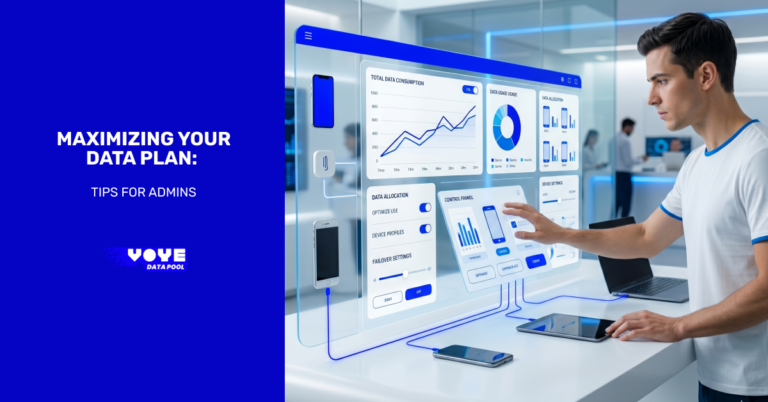


API Integration: Automating Your Mobile Data Connectivity
API integration is transforming how enterprises manage mobile data connectivity by enabling automation, scalability, and real-time control. Businesses can streamline provisioning, monitor usage, and optimize costs through intelligent systems and custom data pool strategies. With platforms like Voye Data Pool, organizations gain centralized visibility and dynamic data allocation, improving efficiency across devices and operations. This approach empowers IT teams and developers to turn connectivity into a programmable, flexible resource aligned with modern digital and business needs.


 7 min read
 Share
Share

In a hyper-connected digital economy, mobile data is no longer just a utility. It is a core operational asset that powers devices, applications, and real-time decision-making. Enterprises, developers, and IT leaders are increasingly looking for ways to streamline how mobile connectivity is managed, provisioned, and optimized. API integration has emerged as a powerful approach to automate mobile data workflows, reduce manual overhead, and enable scalable connectivity strategies.
Modern organizations rely on seamless data exchange between systems. When mobile data connectivity is integrated through APIs, businesses gain programmatic control over provisioning, monitoring, and scaling data usage. This not only improves operational efficiency but also unlocks new possibilities for innovation.
Understanding API Integration in Mobile Data Connectivity
API integration refers to the process of connecting different software systems using Application Programming Interfaces to enable automated communication and data exchange. In the context of mobile data connectivity, APIs allow businesses to manage SIMs, data plans, usage analytics, and network configurations without manual intervention.

Scale Your Connectivity Today
Activate global business connectivity instantly for teams and smart devices.
Key Components of API Integration
These core elements work together to enable seamless automation, visibility, and control across mobile data connectivity systems:
1. Connectivity Management APIs
These APIs allow businesses to:
- Activate or deactivate SIM cards
- Allocate or reassign data plans
- Monitor device connectivity in near-real time
2. Usage and Analytics APIs
These provide insights into:
- Data consumption patterns
- Device-level usage tracking
- Cost optimization opportunities
3. Billing and Subscription APIs
Automation extends to financial processes such as:
- Real-time billing updates
- Subscription lifecycle management
- Usage-based pricing models
4. Security and Authentication APIs
Security is critical when dealing with network access. APIs help enforce:
- Access control policies
- Data encryption standards
- Implement OAuth 2.0 or API Key rotation for secure system-to-system access
Why Automation Matters in Mobile Data Connectivity?
Manual processes in connectivity management are prone to inefficiencies, delays, and errors. API-driven automation mitigates these challenges by replacing manual workflows with predictable logic.
Benefits of Automating Mobile Data Connectivity
Automation delivers efficiency, scalability, and cost control by streamlining connectivity management across devices and networks:
Operational Efficiency
- Reduces dependency on manual workflows
- Speeds up provisioning and deployment
- Minimizes repetitive manual errors and ensures consistency at scale
Scalability
- Supports large-scale device deployments
- Enables dynamic data allocation across regions
- Adapts to fluctuating usage demands
Cost Optimization
- Prevents over-provisioning of data
- Enables real-time usage tracking
- Supports intelligent data allocation strategies
Enhanced Control
- Centralized dashboard for managing connectivity
- Granular control over individual devices
- Automated alerts and triggers
How API Integration Transforms Enterprise Connectivity?
API integration is not just a technical upgrade. It fundamentally changes how enterprises approach connectivity management.
Centralized Control with Decentralized Execution
Organizations can manage global connectivity from a single interface while allowing localized automation. This ensures consistency while maintaining flexibility.
Real-Time Decision Making
With API-driven insights, IT teams can:
- Adjust data plans instantly
- Identify usage spikes or anomalies shortly after they occur
- Respond proactively to connectivity issues
Seamless System Integration
APIs enable integration with:
- Enterprise Resource Planning systems
- Customer Relationship Management platforms
- IoT device management systems
This creates a unified ecosystem where mobile data becomes an integrated component of broader business operations.
Optimize, Automate, and Scale with Confidence
Discover how Voye Data Pool can transform your mobile data strategy.
The Role of Custom Data Pool in API-Driven Connectivity
A custom data pool is a flexible data allocation model where multiple SIMs or devices share a common pool of data. This approach is particularly powerful when combined with API integration.
Advantages of Custom Data Pool
This model enables smarter data distribution by optimizing usage, reducing waste, and enhancing operational flexibility across connected devices:
Efficient Resource Utilization
- Significantly reduces data wastage.
- Balances usage across devices
- Maximizes ROI on data plans
Dynamic Allocation
- APIs can redistribute data based on real-time needs
- Supports seasonal or usage-based variations
- Enables automated scaling
Simplified Management
- Easier tracking and reporting
- Reduced administrative overhead
- A consolidated pool that absorbs the ‘peaks and valleys’ of individual device usage
The Strategic Value of APIs
At this stage, it becomes clear that leveraging an API for mobile data is not just about automation. It is about transforming connectivity into a programmable resource that aligns with business objectives, operational efficiency, and financial optimization.
Voye Data Pool: Enhancing API-Driven Connectivity
Voye Data Pool offers a robust platform designed to simplify and optimize mobile data management through intelligent pooling and seamless API integration.
Key Features of Voye Data Pool
Designed to deliver efficiency, flexibility, and control, these features empower businesses to manage mobile data intelligently at scale:
Unified Data Management
- Centralized control over multiple SIMs and devices
- Real-time visibility into usage and performance
Intelligent Data Pooling
- Dynamic allocation across devices
- Optimized usage with minimal wastage
- Flexible scaling based on demand
API-First Architecture
- Easy integration with enterprise systems
- Automation of provisioning and monitoring
- Custom workflows tailored to business needs
Advanced Analytics
- Detailed usage insights
- Predictive analytics for better planning
- Cost tracking and optimization tools
Implementing API Integration for Mobile Data
Adopting API integration requires a structured approach to ensure seamless implementation and maximum benefits.
Step-by-Step Implementation Strategy
A structured roadmap helps ensure efficient deployment, reduced risks, and long-term success of API-driven connectivity:
1. Define Business Objectives
- Identify connectivity requirements
- Determine scalability needs
- Align with organizational goals
2. Choose the Right Platform
- Evaluate API capabilities
- Assess compatibility with existing systems
- Consider scalability and support
3. Design Integration Architecture
- Map data flows between systems
- Define API endpoints and protocols
- Ensure security and compliance
4. Develop and Test
- Implement API integrations
- Conduct rigorous testing
- Validate performance and reliability
5. Monitor and Optimize
- Track usage and performance metrics
- Adjust configurations as needed
- Continuously improve efficiency
Security Considerations in API Integration
Security is a critical aspect of mobile data connectivity. API integration must be designed with robust security measures to protect sensitive data and ensure compliance.
Best Practices for Secure API Integration
Implementing strong security practices safeguards data integrity while enabling seamless and trusted API interactions:
Authentication and Authorization
- Use secure authentication methods
- Implement role-based access control
Data Encryption
- Use industry-standard encryption protocols
- Ensure API credentials and session metadata are encrypted in transit and at rest
Monitoring and Auditing
- Track API usage and access logs
- Identify and respond to anomalies
Compliance
- Adhere to regulatory requirements
- Ensure data privacy and protection standards
Manage Devices From One Platform
Control usage, monitor data, and assign eSIMs in real time.
Future Trends in API-Driven Mobile Connectivity
The evolution of mobile connectivity is closely tied to advancements in API technologies.
Emerging Trends
Key innovations shaping the future of mobile data connectivity and automation:
AI-Driven Automation
- Predictive data allocation
- Automated anomaly detection
- Intelligent cost optimization
Edge Computing Integration
- Faster data processing
- Reduced latency
- Enhanced real-time capabilities
5G and Beyond
- Increased bandwidth and speed
- Support for high-density device environments
- New use cases in IoT and smart infrastructure
Platform Ecosystems
- Integration with multiple service providers
- Interoperability across platforms
- Unified connectivity management
Why Voye Data Pool is Your Connectivity Sidekick?
Let’s be honest. Managing mobile data across devices can feel like herding cats. This is where Voye Data Pool steps in and makes things delightfully simple.
What Makes It Stand Out?
- Gives you control without overwhelming you with complexity
- Scales effortlessly as your business grows
- Works quietly in the background while you focus on bigger goals
- Abstracts the complexity of multi-carrier environments into a single, programmable interface
It is not just a tool. It is the dependable sidekick that keeps your connectivity game strong.
Conclusion
API integration is reshaping how businesses think about mobile data connectivity. It transforms a traditionally rigid system into a flexible, intelligent, and scalable resource. From automation and cost savings to enhanced control and real-time insights, the benefits are too significant to ignore.
When combined with solutions like Voye Data Pool and a custom data pool strategy, organizations can unlock the full potential of their connectivity infrastructure. The result is a smarter, faster, and more efficient way to manage mobile data in an increasingly connected world.