How to Avoid Data Overage Charges While Traveling?
Business travel often brings unexpected roaming data costs that administrators only discover after receiving the invoice. Devices running background updates, cloud syncing, and mobile apps can consume large amounts of data within hours. This guide explains how organizations can avoid these issues using effective overage protection strategies, including usage monitoring, device policies, and centralized eSIM connectivity. Learn how to keep traveling teams and connected devices online while maintaining full control over data usage and operational expenses with Voye Data Pool.


 8 min read
 Share
Share
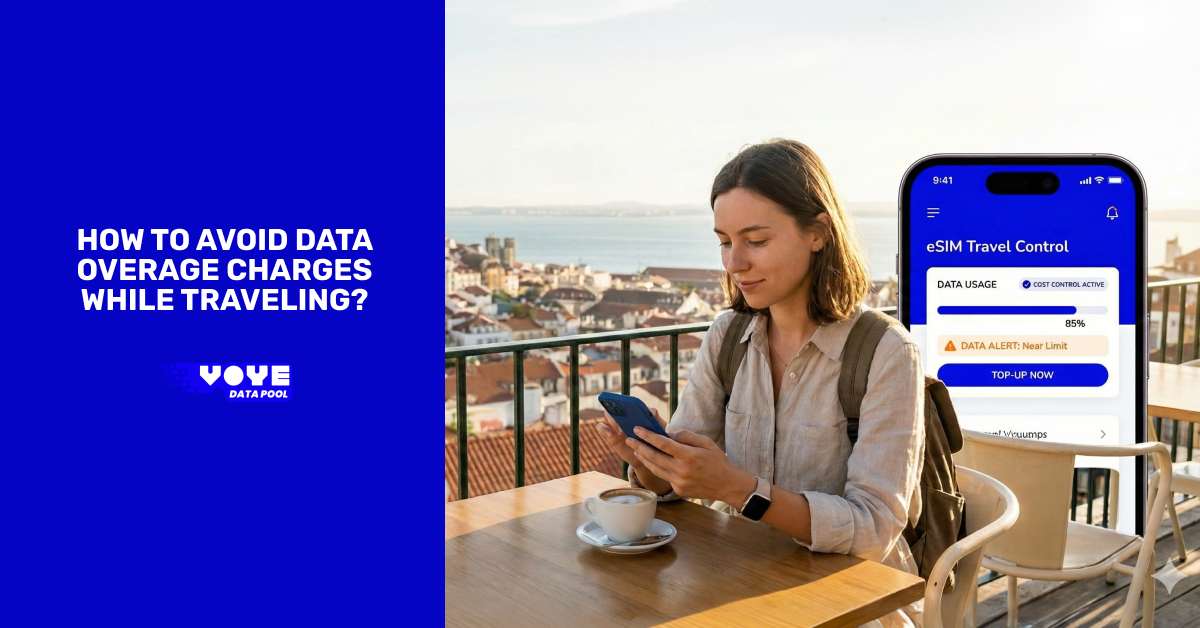
Global business travel depends on reliable mobile connectivity. Employees access cloud platforms, join meetings, upload reports, and manage operations from airports, hotels, and remote work-sites.
For administrators, this convenience often comes with an unexpected challenge. International roaming data can generate high costs in a very short time, sometimes before anyone realizes what is happening.
A single device running background updates or syncing large files can quietly consume gigabytes of data. Without visibility and control, organizations may only discover the problem when the invoice arrives.
To prevent financial surprises while still supporting productivity, companies must manage mobile usage proactively and implement structured connectivity policies before teams begin traveling.
What Are Data Overage Charges?
Data overage charges occur when a device exceeds its allocated data plan limit. During international travel, roaming networks charge carriers significantly higher wholesale rates. Those costs are passed to the business.
Common causes include:
- Automatic cloud backups.
- Software updates.
- Video conferencing on cellular networks.
- Background synchronization apps.
- Misconfigured IoT devices.
- Hotspot sharing.
Unlike domestic usage, international roaming does not provide predictable billing. Without safeguards, one employee streaming a high-resolution training video can consume multiple gigabytes in minutes.
For administrators, the real issue is a lack of visibility. By the time the invoice arrives, the damage is already done.
Why Admins Struggle With International Data Costs?
Administrators typically manage multiple device types:
- Employee smartphones.
- Laptops with cellular connectivity.
- Tablets are used in field operations.
- IoT trackers and sensors.
Each device has different usage patterns, operating systems, and application behaviors. Traditional carrier plans do not offer centralized control across countries. That creates four major problems:
- No real-time monitoring
- No centralized usage policies
- No automatic data shutoff
- Delayed billing visibility
Without a unified management platform, preventing overages becomes reactive instead of proactive.
Pre Travel Planning Checklist
Before employees leave their home country, administrators should complete a connectivity audit. Prevention always costs less than correction.
Step 1: Audit Expected Usage
Identify what the traveler actually needs:
- Email and messaging only.
- Video meetings.
- Cloud file access.
- Field reporting apps.
- Location tracking.
Not every traveler requires the same data allowance. Executives using video calls need a higher allocation than a technician submitting daily reports.
Step 2: Disable Non-Essential Apps
Many apps use background data continuously. Social media, photo backup services, and automatic updates are major contributors to roaming bills.
Create a device preparation checklist that includes:
- Turn off automatic app updates.
- Disable photo cloud backup on cellular.
- Restrict streaming platforms.
- Disable operating system updates on roaming.
Step 3: Establish a Data Budget
Assign a clear data allocation per traveler. For example:
- Light usage: 1 GB to 2 GB
- Standard usage: 3 GB to 5 GB
- Heavy usage: 8 GB to 15 GB
Data budgeting is a core component of overage protection because it sets measurable expectations.

Centralize Connectivity Administration
Replace multiple carriers with one secure enterprise connectivity platform.
Choose the Right International Connectivity Model
Global business travel depends on reliable mobile connectivity. Employees access cloud platforms, attend meetings, and upload reports from airports, hotels, and remote locations. As work becomes more mobile, uninterrupted data access has become essential for daily operations.
For administrators, this convenience can also create unexpected challenges. International roaming usage is difficult to predict, and background apps or automatic updates can consume large amounts of data without user awareness. Many organizations only notice the issue after receiving a costly invoice.
Why eSIM Improves Overage Protection?
An eSIM allows administrators to remotely provision, manage, and monitor connectivity without physical SIM replacement. More importantly, it enables policy control.
With centralized management, you can:
- Allocate pooled data across teams.
- Set usage alerts.
- Suspend devices instantly.
- Control geographic coverage.
- Monitor usage in real time.
This directly reduces the risk of overage charges.
How Voye Data Pool Prevents Data Overage Charges?
Voye Data Pool is designed specifically for organizations managing distributed teams and devices. The platform simplifies, scales, and secures business connectivity using advanced eSIM management across more than 130+ countries.
For administrators, the value is operational visibility and control.
Centralized Data Pooling
Instead of assigning separate plans to every employee, data is pooled. If one employee uses less data, another can use more without triggering overage billing. This alone dramatically improves overage protection.
Real Time Monitoring
Admins can view usage immediately instead of waiting for carrier invoices. You can identify abnormal behavior, such as a device consuming gigabytes overnight.
Automated Policies
Policies can be created to protect budgets:
- Automatic throttling after limits.
- Device suspension.
- Alert notifications.
- Regional restrictions.
Global Coverage
Teams traveling between countries stay on the same management platform. No SIM swapping and no carrier negotiation required. The result is predictable billing and reliable connectivity.
Implement Data Caps and Alerts
A strong overage protection strategy always includes automation.
Administrators should configure three alert thresholds:
- 50 percent usage notification.
- 80 percent usage warning.
- 95 percent emergency alert.
These alerts should notify both the user and the administrator. Early awareness often prevents unnecessary charges because employees adjust their behavior immediately.
Configure Device Level Controls
Even the best network plan cannot protect against poorly configured devices.
Mobile Device Management Policies
Use MDM solutions to enforce:
- Roaming restrictions.
- App data permissions.
- Background refresh limits.
- Hotspot control.
Operating System Settings
Administrators should standardize device configuration templates:
- Disable Wi Fi assist features.
- Restrict high-resolution video playback on cellular.
- Turn off automatic backups.
- Limit large email attachments download.
These settings significantly strengthen overage protection.
Manage Laptop and Hotspot Usage
Laptops often create the highest bills because operating systems perform large background downloads.
Common hidden data consumers include:
- System updates.
- Cloud storage sync.
- Software patching.
- Video conferencing software.
Require travelers to use secured Wi Fi for heavy tasks. Cellular should be reserved for essential communication.
Secure Wi Fi Strategy
Encouraging Wi Fi use reduces roaming consumption, but security must remain a priority.
Best practices:
- Use corporate VPN on public networks.
- Avoid open networks without encryption.
- Provide employees with Wi Fi guidelines.
- Disable automatic network joining.
Balancing Wi Fi usage with security protects both budget and data privacy.
Monitor Usage in Real Time
Monitoring is the foundation of effective overage protection. Administrators should never depend on monthly reports.
Real-time dashboards allow you to:
- Identify unusual spikes.
- Detect compromised devices.
- Forecast monthly costs.
- Adjust policies immediately.
With centralized monitoring platforms like Voye Data Pool, admins can intervene before costs escalate.
Build an Overage Incident Response Plan
Despite precautions, overages can still occur. A response plan minimizes damage.
Your plan should include:
- Immediate device suspension.
- Contact the traveler for verification.
- Check for malware or misconfiguration.
- Reassign data pool allocation.
- Document the incident.
Having a defined workflow shortens response time and limits financial exposure.
IoT Devices and Hidden Overage Risk
IoT devices often operate unattended. That makes them one of the biggest threats to budgets.
Examples include:
- Fleet tracking units.
- Remote sensors.
- Smart kiosks.
- Payment terminals.
If firmware loops or reporting frequency changes, data consumption spikes rapidly. Centralized eSIM management is essential because admins can remotely diagnose and suspend devices.
Voye Data Pool allows administrators to manage both employee devices and IoT hardware from one platform, improving overage protection across the organization.
Cost Forecasting and Budget Control
A mature connectivity strategy includes forecasting.
Use historical data to calculate:
- Average travel consumption.
- Peak seasonal usage.
- Department-specific requirements.
When overage protection is combined with forecasting, connectivity becomes a predictable operational expense instead of a variable liability.
Security and Compliance Benefits
Data overage prevention also improves security posture.
Unusual data spikes may indicate:
- Malware activity.
- Unauthorized tethering.
- Data exfiltration.
Real-time monitoring, therefore, supports compliance and cybersecurity efforts, not just cost control.
Seamless eSIM Connectivity for Enterprises
Activate, manage, and scale eSIMs with ease.
Practical Scenario
Consider a sales team attending an international trade event. Without controls, employees stream presentations, upload media, and attend video meetings over roaming networks. Within two days, the company accumulates major charges.
With centralized eSIM management and overage protection:
- Devices receive allocated data pools.
- Alerts notify heavy users.
- Policies throttle non-essential apps.
- Admins monitor usage live.
The same event now produces predictable costs and uninterrupted connectivity.
Why Businesses Choose Centralized eSIM Connectivity?
Global companies need a connectivity layer that matches their operational scale. Managing separate carrier contracts across countries is inefficient and difficult to monitor.
Voye Data Pool provides:
- Secure connectivity.
- Scalable device management.
- Rapid deployment.
- Reliable international coverage.
- Centralized visibility.
The End of the “What Happened to Our Data?” Meeting
Businesses can connect teams and IoT devices quickly while maintaining full administrative control. Data overage charges are preventable. They occur when organizations lack visibility, monitoring, and policy enforcement across traveling devices. Administrators who implement overage protection strategies gain control over connectivity costs while maintaining reliable communication for global teams.
By preparing devices, educating users, enforcing policies, monitoring usage, and using centralized eSIM management, businesses eliminate billing surprises and improve operational efficiency. Voye Data Pool enables organizations to manage global connectivity through one platform, ensuring secure and scalable service across more than 130+ countries. With real-time monitoring, automated controls, and simplified onboarding, administrators can support travelers and IoT deployments without financial uncertainty. For modern enterprises, overage protection is not just a billing feature. It is a core component of responsible IT administration and successful global operations.