Get 5% Discount using the code VOYE15 Buy eSIM close

From Roaming to Resilience: Building a Truly Global Workforce with Digital Connectivity

Discover how digital connectivity and enterprise eSIM solutions help organizations move beyond roaming to build a secure, resilient, and truly global workforce.

Voye Data Pool Team
January 9, 2026 dot Read 10 min read
share Share
From Roaming to Resilience: Building a Truly Global Workforce with Digital Connectivity

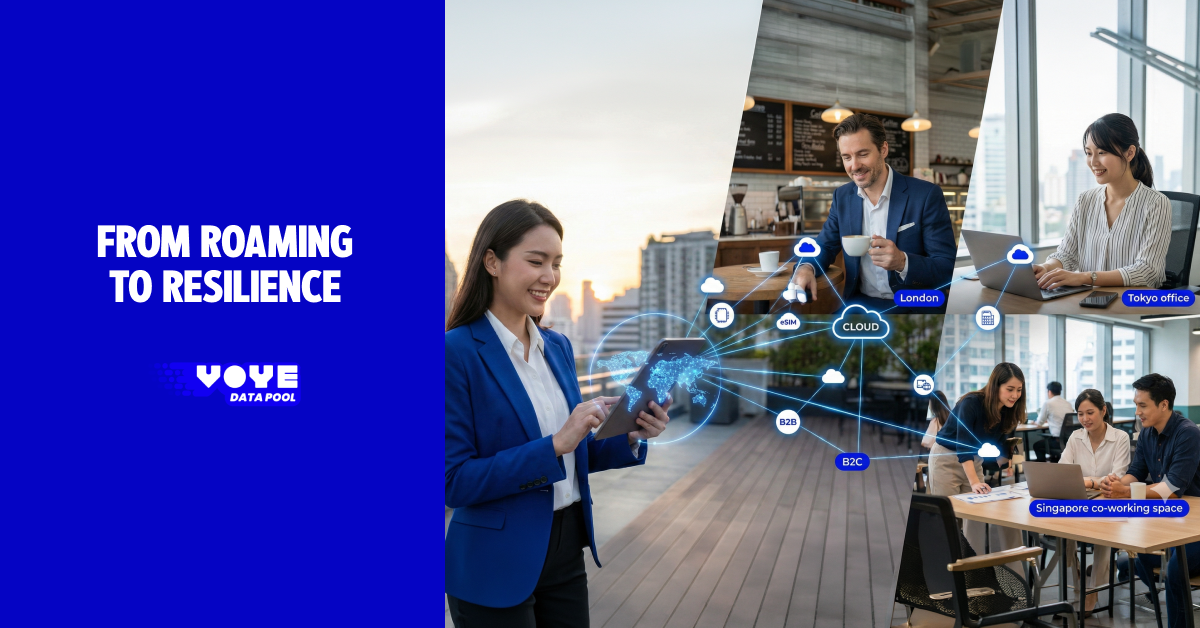
The modern workplace no longer fits inside four walls or a single time zone. Organizations today are expanding beyond borders, tapping into international talent pools, supporting mobile employees, and enabling teams to work from virtually anywhere. This shift has transformed how companies think about productivity, security, and connectivity.

Yet as global workforces grow, so do the challenges. Connectivity costs escalate, roaming bills spiral out of control, IT teams struggle with visibility, and employees face unreliable access to critical tools. What once seemed like a simple problem of staying connected has become a strategic issue that directly affects business resilience.

This is where digital connectivity becomes more than just infrastructure. It becomes a foundation for global workforce success.

In this in-depth guide, we explore how organizations can move from traditional roaming models to resilient, scalable digital connectivity. We also examine how enterprise eSIM solutions like Voye Data Pool are reshaping the way companies activate, manage, and secure connectivity for employees worldwide.

The Evolution of the Global Workforce

The concept of a global workforce is not new, but its scale and complexity have changed dramatically in recent years.

From centralized offices to borderless teams

Historically, multinational organizations operated through regional offices. Employees were tied to physical locations, and international travel was occasional rather than constant. Connectivity challenges were limited to a small group of traveling executives or expatriates.

Today, that model no longer applies.

Organizations now employ:

  • Fully remote workers across continents
  • Hybrid employees who split time between home and office
  • Field staff who move across regions and countries
  • Contractors and freelancers working internationally
  • Digital nomads who require consistent connectivity regardless of location

This shift has unlocked incredible opportunities, but it has also exposed serious gaps in traditional connectivity approaches.

Why connectivity is now a workforce strategy

Connectivity used to be a background utility. As long as employees had access to email and basic tools, it was considered sufficient. That mindset no longer works.

Modern employees rely on:

  • Cloud-based collaboration platforms
  • Real-time communication tools
  • Secure access to enterprise systems
  • Continuous data connectivity for productivity

When connectivity fails, productivity stalls, security risks increase, and employee experience suffers. For global organizations, this can translate into lost revenue, delayed projects, and frustrated teams.

The Hidden Costs of Traditional Roaming

Before digital connectivity solutions became widely available, roaming was the default choice for international connectivity. While convenient on the surface, roaming comes with significant drawbacks that impact both finances and operations.

Unpredictable expenses

Roaming charges are notoriously difficult to control. Even with negotiated carrier plans, costs can fluctuate based on:

  • Country-specific rates
  • Data usage spikes
  • Application updates running in the background
  • Time spent in high-cost regions

Finance teams often discover roaming overruns only after invoices arrive. By then, the damage is done.

Limited visibility and control

Traditional roaming offers little transparency. IT teams struggle to answer basic questions such as:

  • Which employees are using the most data
  • Where connectivity is being used
  • Whether usage aligns with business needs

Without centralized oversight, managing a global workforce becomes reactive instead of strategic.

Inconsistent performance across regions

Roaming relies heavily on local carrier agreements. This often results in:

  • Slower data speeds
  • Network congestion
  • Reduced reliability in certain countries

Employees experience inconsistent connectivity, which disrupts workflows and erodes trust in company-provided tools.

Security vulnerabilities

Roaming connections can expose devices to unsecured networks. This increases the risk of:

  • Data interception
  • Unauthorized access
  • Compliance violations

In industries with strict data protection requirements, these risks are unacceptable.

Digital Connectivity as a Pillar of Resilience

Resilience is no longer just about disaster recovery. In the context of a global workforce, resilience means the ability to adapt, scale, and operate seamlessly under changing conditions.

Digital connectivity plays a central role in this transformation.

What defines resilient connectivity

Resilient connectivity is:

  • Global by design, not patched together country by country
  • Centrally managed with real-time visibility
  • Cost-efficient and predictable
  • Secure across all locations
  • Flexible enough to support different employee roles

This approach shifts connectivity from a reactive expense to a strategic asset.

The Rise of eSIM Technology

Embedded SIM or eSIM technology has emerged as a game changer for global connectivity. Unlike traditional SIM cards, eSIMs are built directly into devices and can be remotely activated and managed.

Why eSIMs matter for enterprises

For organizations managing a global workforce, eSIMs offer several advantages:

  • No physical SIM distribution
  • Instant activation across regions
  • Remote provisioning and deactivation
  • Multiple network profiles on a single device

These capabilities eliminate many of the logistical challenges associated with traditional SIM cards.

Moving beyond consumer use cases

While eSIMs initially gained traction in consumer smartphones, their enterprise potential is far greater. Businesses now use eSIMs to:

  • Equip international employees with consistent connectivity
  • Support IoT deployments across borders
  • Enable secure mobile access for field teams

Enterprise eSIM platforms take this a step further by adding centralized management and analytics.

Building a Truly Global Workforce with Digital Connectivity

Creating a resilient global workforce requires a holistic approach. Connectivity should align with workforce strategy, IT governance, and employee experience.

Step 1: Centralize connectivity management

Decentralized connectivity leads to inefficiencies and blind spots. Centralized management allows organizations to:

  • Activate eSIMs from a single platform
  • Monitor usage in real time
  • Apply policies consistently across regions
  • Deactivate connectivity instantly when needed

This level of control is essential for scaling global operations.

Step 2: Design for mobility, not location

Global workforces are dynamic. Employees travel, relocate, and change roles. Connectivity must adapt just as quickly.

Digital connectivity enables:

  • Seamless transitions between countries
  • No dependency on local SIM purchases
  • Consistent user experience worldwide

This flexibility empowers employees to work effectively wherever business takes them.

Step 3: Prioritize security and compliance

Security cannot be an afterthought. Connectivity solutions should support:

  • Encrypted data transmission
  • Secure network access
  • Compliance with regional data regulations
  • Integration with enterprise security frameworks

By embedding security into connectivity, organizations reduce risk without slowing down productivity.

Enterprise eSIM Connectivity in Practice

To understand the impact of enterprise eSIM connectivity, it helps to look at real-world scenarios.

Supporting remote-first organizations

Remote-first companies often hire talent across multiple countries. Traditional connectivity models struggle to keep up with this diversity.

With enterprise eSIMs:

  • New hires receive connectivity instantly
  • IT teams manage access centrally
  • Employees avoid personal data costs

This creates a consistent onboarding experience regardless of location.

Enabling mobile and field teams

Field teams require reliable connectivity for tasks such as:

  • Accessing real-time data
  • Communicating with headquarters
  • Using location-based applications

Enterprise eSIMs ensure these teams stay connected even when crossing borders or operating in remote areas.

Simplifying international travel

Business travel is back, and so are roaming headaches. Enterprise eSIM connectivity eliminates:

  • The need for temporary local SIMs
  • Unexpected roaming charges
  • Connectivity delays upon arrival

Employees land ready to work, not troubleshoot connectivity.

How Voye Data Pool Enables Global Workforce Connectivity

Voye Data Pool positions itself as a solution built specifically for enterprise needs.

Enterprise eSIM connectivity, simplified

Voye Data Pool provides organizations with the ability to:

  • Easily activate eSIMs for employees worldwide
  • Manage and monitor usage from one secure platform
  • Maintain full visibility into connectivity consumption
  • Control costs with predictable data pooling models

This approach aligns connectivity management with broader IT and workforce strategies.

Key capabilities that support resilience

Some of the standout features include:

  • Centralized dashboard for all eSIMs
  • Real-time monitoring and analytics
  • Secure connectivity across multiple regions
  • Scalable architecture for growing teams

By consolidating connectivity into a single platform, organizations reduce complexity and improve operational efficiency.

Cost Optimization Through Digital Connectivity

One of the most compelling benefits of enterprise eSIM solutions is cost control.

Predictable pricing models

Traditional roaming costs vary widely. Enterprise eSIM connectivity offers:

  • Transparent pricing
  • Pooled data usage across employees
  • Reduced dependency on local carriers

This predictability simplifies budgeting and financial planning.

Eliminating hidden expenses

Hidden costs often arise from:

  • Unused SIMs
  • Over-provisioned plans
  • Emergency connectivity purchases

Centralized management ensures resources are allocated efficiently and unused connections are deactivated promptly.

Enhancing Employee Experience and Productivity

Connectivity directly influences how employees feel about their work environment.

Reducing friction

When employees do not have to worry about connectivity:

  • They focus on their tasks
  • Collaboration improves
  • Stress levels decrease

Reliable digital connectivity becomes an invisible enabler of productivity.

Supporting work-life balance

Global teams often work across time zones. Seamless connectivity ensures:

  • Flexible working arrangements
  • Access to tools without interruption
  • Better alignment between personal and professional life

A positive employee experience contributes to retention and engagement.

The Role of Analytics in Workforce Connectivity

Data-driven insights are critical for continuous improvement.

Understanding usage patterns

Analytics help organizations identify:

  • High-usage roles or regions
  • Opportunities for optimization
  • Potential security anomalies

This information supports informed decision-making.

Aligning connectivity with business goals

By analyzing connectivity data, leaders can:

  • Align resources with strategic priorities
  • Scale operations efficiently
  • Measure the impact of digital initiatives

Connectivity analytics transform raw data into actionable intelligence.

Security and Compliance in a Borderless World

Global connectivity must comply with diverse regulatory environments.

Managing regional regulations

Different countries have varying data protection laws. Enterprise connectivity platforms help ensure:

  • Compliance with local regulations
  • Secure data routing
  • Policy enforcement across borders

This reduces legal risk and builds trust with stakeholders.

Protecting enterprise data

Secure connectivity minimizes exposure to:

  • Public Wi-Fi risks
  • Unauthorized access
  • Data breaches

By controlling how devices connect, organizations strengthen their security posture.

Preparing for the Future of Work

The global workforce will continue to evolve. Connectivity strategies must anticipate future demands.

Supporting emerging technologies

Technologies such as:

  • AI-driven collaboration tools
  • Augmented reality training
  • Real-time analytics platforms

All depend on reliable, high-speed connectivity. Enterprise eSIM solutions provide a foundation for these innovations.

Scaling without disruption

As organizations grow, connectivity should scale seamlessly. Digital connectivity platforms are designed to:

  • Add users quickly
  • Expand into new regions
  • Adapt to changing workforce models

This agility is essential for long-term resilience.

Why Digital Connectivity Is a Competitive Advantage

In a crowded global market, the ability to operate seamlessly across borders sets organizations apart.

Digital connectivity:

  • Enables faster market entry
  • Improves employee satisfaction
  • Enhances operational efficiency
  • Strengthens security and compliance

Companies that invest in resilient connectivity are better positioned to thrive in an unpredictable world.

Final Thoughts: From Roaming to Resilience

The journey from roaming to resilience is not just about technology. It is about rethinking how organizations support their people in a global, digital-first environment.

Traditional roaming models no longer meet the needs of modern enterprises. They are costly, inflexible, and opaque. Digital connectivity, powered by enterprise eSIM solutions, offers a smarter alternative.

By centralizing management, enhancing security, and providing consistent global access, platforms like Voye Data Pool help organizations build a workforce that is not only global but truly resilient.

As the future of work continues to unfold, one thing is clear. Connectivity is no longer a utility. It is a strategic asset that defines how, where, and how well work gets done.

Organizations that embrace this shift today will lead tomorrow.

The modern workplace no longer fits inside four walls or a single time zone. Organizations today are expanding beyond borders, tapping into international talent pools, supporting mobile employees, and enabling teams to work from virtually anywhere. This shift has transformed how companies think about productivity, security, and connectivity.

Yet as global workforces grow, so do the challenges. Connectivity costs escalate, roaming bills spiral out of control, IT teams struggle with visibility, and employees face unreliable access to critical tools. What once seemed like a simple problem of staying connected has become a strategic issue that directly affects business resilience.

This is where digital connectivity becomes more than just infrastructure. It becomes a foundation for global workforce success.

In this in-depth guide, we explore how organizations can move from traditional roaming models to resilient, scalable digital connectivity. We also examine how enterprise eSIM solutions like Voye Data Pool are reshaping the way companies activate, manage, and secure connectivity for employees worldwide.

The Evolution of the Global Workforce

The concept of a global workforce is not new, but its scale and complexity have changed dramatically in recent years.

From centralized offices to borderless teams

Historically, multinational organizations operated through regional offices. Employees were tied to physical locations, and international travel was occasional rather than constant. Connectivity challenges were limited to a small group of traveling executives or expatriates.

Today, that model no longer applies.

Organizations now employ:

  • Fully remote workers across continents
  • Hybrid employees who split time between home and office
  • Field staff who move across regions and countries
  • Contractors and freelancers working internationally
  • Digital nomads who require consistent connectivity regardless of location

This shift has unlocked incredible opportunities, but it has also exposed serious gaps in traditional connectivity approaches.

Why connectivity is now a workforce strategy

Connectivity used to be a background utility. As long as employees had access to email and basic tools, it was considered sufficient. That mindset no longer works.

Modern employees rely on:

  • Cloud-based collaboration platforms
  • Real-time communication tools
  • Secure access to enterprise systems
  • Continuous data connectivity for productivity

When connectivity fails, productivity stalls, security risks increase, and employee experience suffers. For global organizations, this can translate into lost revenue, delayed projects, and frustrated teams.

The Hidden Costs of Traditional Roaming

Before digital connectivity solutions became widely available, roaming was the default choice for international connectivity. While convenient on the surface, roaming comes with significant drawbacks that impact both finances and operations.

Unpredictable expenses

Roaming charges are notoriously difficult to control. Even with negotiated carrier plans, costs can fluctuate based on:

  • Country-specific rates
  • Data usage spikes
  • Application updates running in the background
  • Time spent in high-cost regions

Finance teams often discover roaming overruns only after invoices arrive. By then, the damage is done.

Limited visibility and control

Traditional roaming offers little transparency. IT teams struggle to answer basic questions such as:

  • Which employees are using the most data
  • Where connectivity is being used
  • Whether usage aligns with business needs

Without centralized oversight, managing a global workforce becomes reactive instead of strategic.

Inconsistent performance across regions

Roaming relies heavily on local carrier agreements. This often results in:

  • Slower data speeds
  • Network congestion
  • Reduced reliability in certain countries

Employees experience inconsistent connectivity, which disrupts workflows and erodes trust in company-provided tools.

Security vulnerabilities

Roaming connections can expose devices to unsecured networks. This increases the risk of:

  • Data interception
  • Unauthorized access
  • Compliance violations

In industries with strict data protection requirements, these risks are unacceptable.

Digital Connectivity as a Pillar of Resilience

Resilience is no longer just about disaster recovery. In the context of a global workforce, resilience means the ability to adapt, scale, and operate seamlessly under changing conditions.

Digital connectivity plays a central role in this transformation.

What defines resilient connectivity

Resilient connectivity is:

  • Global by design, not patched together country by country
  • Centrally managed with real-time visibility
  • Cost-efficient and predictable
  • Secure across all locations
  • Flexible enough to support different employee roles

This approach shifts connectivity from a reactive expense to a strategic asset.

The Rise of eSIM Technology

Embedded SIM or eSIM technology has emerged as a game changer for global connectivity. Unlike traditional SIM cards, eSIMs are built directly into devices and can be remotely activated and managed.

Why eSIMs matter for enterprises

For organizations managing a global workforce, eSIMs offer several advantages:

  • No physical SIM distribution
  • Instant activation across regions
  • Remote provisioning and deactivation
  • Multiple network profiles on a single device

These capabilities eliminate many of the logistical challenges associated with traditional SIM cards.

Moving beyond consumer use cases

While eSIMs initially gained traction in consumer smartphones, their enterprise potential is far greater. Businesses now use eSIMs to:

  • Equip international employees with consistent connectivity
  • Support IoT deployments across borders
  • Enable secure mobile access for field teams

Enterprise eSIM platforms take this a step further by adding centralized management and analytics.

Building a Truly Global Workforce with Digital Connectivity

Creating a resilient global workforce requires a holistic approach. Connectivity should align with workforce strategy, IT governance, and employee experience.

Step 1: Centralize connectivity management

Decentralized connectivity leads to inefficiencies and blind spots. Centralized management allows organizations to:

  • Activate eSIMs from a single platform
  • Monitor usage in real time
  • Apply policies consistently across regions
  • Deactivate connectivity instantly when needed

This level of control is essential for scaling global operations.

Step 2: Design for mobility, not location

Global workforces are dynamic. Employees travel, relocate, and change roles. Connectivity must adapt just as quickly.

Digital connectivity enables:

  • Seamless transitions between countries
  • No dependency on local SIM purchases
  • Consistent user experience worldwide

This flexibility empowers employees to work effectively wherever business takes them.

Step 3: Prioritize security and compliance

Security cannot be an afterthought. Connectivity solutions should support:

  • Encrypted data transmission
  • Secure network access
  • Compliance with regional data regulations
  • Integration with enterprise security frameworks

By embedding security into connectivity, organizations reduce risk without slowing down productivity.

Enterprise eSIM Connectivity in Practice

To understand the impact of enterprise eSIM connectivity, it helps to look at real-world scenarios.

Supporting remote-first organizations

Remote-first companies often hire talent across multiple countries. Traditional connectivity models struggle to keep up with this diversity.

With enterprise eSIMs:

  • New hires receive connectivity instantly
  • IT teams manage access centrally
  • Employees avoid personal data costs

This creates a consistent onboarding experience regardless of location.

Enabling mobile and field teams

Field teams require reliable connectivity for tasks such as:

  • Accessing real-time data
  • Communicating with headquarters
  • Using location-based applications

Enterprise eSIMs ensure these teams stay connected even when crossing borders or operating in remote areas.

Simplifying international travel

Business travel is back, and so are roaming headaches. Enterprise eSIM connectivity eliminates:

  • The need for temporary local SIMs
  • Unexpected roaming charges
  • Connectivity delays upon arrival

Employees land ready to work, not troubleshoot connectivity.

How Voye Data Pool Enables Global Workforce Connectivity

Voye Data Pool positions itself as a solution built specifically for enterprise needs.

Enterprise eSIM connectivity, simplified

Voye Data Pool provides organizations with the ability to:

  • Easily activate eSIMs for employees worldwide
  • Manage and monitor usage from one secure platform
  • Maintain full visibility into connectivity consumption
  • Control costs with predictable data pooling models

This approach aligns connectivity management with broader IT and workforce strategies.

Key capabilities that support resilience

Some of the standout features include:

  • Centralized dashboard for all eSIMs
  • Real-time monitoring and analytics
  • Secure connectivity across multiple regions
  • Scalable architecture for growing teams

By consolidating connectivity into a single platform, organizations reduce complexity and improve operational efficiency.

Cost Optimization Through Digital Connectivity

One of the most compelling benefits of enterprise eSIM solutions is cost control.

Predictable pricing models

Traditional roaming costs vary widely. Enterprise eSIM connectivity offers:

  • Transparent pricing
  • Pooled data usage across employees
  • Reduced dependency on local carriers

This predictability simplifies budgeting and financial planning.

Eliminating hidden expenses

Hidden costs often arise from:

  • Unused SIMs
  • Over-provisioned plans
  • Emergency connectivity purchases

Centralized management ensures resources are allocated efficiently and unused connections are deactivated promptly.

Enhancing Employee Experience and Productivity

Connectivity directly influences how employees feel about their work environment.

Reducing friction

When employees do not have to worry about connectivity:

  • They focus on their tasks
  • Collaboration improves
  • Stress levels decrease

Reliable digital connectivity becomes an invisible enabler of productivity.

Supporting work-life balance

Global teams often work across time zones. Seamless connectivity ensures:

  • Flexible working arrangements
  • Access to tools without interruption
  • Better alignment between personal and professional life

A positive employee experience contributes to retention and engagement.

The Role of Analytics in Workforce Connectivity

Data-driven insights are critical for continuous improvement.

Understanding usage patterns

Analytics help organizations identify:

  • High-usage roles or regions
  • Opportunities for optimization
  • Potential security anomalies

This information supports informed decision-making.

Aligning connectivity with business goals

By analyzing connectivity data, leaders can:

  • Align resources with strategic priorities
  • Scale operations efficiently
  • Measure the impact of digital initiatives

Connectivity analytics transform raw data into actionable intelligence.

Security and Compliance in a Borderless World

Global connectivity must comply with diverse regulatory environments.

Managing regional regulations

Different countries have varying data protection laws. Enterprise connectivity platforms help ensure:

  • Compliance with local regulations
  • Secure data routing
  • Policy enforcement across borders

This reduces legal risk and builds trust with stakeholders.

Protecting enterprise data

Secure connectivity minimizes exposure to:

  • Public Wi-Fi risks
  • Unauthorized access
  • Data breaches

By controlling how devices connect, organizations strengthen their security posture.

Preparing for the Future of Work

The global workforce will continue to evolve. Connectivity strategies must anticipate future demands.

Supporting emerging technologies

Technologies such as:

  • AI-driven collaboration tools
  • Augmented reality training
  • Real-time analytics platforms

All depend on reliable, high-speed connectivity. Enterprise eSIM solutions provide a foundation for these innovations.

Scaling without disruption

As organizations grow, connectivity should scale seamlessly. Digital connectivity platforms are designed to:

  • Add users quickly
  • Expand into new regions
  • Adapt to changing workforce models

This agility is essential for long-term resilience.

Why Digital Connectivity Is a Competitive Advantage

In a crowded global market, the ability to operate seamlessly across borders sets organizations apart.

Digital connectivity:

  • Enables faster market entry
  • Improves employee satisfaction
  • Enhances operational efficiency
  • Strengthens security and compliance

Companies that invest in resilient connectivity are better positioned to thrive in an unpredictable world.

Final Thoughts: From Roaming to Resilience

The journey from roaming to resilience is not just about technology. It is about rethinking how organizations support their people in a global, digital-first environment.

Traditional roaming models no longer meet the needs of modern enterprises. They are costly, inflexible, and opaque. Digital connectivity, powered by enterprise eSIM solutions, offers a smarter alternative.

By centralizing management, enhancing security, and providing consistent global access, platforms like Voye Data Pool help organizations build a workforce that is not only global but truly resilient.

As the future of work continues to unfold, one thing is clear. Connectivity is no longer a utility. It is a strategic asset that defines how, where, and how well work gets done.

Organizations that embrace this shift today will lead tomorrow.

Related Articles