How to Handle “Shadow IT” in Mobile Data Usage?
Shadow IT in mobile data usage can create significant security, compliance, visibility, and cost management challenges for organizations. This blog explores practical strategies IT managers can use to identify unauthorized applications, strengthen mobile governance, improve security controls, and increase operational visibility. Learn how proactive monitoring, employee education, centralized oversight, and effective mobile data management can help organizations reduce risk, improve compliance, and maintain productivity in increasingly mobile and distributed work environments.


 9 min read
 Share
Share
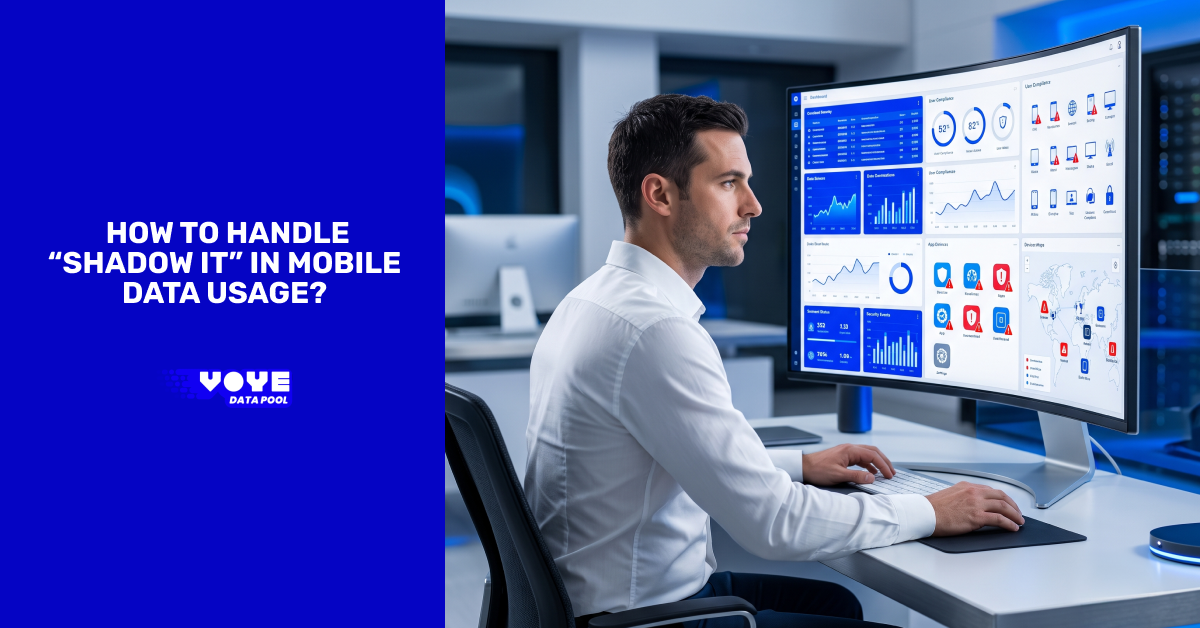
Mobile connectivity has transformed the way organizations operate. Employees now work across offices, homes, client locations, airports, and project sites while relying on smartphones, tablets, laptops, and connected devices to stay productive. For IT managers, this flexibility creates opportunities to support business growth, but it also introduces new challenges related to security, visibility, compliance, and cost control.
One of the most persistent challenges is Shadow IT in mobile data usage. As organizations embrace remote and hybrid work models, employees often adopt applications, services, devices, and connectivity solutions outside approved IT processes. While these decisions are rarely made with malicious intent, they can expose businesses to significant risks. Understanding how Shadow IT develops and implementing a proactive management strategy is essential for maintaining a secure and efficient mobile environment.
Understanding Shadow IT in Mobile Data Usage
Shadow IT refers to any technology, application, device, or service that employees use without the knowledge, approval, or oversight of the IT department. In a mobile-first workplace, Shadow IT can emerge through unauthorized communication tools, personal hotspots, unmanaged mobile devices, unapproved cloud storage services, or applications that bypass organizational policies.
Many employees turn to these solutions because they are searching for convenience, speed, or functionality that they believe is unavailable through approved channels. In some cases, business needs evolve faster than technology approval processes, encouraging employees to seek alternatives on their own.
For IT managers, the challenge is not simply identifying Shadow IT. The larger challenge is understanding how it affects mobile data management, corporate security, operational efficiency, and long-term governance objectives.

Stay Connected Securely
Reliable mobile data access for productive teams anywhere.
Why Shadow IT Continues to Grow?
The growth of remote work, distributed teams, and mobile productivity has significantly expanded the technology landscape within organizations. Employees expect instant access to tools that help them communicate, collaborate, and complete tasks from anywhere.
Several factors contribute to the rise of Shadow IT:
- Increased use of mobile devices for business activities.
- Growing demand for remote work flexibility.
- Faster adoption of cloud-based services.
- Lack of awareness regarding security risks.
- Delays in technology approval processes.
When employees believe that approved solutions slow down their work, they often seek alternatives. This behavior can create visibility gaps that make it difficult for IT teams to monitor corporate mobile usage effectively.
The Business Risks Associated With Shadow IT
Shadow IT creates challenges that extend beyond simple policy violations. It can directly affect security, compliance, financial planning, and operational stability.
Unauthorized applications may store sensitive business information in environments that do not meet organizational security standards. Employees might transfer files through unapproved channels, exposing confidential information to unnecessary risk. Devices operating outside approved management systems may also lack essential security controls such as encryption, access restrictions, and monitoring capabilities.
Financial management becomes more complicated when mobile data usage occurs across multiple unmanaged services. Without centralized oversight, organizations may struggle to track costs, optimize plans, and identify inefficient usage patterns.
Operationally, Shadow IT reduces visibility. IT departments cannot effectively protect, support, or govern technologies they do not know exist.
How IT Managers Can Identify Shadow IT Activity?
The first step in addressing Shadow IT is gaining visibility into the mobile environment. Organizations cannot protect what they cannot see.
IT managers should regularly review mobile usage reports, application inventories, access logs, and device records to identify unusual activity. Unexpected spikes in data consumption, connections to unfamiliar services, or devices operating outside management systems may indicate Shadow IT activity.
Many organizations discover Shadow IT during routine audits, mobile expense reviews, or security assessments rather than through direct alerts. This highlights the importance of continuous monitoring and proactive governance.
The ability to effectively manage team data starts with understanding which devices, applications, and services are consuming organizational resources.
Establishing a Strong Mobile Data Governance Framework
Successful organizations treat mobile governance as an ongoing business process rather than a one-time initiative.
A strong governance framework helps align security requirements, operational objectives, and employee productivity. Instead of focusing solely on restrictions, organizations should create policies that encourage the use of approved tools while providing employees with practical alternatives.
An effective governance framework should include:
- Clear mobile usage policies.
- Defined application approval procedures.
- Device management standards.
- Data protection requirements.
- Security compliance guidelines.
- Regular governance reviews.
When employees understand available resources and can easily access approved solutions, they are less likely to adopt unauthorized technologies.
Strengthening Security Controls Across Mobile Environments
Security remains one of the most important components of Shadow IT management.
Modern organizations must implement controls that protect corporate information without creating unnecessary barriers for employees. Mobile security should include device authentication, access controls, encryption standards, application management, and continuous monitoring.
IT leaders should also ensure that security policies extend beyond traditional office networks. Mobile users frequently connect through public networks, remote locations, and personal internet connections, creating additional exposure points that require oversight.
Organizations that proactively manage team data through centralized security controls can reduce vulnerabilities while maintaining workforce flexibility.
The Compliance Impact of Shadow IT
Compliance requirements continue to influence how organizations manage mobile technology.
Many businesses operate under regulations governing data privacy, information security, record retention, and customer protection. Unauthorized applications and unmanaged services can create compliance gaps by storing or processing information outside approved environments.
For IT managers, compliance is not simply about avoiding penalties. It is about ensuring consistent governance across the entire technology ecosystem.
Maintaining visibility into mobile data usage, application activity, and device access helps support compliance efforts while strengthening overall security posture. Organizations that implement clear governance standards are often better prepared for audits, risk assessments, and evolving regulatory requirements.
Educating Employees to Reduce Shadow IT
Technology alone cannot eliminate Shadow IT. Employee awareness plays an equally important role.
Many employees do not fully understand the risks associated with unauthorized applications and services. They often view these tools as productivity enhancers rather than potential security concerns.
Training initiatives should focus on helping employees understand:
- Why approved technology standards exist.
- The risks associated with unauthorized applications.
- Mobile data security best practices.
- Procedures for requesting new tools.
- Their role in protecting organizational information.
Organizations that invest in education frequently experience stronger policy compliance and improved collaboration between employees and IT teams.
Simplify Mobile Connectivity
Manage workforce connectivity with greater visibility and control.
How to Assess Shadow IT Risk in Mobile Data Usage?
Every organization faces a different level of Shadow IT risk. Conducting regular assessments allows IT managers to prioritize resources and identify vulnerabilities before they become larger problems.
Key areas to evaluate include:
- Sensitivity of information being accessed.
- Number of unmanaged applications detected.
- Volume of mobile data consumed outside approved systems.
- Geographic distribution of users and devices.
- Existing security controls.
- Regulatory obligations affecting data management.
Risk assessments help organizations make informed decisions regarding governance strategies, technology investments, and operational priorities.
A structured approach to managing team data enables IT leaders to identify emerging threats while improving visibility across the organization.
Signs Your Mobile Data Governance Strategy Needs Improvement
Certain warning signs often indicate growing Shadow IT activity.
Frequent requests for unsupported applications, inconsistent device inventories, unexplained increases in mobile data costs, and limited visibility into user activity may signal governance weaknesses.
Organizations should also pay attention to employee feedback. If teams consistently report that approved tools do not meet operational requirements, Shadow IT adoption may increase as employees seek alternatives.
Regular reviews of mobile operations help IT managers identify these issues early and implement corrective actions before risks escalate.
What Successful Organizations Do Differently?
Organizations that effectively control Shadow IT share several common characteristics.
They maintain clear governance standards while remaining flexible enough to support evolving business needs. They prioritize visibility, regularly review usage trends, and encourage open communication between employees and IT teams.
Successful organizations also:
- Monitor mobile data consumption consistently.
- Maintain accurate device inventories.
- Evaluate application usage patterns.
- Provide approved alternatives to common employee requests.
- Align technology governance with business objectives.
Rather than relying exclusively on restrictive controls, these organizations create environments where responsible technology adoption becomes part of the company culture.
Improving Visibility Through Centralized Management
Centralized oversight remains one of the most effective ways to reduce Shadow IT risks.
As organizations expand across multiple locations and support increasingly distributed teams, maintaining visibility becomes more challenging. Fragmented mobile environments often lead to inconsistent policies, limited reporting, and inefficient resource allocation.
Organizations seeking greater visibility into workforce connectivity and a more efficient way to manage team data can benefit from Voye Data Pool, which helps centralize oversight, improve operational control, and simplify mobile data management across distributed teams.
Centralized management enables IT leaders to make better decisions regarding resource allocation, security policies, budgeting, and operational planning.
Building a Long-Term Strategy for Shadow IT Management
Shadow IT is not a temporary challenge. New applications, services, and technologies continue to emerge, creating ongoing governance requirements for organizations of all sizes.
The most effective long-term strategy combines visibility, education, security, governance, and employee collaboration. Organizations that focus on only one area often struggle to achieve sustainable results.
Continuous monitoring, regular policy reviews, and proactive communication help organizations adapt to changing technology landscapes while maintaining operational control. Businesses that consistently manage team data through a structured governance approach are better positioned to support growth, maintain compliance, and protect critical information assets.
Shadow IT in mobile data usage will remain an important concern for IT managers as workforce mobility continues to expand. However, organizations that prioritize visibility, governance, security, and employee engagement can significantly reduce risk while supporting productivity. The goal is not to prevent innovation but to ensure that technology adoption occurs within a framework that protects both business objectives and organizational data.
By creating clear policies, educating employees, strengthening oversight, and investing in centralized mobile management practices, businesses can build a more secure and efficient mobile ecosystem. Organizations that proactively manage team data while maintaining visibility into mobile operations will be better prepared to navigate future challenges and support long-term digital transformation initiatives.
Conclusion
Shadow IT in mobile data usage is a growing challenge that can affect security, compliance, operational visibility, and cost management. Organizations that take a proactive approach by improving governance, monitoring mobile activity, educating employees, and strengthening security controls are better equipped to reduce risks and maintain control over their technology environments.
As mobile work continues to expand, IT managers must focus on creating a balance between productivity and governance. With clear policies, centralized oversight, and continuous visibility into mobile operations, organizations can minimize Shadow IT risks while supporting efficient, secure, and scalable workforce connectivity.
Support Mobile Teams
Enable secure data access across distributed work environments.