

eSIM for IoT: Revolutionizing Fleet Management
eSIM for IoT is transforming fleet management by enabling reliable connectivity, real-time vehicle tracking, predictive maintenance, and enhanced operational efficiency. As connected fleets continue to grow, businesses need scalable solutions that simplify device management and support seamless communication across regions. This blog explores how eSIM technology helps fleet managers reduce downtime, improve security, optimize costs, and build future-ready transportation networks powered by intelligent IoT connectivity.


 9 min read
 Share
Share
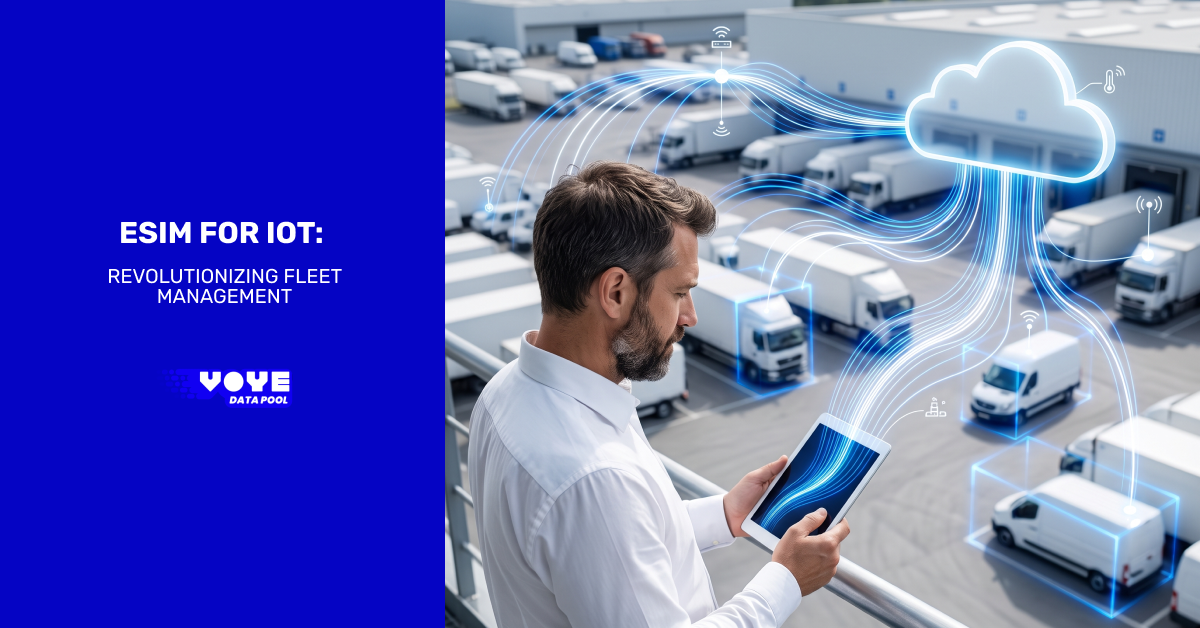
Fleet management has evolved dramatically over the last decade. What was once focused primarily on vehicle maintenance and driver scheduling has transformed into a data-driven operation powered by connected technologies. Today, fleet managers are expected to optimize routes, reduce operational costs, improve driver safety, monitor assets in real time, and maintain compliance across multiple regions. Achieving these goals requires reliable and scalable connectivity.
This is where eSIM technology is changing the landscape. As fleets become increasingly connected through IoT devices, traditional SIM card management often creates unnecessary complexity. Modern businesses need a flexible connectivity solution that can support vehicles, sensors, telematics systems, and tracking devices across multiple networks and locations. eSIM technology is helping organizations meet these demands while improving efficiency, visibility, and operational control across their entire fleet ecosystem.
The Growing Role of IoT in Fleet Operations
The Internet of Things has become a critical component of modern fleet management. Connected devices continuously collect and transmit valuable information about vehicle performance, location, fuel consumption, driver behavior, cargo conditions, and maintenance requirements.
Fleet managers rely on this real-time data to make informed decisions that directly impact operational efficiency. Instead of reacting to issues after they occur, organizations can identify potential problems early and take proactive measures.
Common IoT-enabled fleet applications include:
- GPS vehicle tracking
- Predictive maintenance systems
- Fuel monitoring solutions
- Driver safety monitoring
- Asset and cargo tracking
As the number of connected devices grows, maintaining seamless connectivity becomes increasingly important. Any disruption in communication can affect visibility, efficiency, and customer satisfaction.

Optimize Fleet Connectivity
Enable reliable data access across every connected vehicle.
Why Traditional SIM Cards Create Challenges?
While traditional SIM cards have supported connected devices for years, they often struggle to meet the demands of large-scale fleet operations.
Physical SIM cards require manual installation and replacement. Managing thousands of vehicles across multiple regions can create logistical challenges and increase operational costs. When vehicles cross borders, connectivity issues can arise if network coverage is limited or roaming expenses become excessive.
Additionally, updating carrier profiles or changing network providers often requires physical intervention. This process can be time-consuming and costly, particularly for fleets operating internationally.
As transportation networks become more connected, businesses need a more agile solution capable of adapting to changing connectivity requirements without disrupting operations.
Understanding eSIM Technology in Fleet Management
An embedded SIM, or eSIM, is a programmable SIM integrated directly into a device. Unlike traditional SIM cards, it can store multiple carrier profiles and be remotely managed through software.
For fleet operators, this creates significant advantages. Vehicles and connected devices can switch between available networks without requiring physical SIM replacements. Connectivity can be optimized based on coverage, performance, and operational requirements.
The adoption of eSIM for IoT is helping organizations simplify device management while improving connectivity reliability across large fleets. By eliminating the need for physical SIM handling, businesses can reduce administrative overhead and improve operational scalability.
Improving Real-Time Visibility Across Fleet Networks
Real-time visibility is one of the most valuable capabilities in fleet management. Whether monitoring vehicle location, cargo conditions, or driver performance, uninterrupted connectivity is essential for maintaining accurate data streams.
The implementation of eSIM for IoT enables devices to remain connected through the strongest available network. This capability helps reduce communication gaps that can occur when vehicles move through areas with varying network coverage.
Reliable connectivity supports continuous vehicle tracking, faster response to unexpected incidents, improved route optimization, better customer communication, and enhanced operational transparency.
When fleet managers have access to accurate, real-time information, they can make faster decisions and improve overall service quality.
Reducing Downtime Through Predictive Maintenance
Vehicle downtime remains one of the most significant challenges in fleet operations. Unexpected breakdowns can lead to missed deliveries, increased repair costs, and reduced customer satisfaction.
Connected sensors continuously monitor engine performance, tire pressure, battery health, and other critical systems. This data enables predictive maintenance programs that identify potential issues before they become major problems.
The use of eSIM for IoT ensures that maintenance data is transmitted consistently to fleet management platforms. Reliable communication allows maintenance teams to schedule repairs proactively, minimizing disruptions and extending vehicle lifespan.
Predictive maintenance not only improves vehicle availability but also contributes to lower operating costs and enhanced safety standards.
Enhancing Fleet Security and Asset Protection
Security is a growing concern for fleet operators. Vehicle theft, unauthorized usage, cargo loss, and equipment tampering can result in significant financial losses.
Connected tracking devices provide real-time visibility into vehicle and asset locations. Geofencing technology can trigger alerts when vehicles enter or leave designated areas, while sensor data can identify unauthorized access attempts.
By leveraging eSIM for IoT, organizations can maintain consistent communication with security systems regardless of geographic location. This enhanced connectivity strengthens monitoring capabilities and improves incident response times.
For fleets transporting valuable goods, maintaining uninterrupted tracking can be a critical component of risk management strategies.
Supporting Global Fleet Operations
Many transportation and logistics companies operate across multiple countries and regions. Managing connectivity in these environments can be complex when devices rely on traditional SIM cards tied to specific carriers.
International operations require connectivity solutions that can adapt to changing network conditions while maintaining compliance with local regulations.
The flexibility offered by eSIM for IoT allows devices to switch between approved carrier profiles remotely. This capability helps ensure consistent connectivity while reducing the challenges associated with roaming agreements and carrier management.
As global supply chains continue to expand, connectivity flexibility becomes increasingly important for maintaining operational continuity.
Scale Smart Fleet Operations
Support growing fleets with seamless global IoT connectivity.
Real-World Fleet Challenges That eSIM Technology Solves
Fleet managers face a variety of operational challenges that can directly impact profitability and service quality. Maintaining connectivity across hundreds or even thousands of vehicles is often more complicated than expected. Vehicles regularly travel through regions with varying network coverage, while physical SIM replacements can require significant time and resources.
For organizations operating across multiple states or countries, managing connectivity manually can become a major administrative burden. Drivers may experience interruptions in data transmission, making it difficult to track vehicles, monitor assets, or receive critical maintenance alerts.
eSIM technology addresses these challenges by enabling remote profile management and automated network selection. This reduces the need for manual intervention while ensuring connected devices remain operational throughout their journeys. As fleet operations continue to expand, flexible connectivity solutions become increasingly important for maintaining efficiency and visibility.
Security and Compliance Considerations for Connected Fleets
As fleet operations become more connected, cybersecurity and data protection are becoming top priorities. Connected vehicles generate large volumes of sensitive operational data, including vehicle locations, driver activity, maintenance records, and asset information.
Organizations must ensure that this information is transmitted securely and protected from unauthorized access. Modern eSIM-enabled connectivity solutions support secure authentication methods and encrypted communications that help reduce security risks across connected environments.
Compliance is another critical consideration. Transportation companies often operate across different regions, each with specific regulatory requirements related to data handling and operational reporting. Reliable connectivity infrastructure helps businesses maintain consistent reporting standards while supporting compliance objectives.
By incorporating security and compliance planning into their connectivity strategy, fleet managers can reduce risk while strengthening operational resilience.
Measuring ROI from Connected Fleet Technologies
Investments in fleet technology must deliver measurable business value. Fleet managers are increasingly focused on key performance indicators that demonstrate the return on connectivity and IoT investments.
Common metrics include reduced vehicle downtime, lower fuel consumption, improved route efficiency, increased asset utilization, and faster maintenance response times.
Predictive maintenance programs can significantly reduce unexpected breakdowns, while real-time fleet visibility improves operational efficiency and customer service outcomes. When reliable connectivity supports these technologies, organizations gain access to actionable insights that help improve decision-making across the entire fleet.
Over time, these operational improvements contribute to cost savings, stronger customer satisfaction, and greater competitiveness in the transportation sector.
Cost Optimization Through Smarter Connectivity
Fleet managers are constantly under pressure to reduce operating expenses while maintaining service quality. Connectivity costs can become significant when managing large numbers of vehicles and IoT devices.
eSIM technology supports more efficient carrier management by allowing organizations to select networks based on performance and pricing. Remote provisioning eliminates many of the logistical costs associated with traditional SIM replacements.
In addition, centralized device management simplifies administrative processes and reduces labor requirements. Organizations gain greater control over connectivity expenses while improving operational efficiency.
These cost savings can have a meaningful impact on overall fleet profitability, particularly for large-scale transportation and logistics operations.
Scaling Fleet Connectivity for Future Growth
As businesses grow, their fleet connectivity requirements become more complex. Adding vehicles, deploying new sensors, and expanding into additional markets require a scalable infrastructure that can adapt quickly.
Traditional SIM management often creates bottlenecks when organizations attempt to scale. Physical installation, carrier coordination, and device provisioning can slow deployment timelines.
The adoption of eSIM for IoT provides a scalable foundation for future growth. New devices can be activated remotely, network profiles can be updated over the air, and connectivity can be managed centrally across the entire fleet.
This flexibility allows organizations to expand operations without introducing unnecessary complexity into their connectivity strategy.
Future Trends Shaping Fleet Management
Fleet management is becoming increasingly data-centric. Emerging technologies such as artificial intelligence, machine learning, advanced telematics, autonomous transportation systems, and predictive analytics are becoming more important across transportation and logistics operations.
Connected vehicles will continue generating larger volumes of data that can be analyzed to improve routing, maintenance scheduling, fuel efficiency, and driver safety. Fleet managers will increasingly rely on data-driven insights to identify opportunities for optimization before operational issues arise.
As these technologies evolve, connectivity will remain the foundation that enables communication between vehicles, sensors, cloud platforms, and management systems.
Organizations investing in scalable IoT connectivity solutions today will be better positioned to adopt future innovations and maintain long-term operational efficiency. Voye Data Pool helps businesses simplify connectivity management for modern fleet operations while supporting the growing demands of connected transportation ecosystems.
Conclusion
The digital transformation of fleet management is creating new opportunities for efficiency, visibility, and operational control. Connected vehicles and IoT devices generate valuable insights that help organizations optimize performance, reduce costs, and improve customer experiences. However, these benefits depend on consistent and reliable connectivity across every asset in the fleet.
eSIM technology is emerging as a powerful solution for addressing the challenges associated with traditional SIM management. By enabling remote provisioning, flexible network selection, enhanced security, and scalable connectivity management, eSIMs are helping fleet operators build smarter and more resilient operations. As transportation networks become increasingly connected, organizations that embrace advanced connectivity solutions will be better prepared to navigate the future of fleet management with confidence and long-term success.
Reduce Fleet Downtime
Improve maintenance visibility and keep vehicles connected.