

eSIM vs. Physical SIM: Which is More Secure for Business?
Enterprises are shifting toward eSIM technology to strengthen connectivity security. Learn how eSIM for business improves protection against SIM related risks while providing better control over device connectivity across global teams.


 6 min read
 Share
Share
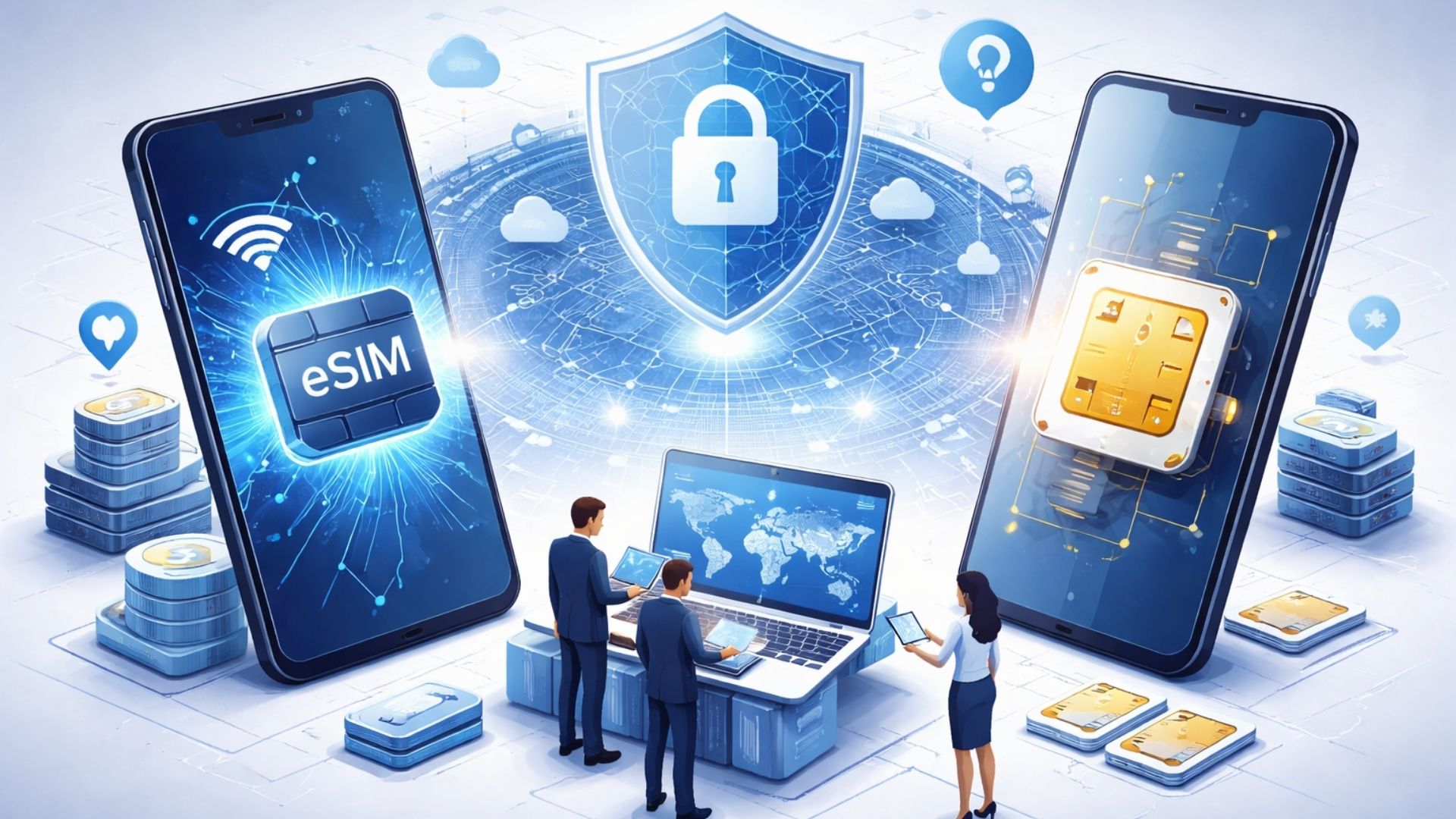
Connectivity plays a critical role in modern enterprise operations. Businesses rely on mobile devices, connected infrastructure, and global teams that require constant access to secure networks. As organizations expand their digital environments, the need for secure and reliable connectivity solutions becomes increasingly important.
Traditionally, enterprises relied on physical SIM cards to connect devices to mobile networks. However, new digital technologies are changing how connectivity is managed. eSIM technology now allows enterprises to activate and manage connectivity remotely without the need for physical SIM distribution.
For enterprise IT and security teams, the question is no longer just about connectivity but also about security. Choosing between eSIM and traditional SIM cards requires understanding how each technology protects devices, networks, and enterprise data.
At Voye Data Pool, we help organizations simplify global connectivity through secure eSIM infrastructure that supports teams and devices across more than 130+ countries.
Understanding Physical SIM Cards in Enterprise Environments
Physical SIM cards have been the standard connectivity solution for many years. They contain subscriber identity information that allows devices to connect to mobile networks.
In enterprise environments, physical SIM cards are commonly used in smartphones, tablets, laptops, and IoT devices. While they provide reliable connectivity, managing them at scale can introduce operational and security challenges.
Key Characteristics of Physical SIM Cards
- Require manual insertion into devices.
- Must be physically distributed to employees or infrastructure locations.
- Often tied to a single network provider.
- Replacement requires physical access to the device.
For enterprises managing hundreds or thousands of devices, these limitations can create administrative complexity.
What Is eSIM Technology?
eSIM technology replaces traditional removable SIM cards with an embedded digital SIM built directly into the device hardware. Instead of inserting a card, connectivity profiles are downloaded and activated digitally.
This approach allows enterprises to manage connectivity remotely through centralized platforms.
Key Features of eSIM
- Digital SIM profiles are stored within the device.
- Remote activation and configuration.
- Ability to switch between network providers.
- Centralized management of connectivity.
These capabilities make eSIM particularly valuable for organizations managing distributed devices or global teams.
Security Considerations in Enterprise Connectivity
When evaluating connectivity technologies, enterprises must consider how well each option protects network access and sensitive data.
Security concerns typically include:
- Unauthorized device access.
- SIM theft or duplication.
- Network identity protection.
- Secure device provisioning.
Both physical SIM cards and eSIM technology provide secure connectivity, but the way they manage identity and access can differ significantly.

Secure Your Enterprise Connectivity
Protect business devices with secure and scalable global eSIM connectivity.
Physical SIM Security Risks
While physical SIM cards have been widely used for years, they introduce several potential security vulnerabilities for enterprises.
1. Risk of Physical Theft
Since physical SIM cards can be removed from devices, they can be stolen or transferred to unauthorized devices. This can allow attackers to impersonate legitimate network users.
2. SIM Swapping Attacks
SIM swapping occurs when an attacker convinces a carrier to transfer a phone number to a new SIM card. This can allow attackers to intercept communications or bypass security authentication systems.
3. Device Handling Risks
Enterprises must distribute and replace SIM cards manually. This process increases the risk of loss, misplacement, or unauthorized access.
These risks can be particularly concerning for organizations managing large device fleets.
Why eSIM Improves Enterprise Security?
eSIM technology addresses several of the vulnerabilities associated with physical SIM cards. Because the SIM is embedded directly into the device hardware, it cannot be physically removed or swapped.
- Embedded Identity Protection
The embedded nature of eSIM prevents unauthorized physical access to the SIM itself.
- Secure Remote Provisioning
Connectivity profiles can be installed securely through encrypted provisioning systems. This reduces the risk of unauthorized network access.
- Centralized Security Control
Enterprise administrators can manage connectivity profiles remotely, allowing them to disable, modify, or reconfigure device connectivity if security issues arise.
- Reduced Risk of SIM Fraud
Since there is no physical SIM to swap or steal, many traditional SIM-based fraud techniques become far less effective.
For enterprises prioritizing security and operational control, these advantages are significant.
Operational Security Advantages for Enterprises
Security in enterprise connectivity is not limited to preventing external threats. It also includes managing devices efficiently and reducing administrative risks.
- Remote Device Management
With eSIM technology, administrators can activate or deactivate connectivity profiles remotely. This ensures devices can be secured quickly if they are lost or compromised.
- Faster Security Response
If a device experiences suspicious activity, connectivity access can be disabled immediately without needing physical access to the device.
- Improved Compliance
Centralized connectivity management allows organizations to maintain better records of device activity and network access.
These operational advantages support stronger overall enterprise security frameworks.
Future Ready Business Connectivity
Support enterprise security with scalable and reliable eSIM infrastructure.
Connectivity, Flexibility, and Security
Enterprise security strategies must also consider how connectivity adapts to changing business environments. Organizations with international operations often require devices that can connect to multiple networks across regions.
Traditional SIM cards often restrict devices to a single network provider. This limitation can affect connectivity performance and operational flexibility.
Through eSIM for business, organizations gain the ability to manage connectivity dynamically across regions while maintaining centralized control over device security.
This flexibility allows enterprises to maintain secure connectivity while supporting global teams and distributed operations.
How We Support Secure Enterprise Connectivity?
At Voye Data Pool, we provide enterprises with secure and scalable eSIM connectivity solutions designed for modern business environments.
Our platform allows organizations to manage connectivity across global teams and connected devices through a centralized management system. Enterprises can activate devices remotely, monitor connectivity usage, and maintain secure network access across more than 130+ countries.
By combining advanced eSIM technology with centralized management, we help businesses simplify connectivity operations while strengthening their enterprise security posture.
Choosing the Right Connectivity Security Model
As enterprise connectivity needs continue to evolve, businesses must evaluate which technologies provide the strongest combination of security, flexibility, and operational efficiency.
While physical SIM cards have served organizations for many years, digital connectivity solutions now offer new advantages for enterprises managing global devices and distributed teams.
With stronger identity protection, centralized control, and secure remote provisioning, eSIM technology provides enterprises with a modern approach to connectivity security that supports the demands of today’s connected business environment.