


Enterprise Mobility Audits: What Every IT Leader Needs to Know
Enterprise mobility audits help IT leaders uncover hidden mobile costs, reduce roaming spend, improve security, and gain real-time visibility across global workforces. Learn how to audit, optimize, and future-proof enterprise mobility using modern eSIM solutions.


 8 min read
 Share
Share
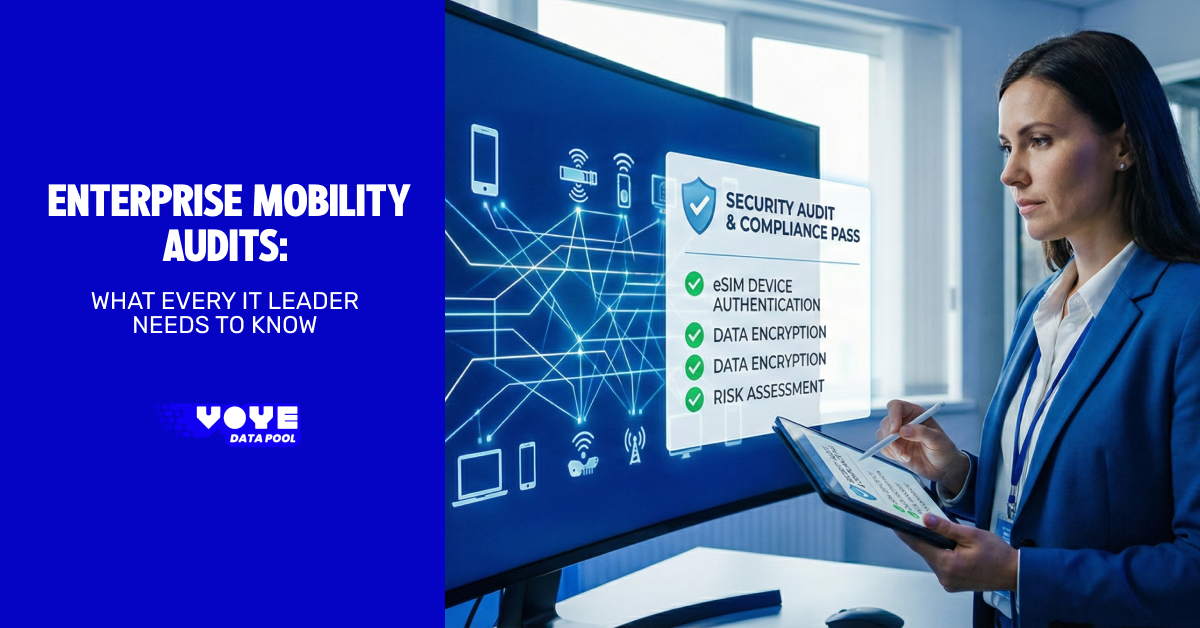
Why Enterprise Mobility Audits Are No Longer Optional
Enterprise mobility has evolved from a convenience into a mission-critical business function. With global workforces, remote teams, international travel, IoT devices, and BYOD (Bring Your Own Device) policies becoming the norm, organizations are more dependent than ever on mobile connectivity.
However, this rapid expansion has created complexity, cost leakage, security risks, and operational blind spots. Many enterprises are paying for unused mobile data plans, facing unexpected roaming charges, or struggling to maintain compliance across regions.
This is where enterprise mobility audits become essential.
An enterprise mobility audit provides IT leaders with a structured, data-driven approach to assessing mobile usage, costs, security, and operational efficiency across the organization. It uncovers inefficiencies, reduces waste, strengthens security, and ensures that mobile strategies align with business goals.
What Is an Enterprise Mobility Audit?
An enterprise mobility audit is a systematic evaluation of an organization’s mobile ecosystem, including:
- Mobile devices (smartphones, tablets, laptops, IoT devices)
- Connectivity plans and data usage
- Roaming expenses
- Security policies and compliance
- Vendor contracts and carrier agreements
- Mobile device management (MDM) tools
- User behavior and consumption patterns
The goal is to gain full visibility and control over enterprise mobility while optimizing costs, performance, and security.
Key Objectives of a Mobility Audit
An effective enterprise mobility audit aims to:
- Identify unnecessary or unused mobile spend
- Eliminate roaming bill shock
- Improve visibility into global data usage
- Strengthen security and compliance
- Optimize vendor and carrier contracts
- Align mobility strategy with business needs
- Enable scalable growth for global teams
Why Enterprise Mobility Audits Matter More Than Ever
1. The Rise of Global and Remote Workforces
Modern enterprises operate across borders. Employees travel frequently, work remotely, or operate in multiple countries. Traditional SIM-based contracts struggle to support this reality, leading to:
- Multiple regional carriers
- Fragmented billing systems
- Inconsistent data policies
- Limited usage visibility
A mobility audit exposes these inefficiencies and lays the groundwork for a centralized solution.
2. Escalating Roaming Costs
Roaming remains one of the biggest hidden expenses for enterprises. Without proper monitoring:
- Employees unknowingly consume expensive roaming data
- IT teams discover overruns only after invoices arrive
- Budgets spiral out of control
Mobility audits reveal where roaming costs originate and how they can be reduced—often by up to 70% using modern eSIM platforms.
3. Growing Security and Compliance Risks
Each mobile device represents a potential entry point for cyber threats. Without proper oversight:
- Lost or stolen devices may expose sensitive data
- Outdated OS versions increase vulnerability
- Unapproved apps or networks compromise security
- Compliance violations go unnoticed
A mobility audit identifies security gaps and ensures policies are enforced consistently.
4. Lack of Real-Time Visibility
Many IT leaders rely on delayed carrier reports or spreadsheets to manage mobility. This results in:
- Reactive decision-making
- Limited cost forecasting
- Poor accountability
Audits replace guesswork with actionable insights.
Key Components of an Enterprise Mobility Audit
1. Device Inventory and Lifecycle Management
A comprehensive audit starts with understanding what devices exist across the organization.
This includes:
- Smartphones, tablets, laptops
- Employee-owned vs. corporate-owned devices
- IoT and M2M devices
- Device age, OS version, and usage status
Common issues uncovered:
- Orphaned devices still generating costs
- Employees using outdated or unsupported devices
- Lack of standardized device policies
2. Data Usage and Consumption Analysis
Data usage is often the most expensive aspect of enterprise mobility.
An audit evaluates:
- Monthly data consumption by user, team, and region
- Peak usage patterns
- Over-provisioned or underutilized plans
- International vs. domestic data usage
This analysis highlights where enterprises are overpaying and where flexible data solutions can deliver savings.
3. Roaming and International Connectivity Review
For global teams, roaming costs are a major concern.
Audits examine:
- Frequency of international travel
- Roaming data usage by destination
- Cost per MB across carriers
- Availability of local or regional alternatives
This step often reveals that traditional roaming contracts are outdated and inefficient compared to enterprise eSIM solutions.
4. Carrier and Vendor Contract Evaluation
Most enterprises work with multiple carriers across regions.
A mobility audit reviews:
- Contract terms and renewal dates
- Pricing inconsistencies
- Redundant services
- SLA compliance
This allows IT leaders to renegotiate contracts or consolidate vendors.
5. Security and Compliance Assessment
Security is a non-negotiable aspect of mobility audits.
Key areas include:
- Device encryption and authentication
- MDM and endpoint security tools
- Data access controls
- Compliance with industry regulations (GDPR, HIPAA, ISO)
Audits identify vulnerabilities before they become incidents.
6. Policy and Governance Review
Many enterprises lack clear mobility governance.
Audits evaluate:
- BYOD policies
- Acceptable usage guidelines
- Data consumption limits
- Incident response procedures
Strong governance ensures consistency and accountability.
Common Challenges IT Leaders Face Without Mobility Audits
Fragmented Data Sources
Multiple carriers and billing systems make it difficult to get a single source of truth.
Hidden Costs
Unused plans, inactive SIMs, and roaming overruns silently drain budgets.
Manual Management
Spreadsheets and email approvals slow down operations and increase errors.
Limited Scalability
Traditional SIM provisioning cannot keep pace with fast-growing global teams.
Reactive IT Operations
Without real-time insights, IT teams respond after problems occur.

Take Control of Enterprise Mobility
Reduce roaming costs and manage global connectivity from one platform.
Best Practices for Conducting an Enterprise Mobility Audit
1. Define Clear Objectives
Before starting, determine what success looks like:
- Cost reduction
- Improved security
- Better user experience
- Global scalability
2. Centralize Data Collection
Use platforms that aggregate usage, billing, and device data in one place.
3. Involve Key Stakeholders
Include IT, finance, security, HR, and procurement teams to ensure alignment.
4. Prioritize Actionable Insights
Audits should lead to concrete actions—not just reports.
5. Make Audits Continuous, Not One-Time
Mobility environments change constantly. Continuous monitoring is essential.
The Role of eSIM Technology in Enterprise Mobility Audits
Traditional SIM-based mobility models are no longer sufficient.
Enterprise eSIM platforms fundamentally change how mobility audits are conducted and maintained.
Why eSIM Is a Game Changer
- Instant provisioning without physical SIM cards
- Centralized global management
- Real-time data visibility
- Flexible, scalable data plans
- Seamless international connectivity
eSIM transforms audits from periodic exercises into ongoing optimization processes.
How Voye Data Pool Simplifies Enterprise Mobility Audits
About Voye Data Pool
Voye Data Pool is a corporate eSIM management platform designed to help enterprises:
- Save on roaming costs
- Simplify global connectivity
- Distribute, monitor, and control mobile data
- Manage global teams from one centralized platform
Key Benefits for Enterprise Mobility Audits
1. Centralized Visibility
Voye Data Pool provides a single dashboard to monitor:
- Real-time data usage
- Active and inactive eSIMs
- Regional consumption trends
- Cost allocation by team or project
This eliminates blind spots uncovered during audits.
2. Cost Optimization and Roaming Reduction
By replacing traditional roaming with affordable, flexible eSIM data, enterprises can cut roaming costs by up to 70%.
No bill shock. No surprises.
3. Instant Global Deployment
Deploy connectivity in seconds—without shipping SIM cards or negotiating local carriers.
This simplifies audits and accelerates workforce onboarding.
4. Policy Control and Governance
IT teams can:
- Set usage limits
- Assign data pools
- Disable unused eSIMs
- Enforce regional policies
This ensures compliance long after the audit ends.
5. Scalable for Growing Enterprises
Whether supporting 10 travelers or 10,000 employees, Voye Data Pool scales effortlessly.
Building a Future-Proof Enterprise Mobility Strategy
A mobility audit is not the end goal—it’s the foundation.
To stay competitive, IT leaders must:
- Embrace centralized eSIM platforms
- Move from reactive to proactive mobility management
- Align mobility with digital transformation initiatives
- Enable seamless global operations
Voye Data Pool empowers enterprises to do exactly that.
Enterprise Mobility Audit Checklist for IT Leaders
Before concluding, here’s a practical checklist:
- Do you have a complete inventory of all mobile devices?
- Can you see real-time data usage across regions?
- Are you paying for unused or inactive plans?
- Do roaming costs exceed expectations?
- Is mobility data centralized or fragmented?
- Are security policies consistently enforced?
- Can you provision connectivity instantly for global teams?
- Is your mobility strategy scalable?
If you answered “no” to any of these, it’s time for an enterprise mobility audit—and a modern solution.
Conclusion: Take Control of Enterprise Mobility Today
Enterprise mobility audits are no longer optional—they are essential for cost control, security, and operational efficiency. As workforces become more global and mobile, traditional approaches fail to deliver the visibility and flexibility IT leaders need.
By conducting regular mobility audits and adopting modern eSIM platforms like Voye Data Pool, enterprises can:
- Eliminate roaming bill shock
- Gain real-time visibility
- Simplify global connectivity
- Reduce costs by up to 70%
- Future-proof their mobility strategy
Voye Data Pool enables IT leaders to move beyond audits and into continuous optimization—managing global connectivity with confidence, control, and clarity.
About Voye Data Pool
Voye Data Pool is a Business eSIM and Enterprise Data Solutions platform offering:
- Affordable, flexible eSIM data for corporate teams
- Instant, secure, and hassle-free global connectivity
- One platform to distribute, monitor, and control mobile data
- Seamless support for teams on the move
One platform. One global solution. Zero complexity.
Seamless eSIM Connectivity for Enterprises
Activate, manage, and scale eSIMs with ease.