Get 5% Discount using the code VOYE15 Buy eSIM close

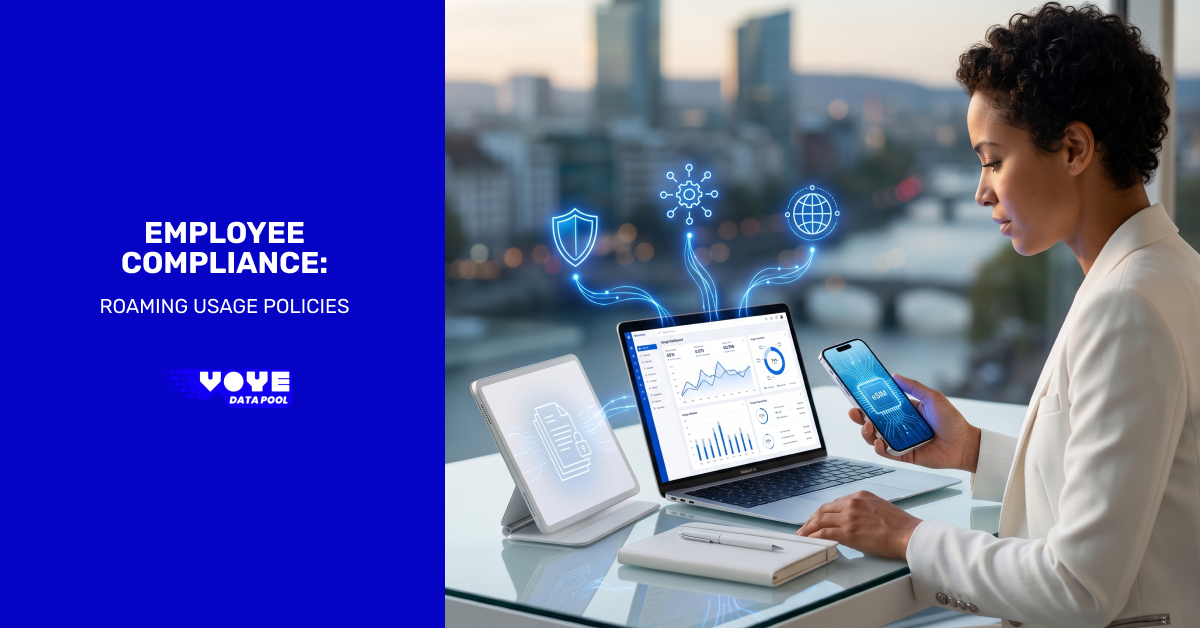
Employee Compliance: Roaming Usage Policies

Employee roaming usage policies help organizations manage international mobile connectivity while maintaining security, compliance, and operational efficiency. This blog explains how businesses can create effective roaming frameworks, control mobile expenses, reduce cybersecurity risks, and improve employee accountability during global travel. It also highlights the importance of employee awareness, secure mobile practices, and modern roaming management solutions that support long-term business continuity and workforce productivity in an increasingly connected global environment.

Voye Data Pool Team
May 28, 2026 dot Read 9 min read
share Share
Employee Compliance: Roaming Usage Policies

Global connectivity has become a standard part of modern business operations. Employees travel frequently for client meetings, international conferences, remote collaboration, and cross-border project management. While mobility helps organizations stay productive and competitive, it also introduces new challenges related to mobile usage, data costs, security risks, and regulatory compliance. Companies that fail to establish clear roaming usage policies often incur uncontrolled expenses, face security vulnerabilities, and cause confusion among employees about acceptable mobile usage practices.

A well-structured roaming policy creates transparency between employers and employees while ensuring that communication systems remain secure and cost-efficient. Organizations today are increasingly prioritizing mobile governance because international roaming charges can quickly escalate without proper oversight. Businesses also need to ensure employees follow internal compliance standards when using mobile devices abroad. This is where carefully designed policies play an important role in maintaining operational control while supporting workforce flexibility.

Why Roaming Usage Policies Matter in Modern Organizations?

Mobile devices are now central to daily business communication. Employees rely on smartphones, tablets, and connected devices to access emails, cloud platforms, video meetings, and business applications from anywhere in the world. However, unrestricted roaming usage can lead to several organizational risks that impact both financial planning and operational security.

One of the most common concerns is unexpected roaming expenses. Employees may unknowingly consume large amounts of mobile data while streaming content, downloading files, or using applications that run in the background. These activities can significantly increase international mobile bills, especially when employees travel frequently across multiple countries.

Security is another major factor. Public networks and unsecured roaming connections can expose sensitive company information to cyber threats. Without clear guidance, employees may connect to unsafe networks or use unauthorized applications that compromise organizational data security. Roaming usage policies help define safe communication practices and reinforce cybersecurity expectations.

Compliance requirements also continue to evolve across industries. Organizations handling financial records, healthcare information, customer data, or confidential communications must ensure employees follow approved mobile usage standards. Proper mobile governance reduces legal exposure and supports stronger accountability throughout the organization.

Building a Clear Employee Roaming Framework

An effective roaming usage policy should provide employees with practical guidelines while remaining easy to understand. Policies that are too technical or overly restrictive often create confusion and reduce employee adherence. Businesses should focus on clarity, consistency, and operational relevance.

The first step is defining approved roaming activities. Employees need clear instructions regarding acceptable usage during business travel. This may include access to corporate email systems, approved messaging platforms, business applications, and secure communication channels. Organizations should also explain restricted activities such as personal streaming, excessive downloads, or unauthorized hotspot usage.

Device security requirements should also be included in the framework. Employees must understand how to protect business information while traveling internationally. Companies may require password-protected devices, virtual private network usage, multi-factor authentication, and encrypted communication tools. These security measures help reduce the risk of unauthorized access while employees work remotely.

Another important element involves expense monitoring and reimbursement rules. Employees should know how roaming costs are managed, what expenses are covered by the company, and which activities may result in personal accountability. Transparent communication reduces disputes and encourages responsible usage behavior.

The Role of Employee Awareness in Compliance Success

Even the strongest policy will fail without employee awareness and participation. Organizations must ensure employees fully understand roaming expectations before traveling internationally. Training sessions, onboarding materials, and regular compliance updates can help reinforce responsible mobile usage habits.

Employees often underestimate how quickly roaming charges accumulate. Automatic app updates, cloud synchronization, video conferencing, and social media usage can consume substantial amounts of mobile data within a short period. Educational programs should explain how employees can monitor data usage, connect securely, and minimize unnecessary roaming activity.

Managers and compliance teams also benefit from ongoing communication regarding mobile governance standards. Regular policy reviews help businesses adapt to changing technologies, evolving regulations, and workforce mobility trends. Strong communication creates a culture of accountability and helps employees feel more confident about following company procedures.

Businesses that prioritize employee compliance roaming strategies often experience improved cost control and stronger operational visibility. Clear guidance empowers employees to make informed decisions while protecting organizational resources during international travel.

Balancing Productivity With Cost Management

Many organizations struggle to balance employee productivity with mobile expense management. Employees require reliable communication tools to perform their responsibilities effectively, but unrestricted roaming access can lead to high operational costs. Successful organizations create policies that support both business continuity and financial accountability.

One practical solution involves setting roaming usage thresholds. Companies can establish monthly or trip-based data limits that align with employee roles and travel frequency. Automated alerts may notify employees when they approach usage limits, helping prevent unexpected expenses before they escalate.

Another effective strategy is encouraging Wi Fi usage whenever secure networks are available. Employees can reduce mobile data consumption by connecting to approved wireless networks at hotels, offices, or conference venues. However, organizations should also educate employees about the importance of avoiding unsecured public networks without proper security protections.

Businesses may also categorize roaming access based on job responsibilities. Executives, sales teams, technical specialists, and remote project managers may require broader roaming capabilities compared to employees with limited international communication needs. Tailoring roaming permissions helps organizations optimize costs while supporting operational requirements.

Security Considerations for International Mobile Usage

Cybersecurity risks continue to grow as organizations expand remote and international operations. Employees traveling abroad often connect through unfamiliar mobile networks, increasing the likelihood of phishing attacks, malware exposure, and unauthorized data interception. Roaming policies should therefore include detailed security expectations that align with broader organizational compliance standards.

Employees should be instructed to avoid downloading unknown applications or accessing sensitive company systems through unsecured networks. Organizations may require employees to use company-approved communication platforms and encrypted applications for all business interactions while traveling.

Device monitoring and remote management solutions also support stronger mobile governance. Many organizations implement mobile device management systems that allow IT teams to track device activity, enforce security settings, and remotely disable compromised devices if necessary. These tools improve visibility and help businesses respond quickly to security incidents.

Strong authentication protocols are equally important. Password requirements, biometric verification, and multi-factor authentication create additional layers of protection against unauthorized access. These measures are particularly valuable when employees handle confidential business information across international networks.

How Compliance Policies Improve Organizational Accountability?

A structured roaming policy supports accountability at every organizational level. Employees understand their responsibilities, managers gain clearer oversight, and compliance teams can monitor adherence more effectively. This consistency reduces ambiguity and strengthens operational governance across the company.

Documented policies also provide legal and regulatory advantages. Organizations operating across multiple jurisdictions often face varying data protection and communication regulations. Clear internal guidelines demonstrate a proactive approach to compliance management and reduce the risk of regulatory violations.

Internal reporting processes should also be incorporated into roaming policies. Employees need clear instructions regarding how to report suspicious activity, lost devices, unexpected charges, or security incidents while traveling. Quick reporting procedures help organizations respond efficiently and minimize operational disruption.

Companies implementing employee compliance roaming practices often discover additional long-term benefits beyond cost reduction. Improved policy adherence can strengthen employee awareness, reduce cybersecurity risks, and support better decision-making across mobile operations.

Supporting Smarter Roaming Management Through Technology

Technology continues to reshape how organizations manage international mobile usage. Advanced analytics, usage tracking platforms, and centralized management tools now provide businesses with greater visibility into roaming activity and employee behavior. These technologies help compliance teams identify unusual usage patterns, monitor expenses, and enforce policy standards more efficiently.

Modern organizations increasingly rely on automated mobile management systems to streamline roaming oversight. These systems can generate real-time alerts, apply usage restrictions, and provide detailed reporting that supports informed decision-making. Companies also benefit from centralized dashboards that allow administrators to monitor global mobile activity from a single platform.

Solution by Voye Data Pool helps organizations simplify international mobile management while maintaining stronger control over operational costs and compliance standards. Businesses seeking scalable global mobile connectivity solutions often prioritize platforms that improve transparency, enhance security oversight, and support efficient communication management across distributed teams.

Best Practices for Maintaining Effective Roaming Policies

Organizations should regularly review and update roaming policies to reflect changing business requirements and emerging technologies. Mobile communication trends evolve rapidly, and outdated policies may no longer address current operational risks or employee needs.

Some important best practices include:

  • Conduct regular employee training sessions on roaming security and cost awareness
  • Review roaming expense reports frequently to identify unusual usage patterns
  • Update mobile security protocols based on evolving cybersecurity threats
  • Create clear reporting channels for lost devices or suspicious activity

Businesses should also gather employee feedback regarding policy effectiveness. Employees who travel regularly often provide valuable insights into practical challenges, connectivity needs, and policy limitations. Incorporating this feedback helps organizations improve compliance adoption while maintaining operational flexibility.

Conclusion

Roaming usage policies are no longer optional for organizations operating in a globally connected business environment. As employees increasingly rely on mobile communication during international travel, businesses must establish clear standards that support cost management, data security, and operational accountability. Well-structured policies help organizations reduce financial risks while ensuring employees remain productive and informed throughout their travel activities.

Successful compliance strategies depend on clarity, employee education, consistent enforcement, and modern technology support. Organizations that invest in stronger mobile governance frameworks position themselves for better operational resilience, improved cybersecurity protection, and more efficient communication management. By creating practical and transparent roaming policies, businesses can confidently support workforce mobility while maintaining long-term compliance success.

Global connectivity has become a standard part of modern business operations. Employees travel frequently for client meetings, international conferences, remote collaboration, and cross-border project management. While mobility helps organizations stay productive and competitive, it also introduces new challenges related to mobile usage, data costs, security risks, and regulatory compliance. Companies that fail to establish clear roaming usage policies often incur uncontrolled expenses, face security vulnerabilities, and cause confusion among employees about acceptable mobile usage practices.

A well-structured roaming policy creates transparency between employers and employees while ensuring that communication systems remain secure and cost-efficient. Organizations today are increasingly prioritizing mobile governance because international roaming charges can quickly escalate without proper oversight. Businesses also need to ensure employees follow internal compliance standards when using mobile devices abroad. This is where carefully designed policies play an important role in maintaining operational control while supporting workforce flexibility.

Why Roaming Usage Policies Matter in Modern Organizations?

Mobile devices are now central to daily business communication. Employees rely on smartphones, tablets, and connected devices to access emails, cloud platforms, video meetings, and business applications from anywhere in the world. However, unrestricted roaming usage can lead to several organizational risks that impact both financial planning and operational security.

One of the most common concerns is unexpected roaming expenses. Employees may unknowingly consume large amounts of mobile data while streaming content, downloading files, or using applications that run in the background. These activities can significantly increase international mobile bills, especially when employees travel frequently across multiple countries.

Security is another major factor. Public networks and unsecured roaming connections can expose sensitive company information to cyber threats. Without clear guidance, employees may connect to unsafe networks or use unauthorized applications that compromise organizational data security. Roaming usage policies help define safe communication practices and reinforce cybersecurity expectations.

Compliance requirements also continue to evolve across industries. Organizations handling financial records, healthcare information, customer data, or confidential communications must ensure employees follow approved mobile usage standards. Proper mobile governance reduces legal exposure and supports stronger accountability throughout the organization.

Building a Clear Employee Roaming Framework

An effective roaming usage policy should provide employees with practical guidelines while remaining easy to understand. Policies that are too technical or overly restrictive often create confusion and reduce employee adherence. Businesses should focus on clarity, consistency, and operational relevance.

The first step is defining approved roaming activities. Employees need clear instructions regarding acceptable usage during business travel. This may include access to corporate email systems, approved messaging platforms, business applications, and secure communication channels. Organizations should also explain restricted activities such as personal streaming, excessive downloads, or unauthorized hotspot usage.

Device security requirements should also be included in the framework. Employees must understand how to protect business information while traveling internationally. Companies may require password-protected devices, virtual private network usage, multi-factor authentication, and encrypted communication tools. These security measures help reduce the risk of unauthorized access while employees work remotely.

Another important element involves expense monitoring and reimbursement rules. Employees should know how roaming costs are managed, what expenses are covered by the company, and which activities may result in personal accountability. Transparent communication reduces disputes and encourages responsible usage behavior.

The Role of Employee Awareness in Compliance Success

Even the strongest policy will fail without employee awareness and participation. Organizations must ensure employees fully understand roaming expectations before traveling internationally. Training sessions, onboarding materials, and regular compliance updates can help reinforce responsible mobile usage habits.

Employees often underestimate how quickly roaming charges accumulate. Automatic app updates, cloud synchronization, video conferencing, and social media usage can consume substantial amounts of mobile data within a short period. Educational programs should explain how employees can monitor data usage, connect securely, and minimize unnecessary roaming activity.

Managers and compliance teams also benefit from ongoing communication regarding mobile governance standards. Regular policy reviews help businesses adapt to changing technologies, evolving regulations, and workforce mobility trends. Strong communication creates a culture of accountability and helps employees feel more confident about following company procedures.

Businesses that prioritize employee compliance roaming strategies often experience improved cost control and stronger operational visibility. Clear guidance empowers employees to make informed decisions while protecting organizational resources during international travel.

Balancing Productivity With Cost Management

Many organizations struggle to balance employee productivity with mobile expense management. Employees require reliable communication tools to perform their responsibilities effectively, but unrestricted roaming access can lead to high operational costs. Successful organizations create policies that support both business continuity and financial accountability.

One practical solution involves setting roaming usage thresholds. Companies can establish monthly or trip-based data limits that align with employee roles and travel frequency. Automated alerts may notify employees when they approach usage limits, helping prevent unexpected expenses before they escalate.

Another effective strategy is encouraging Wi Fi usage whenever secure networks are available. Employees can reduce mobile data consumption by connecting to approved wireless networks at hotels, offices, or conference venues. However, organizations should also educate employees about the importance of avoiding unsecured public networks without proper security protections.

Businesses may also categorize roaming access based on job responsibilities. Executives, sales teams, technical specialists, and remote project managers may require broader roaming capabilities compared to employees with limited international communication needs. Tailoring roaming permissions helps organizations optimize costs while supporting operational requirements.

Security Considerations for International Mobile Usage

Cybersecurity risks continue to grow as organizations expand remote and international operations. Employees traveling abroad often connect through unfamiliar mobile networks, increasing the likelihood of phishing attacks, malware exposure, and unauthorized data interception. Roaming policies should therefore include detailed security expectations that align with broader organizational compliance standards.

Employees should be instructed to avoid downloading unknown applications or accessing sensitive company systems through unsecured networks. Organizations may require employees to use company-approved communication platforms and encrypted applications for all business interactions while traveling.

Device monitoring and remote management solutions also support stronger mobile governance. Many organizations implement mobile device management systems that allow IT teams to track device activity, enforce security settings, and remotely disable compromised devices if necessary. These tools improve visibility and help businesses respond quickly to security incidents.

Strong authentication protocols are equally important. Password requirements, biometric verification, and multi-factor authentication create additional layers of protection against unauthorized access. These measures are particularly valuable when employees handle confidential business information across international networks.

How Compliance Policies Improve Organizational Accountability?

A structured roaming policy supports accountability at every organizational level. Employees understand their responsibilities, managers gain clearer oversight, and compliance teams can monitor adherence more effectively. This consistency reduces ambiguity and strengthens operational governance across the company.

Documented policies also provide legal and regulatory advantages. Organizations operating across multiple jurisdictions often face varying data protection and communication regulations. Clear internal guidelines demonstrate a proactive approach to compliance management and reduce the risk of regulatory violations.

Internal reporting processes should also be incorporated into roaming policies. Employees need clear instructions regarding how to report suspicious activity, lost devices, unexpected charges, or security incidents while traveling. Quick reporting procedures help organizations respond efficiently and minimize operational disruption.

Companies implementing employee compliance roaming practices often discover additional long-term benefits beyond cost reduction. Improved policy adherence can strengthen employee awareness, reduce cybersecurity risks, and support better decision-making across mobile operations.

Supporting Smarter Roaming Management Through Technology

Technology continues to reshape how organizations manage international mobile usage. Advanced analytics, usage tracking platforms, and centralized management tools now provide businesses with greater visibility into roaming activity and employee behavior. These technologies help compliance teams identify unusual usage patterns, monitor expenses, and enforce policy standards more efficiently.

Modern organizations increasingly rely on automated mobile management systems to streamline roaming oversight. These systems can generate real-time alerts, apply usage restrictions, and provide detailed reporting that supports informed decision-making. Companies also benefit from centralized dashboards that allow administrators to monitor global mobile activity from a single platform.

Solution by Voye Data Pool helps organizations simplify international mobile management while maintaining stronger control over operational costs and compliance standards. Businesses seeking scalable global mobile connectivity solutions often prioritize platforms that improve transparency, enhance security oversight, and support efficient communication management across distributed teams.

Best Practices for Maintaining Effective Roaming Policies

Organizations should regularly review and update roaming policies to reflect changing business requirements and emerging technologies. Mobile communication trends evolve rapidly, and outdated policies may no longer address current operational risks or employee needs.

Some important best practices include:

  • Conduct regular employee training sessions on roaming security and cost awareness
  • Review roaming expense reports frequently to identify unusual usage patterns
  • Update mobile security protocols based on evolving cybersecurity threats
  • Create clear reporting channels for lost devices or suspicious activity

Businesses should also gather employee feedback regarding policy effectiveness. Employees who travel regularly often provide valuable insights into practical challenges, connectivity needs, and policy limitations. Incorporating this feedback helps organizations improve compliance adoption while maintaining operational flexibility.

Conclusion

Roaming usage policies are no longer optional for organizations operating in a globally connected business environment. As employees increasingly rely on mobile communication during international travel, businesses must establish clear standards that support cost management, data security, and operational accountability. Well-structured policies help organizations reduce financial risks while ensuring employees remain productive and informed throughout their travel activities.

Successful compliance strategies depend on clarity, employee education, consistent enforcement, and modern technology support. Organizations that invest in stronger mobile governance frameworks position themselves for better operational resilience, improved cybersecurity protection, and more efficient communication management. By creating practical and transparent roaming policies, businesses can confidently support workforce mobility while maintaining long-term compliance success.

Related Articles

  • VPN on Mobile: Why You Need Encrypted Data Streams?

    Mobile VPNs have become essential for securing enterprise data in an increasingly connected world. By encrypting data streams, they protect sensitive business information from cyber threats, especially across public and unstable networks. Combined with strategies like custom data pool management and solutions such as Voye Data Pool, organizations can enhance both security and operational efficiency. This approach enables safe remote work, ensures compliance, and strengthens overall IT infrastructure, making mobile VPNs a critical component of modern enterprise security frameworks.

  • How to Set Up a Corporate Data Pool in 5 Minutes?

    Managing mobile connectivity across employees, remote teams, and connected devices can quickly become complex and expensive. A corporate data pool simplifies operations by centralizing data usage, enabling instant eSIM activation, and giving IT administrators full visibility and control from a single platform. With Voye Data Pool, businesses can deploy secure global connectivity in minutes, reduce roaming costs, and support teams without handling physical SIM cards.

  • Why Every Company Will Have a Data Pool by 2030?

    The future of business will be driven not just by artificial intelligence or cloud computing, but by unified data ecosystems. By 2030, organizations across industries will adopt data pools to connect employees, devices, customers, and operations into one intelligent framework. This article explains how IoT, remote work, analytics, and predictive automation are pushing companies toward centralized data infrastructures. It also explores the critical role of reliable global connectivity and enterprise eSIM management in ensuring uninterrupted data flow. Platforms such as Voye Data Pool are helping organizations activate, monitor, and manage connectivity across global teams and connected devices. Companies that implement data pooling early will gain faster decisions, stronger security, improved customer experience, and a significant competitive advantage in the digital economy.

  • Technical Guide: Digital SIM Activation for IT Managers

    Enterprise connectivity is rapidly evolving with eSIM technology and remote provisioning frameworks. This guide provides IT managers with a clear understanding of activation workflows, architecture, and deployment strategies required for scalable operations. It highlights how organizations can optimize connectivity, improve security, and manage global device fleets efficiently. With insights into intelligent data management and enterprise integration, this content equips decision-makers to build future-ready connectivity strategies that align with business growth and digital transformation goals.

  • Ensuring Productivity with Reliable Business Internet

    Reliable business internet is essential for maintaining productivity, improving communication, and supporting seamless daily operations. This blog explains how stable connectivity helps operations managers reduce downtime, strengthen cloud-based workflows, enhance cybersecurity, and support scalable business growth. It also highlights the importance of dependable digital infrastructure in creating efficient and collaborative work environments. Businesses that invest in reliable internet solutions can improve operational performance, maintain customer satisfaction, and ensure uninterrupted workflow management in today’s competitive digital landscape.