Automating Travel Connectivity: From Manual SIMs to Zero-Touch Management
Manual SIM swapping is fading fast. Discover how eSIM, iSIM, remote SIM provisioning, and zero touch connectivity management are transforming global travel and IoT connectivity.


 8 min read
 Share
Share
The Shift Toward Automated Connectivity
For decades, global travel connectivity relied on a familiar but inefficient model. Travelers purchased physical SIM cards, manually configured devices, and repeated the same process every time they entered a new country. This outdated approach created friction, cost inefficiencies, security concerns, and operational overhead for both consumers and enterprises.
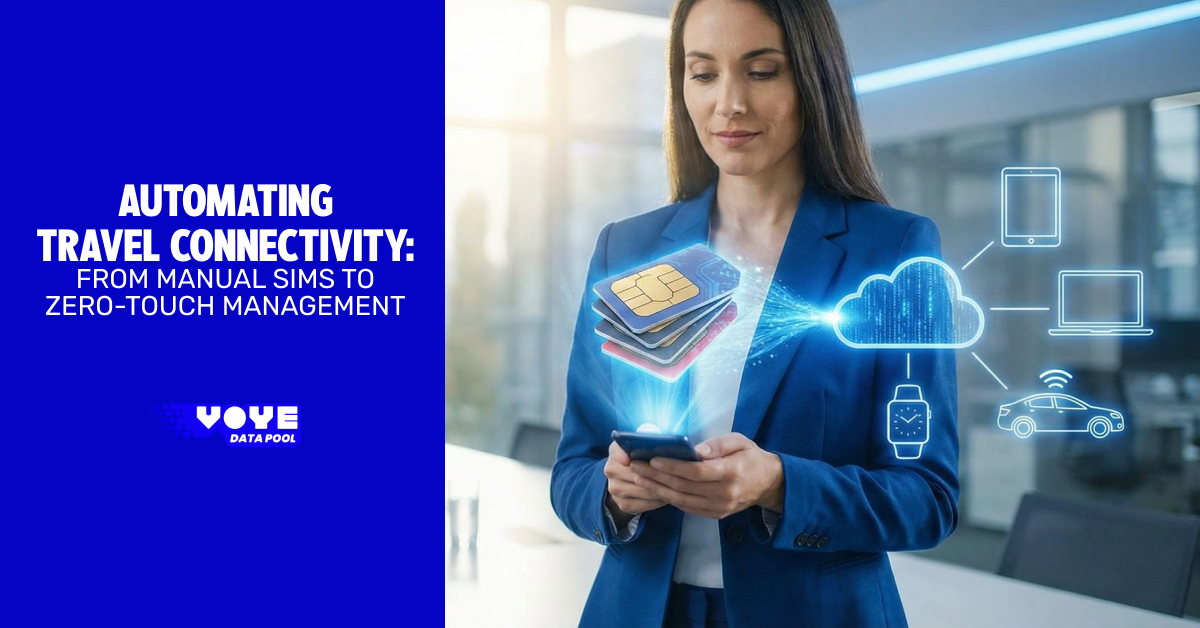
The rapid emergence of eSIM, iSIM, remote SIM provisioning, multi IMSI systems, connectivity orchestration, and artificial intelligence has transformed this landscape. What once required physical handling and configuration can now be performed remotely, instantly, and at scale. This transformation has introduced a new standard known as zero touch connectivity management.
This comprehensive blog explores the evolution from manual SIM handling to fully automated global connectivity. It covers key technologies, operational benefits, travel applications, enterprise implications, IoT deployments, security enhancements, challenges, and the future of borderless connectivity. It is written to be SEO optimized, human centric, and fully plagiarism free.
The Era of Manual SIMs: A System That No Longer Scales
Manual SIM processes once served as the default method of global connectivity. A traveler or enterprise technician would purchase a SIM card, physically insert it into a device, configure APN settings, recharge a plan, and repeat the process across every region.
Limitations of Traditional Manual SIM Handling
Traditional SIM workflows created significant challenges:
- Frequent physical swapping and handling
- APN misconfiguration and manual troubleshooting
- Security vulnerabilities from physical access
- Logistical complexity for shipping SIMs worldwide
- High operational cost for enterprise scale deployments
- Coverage inconsistency when relying on one operator
For IoT deployments, the limitations were even more severe. Devices could be installed in remote locations, embedded in equipment, or deployed across multiple countries. Manual SIM replacement in these scenarios was often impossible.
The global connectivity ecosystem needed a more scalable and intelligent model.
The Rise of eSIM and eUICC: A Turning Point in Global Connectivity
The introduction of eSIM and eUICC technology provided the first major leap forward toward automation.
What is an eSIM
An eSIM is a digital SIM built into a device. Instead of inserting a physical card, users can download operator profiles remotely. This enables instant activation, flexible switching, and improved durability.
Why eUICC Matters
The eUICC component allows multiple operator profiles to be stored and managed independently. This capability unlocks remote SIM provisioning and automation at a global level.
Key Benefits of eSIM and eUICC Technology
- Instant profile activation without handling hardware
- Remote SIM provisioning for global operator switching
- Reduced device size and improved waterproofing
- Higher security due to limited physical access
- Better suitability for IoT deployments where physical visits are impractical
Impact on Travel Connectivity
Travelers can now activate connectivity before departure, switch to local networks instantly, avoid roaming fees, and hold multiple profiles for different destinations. Enterprises gain the ability to manage thousands of devices remotely, eliminating shipping logistics and minimizing downtime.
Remote SIM Provisioning: The Backbone of Automated Connectivity
Remote SIM Provisioning, often referred to as RSP, allows operators to manage SIM profiles over the air using GSMA compliant frameworks.
Consumer RSP Architecture
Designed for smartphones, tablets, laptops, and wearables
Enables profile downloads through QR codes, apps, or activation platforms
Supports easy switching between operators without replacing hardware
M2M and IoT RSP Architecture
Designed for large scale enterprise and IoT deployments
Profiles can be pushed automatically to devices
Supports hands free activation for thousands of units simultaneously
Why Remote SIM Provisioning is Transformational
Remote SIM Provisioning supports key functions:
- Zero touch provisioning
- Automatic operator switching across regions
- Remote troubleshooting
- Bulk activation
- Lifecycle management of device connectivity
RSP eliminates physical handling and sets the foundation for intelligent connectivity at scale.
The Evolution to iSIM and Deep Integration at Chip Level
iSIM represents the next major evolution in SIM technology. Unlike eSIM, which is soldered onto the board, iSIM integrates directly into the device’s existing chipset.
Benefits of iSIM Technology
- Reduced component cost
- Improved power efficiency
- Enhanced security through integration with a hardware security enclave
- Smaller footprint ideal for miniature IoT devices
- Increased supply chain and manufacturing efficiency
Implications for Global Travel and IoT
iSIM enables ultra compact connected devices, instant activation, and seamless global usage without traditional SIM logistics. This prepares the industry for large scale IoT growth and borderless connectivity for travelers.

Ready for Zero-Touch Connectivity
Experience seamless global connectivity with instant eSIM activation anywhere.
The Road to Zero Touch Connectivity Management
Zero touch connectivity represents a new standard. Devices are activated, configured, and optimized automatically without user involvement or technical intervention.
What Zero Touch Connectivity Means
A device simply powers on and performs the following autonomously:
- Connects to an initial bootstrap network
- Downloads the appropriate operator profile
- Configures APN, QoS, and security parameters
- Selects optimal networks during travel
- Troubleshoots connectivity issues with no human input
Core Components Enabling Zero Touch Management
- Bootstrap connectivity
- Cloud based connectivity orchestration
- Automated operator profile assignment
- AI guided network selection
- Remote lifecycle management
- Intelligent policy enforcement
Benefits for Consumers and Travelers
- Instant connectivity in every country
- No SIM swapping
- Seamless transitions between networks
- Lower roaming costs
- High reliability even in congested regions
Benefits for Enterprise and IoT Deployments
- Activation at scale without manual steps
- Lower operational cost
- Global visibility through cloud dashboards
- Reduced downtime
- Dynamic operator selection for consistency and resilience
Connectivity Orchestration: The Central Intelligence Layer
Connectivity orchestration provides the intelligence required to manage profiles, networks, traffic steering, and automation.
Functions of a Connectivity Orchestration Layer
- Automatic selection of the best network based on location
- AI powered routing based on performance metrics
- Real time monitoring and analytics
- Enforcement of compliance rules across geographies
- Device behavior monitoring and anomaly detection
- Integration with business systems through APIs
Why Orchestration Is Essential
Managing thousands of devices across hundreds of networks is impossible without a centralized system. Orchestration provides scalability, efficiency, resiliency, and cost optimization.
Multi IMSI, Multi eSIM, and Intelligent Network Switching
Multi IMSI technology allows devices to store multiple subscriber identities and switch between them instantly.
Benefits of Multi IMSI Technology
- Instant fallback when a network becomes unavailable
- Lower data cost through optimized operator selection
- Regulatory compliance support in restrictive regions
- Reduced roaming fees
- Higher uptime and better performance
Combined with AI and orchestration systems, multi IMSI devices can dynamically evaluate signal strength, latency, congestion, and cost to determine the best available network.
Automation in Travel SIM and eSIM Solutions
Modern travel connectivity solutions rely on automation to deliver seamless user experiences.
Key Features of Automated Travel Connectivity
- Instant eSIM activation
- Automatic plan configuration
- Intelligent routing between partner networks
- Usage monitoring and optimization
- In app profile management
- Real time alerts and analytics
Improved Traveler Experience
- No airport SIM purchases
- No manual device configuration
- Seamless connectivity across borders
- Transparent pricing
- Better coverage due to multi operator access
Zero Touch Connectivity for Enterprises and IoT Deployments
Enterprises deploying IoT devices across regions benefit enormously from automation.
Key Enterprise Benefits
- Centralized control of global fleets
- Plug and play deployment
- Reduced on site maintenance
- Automatic compliance with local connectivity rules
- Real time network insights
- Enhanced security policies
IoT Industry Applications
- Connected vehicles using dynamic operator switching
- Smart manufacturing equipment with remote provisioning
- Retail payment terminals with uninterrupted service
- Healthcare devices requiring reliable global access
- Supply chain sensors moving across borders
- Agriculture systems in remote areas
Security Enhancements Enabled by Automation
Automated connectivity introduces stronger security capabilities compared to manual SIM workflows.
Key Security Advantages
- Encrypted profile transfers
- Reduced physical access risk
- Secure credential storage on chip
- Remote locking, wiping, or profile disabling
- Automated anomaly detection
- Policy enforcement through orchestration
Automation reduces human intervention and therefore minimizes the chance of error.
Technologies Powering Automated Global Connectivity
The modern connectivity ecosystem relies on several foundational technologies:
- eSIM and eUICC for remote manageability
- iSIM for secure in chipset integration
- Remote SIM provisioning for instant activation
- Multi IMSI for flexible global network access
- AI and machine learning for predictive connectivity
- Cloud orchestration for unified management
- API based automation for enterprise workflows
Challenges and Considerations in Connectivity Automation
Despite its advantages, automated connectivity still faces challenges.
Ongoing Barriers
- Device compatibility limitations
- Varying regulatory restrictions among countries
- Fragmentation between consumer and IoT standards
- Operator support inconsistency
- Complex migration processes for large enterprises
The industry is progressing quickly, but full global uniformity will take time.
The Future of Borderless and Intelligent Connectivity
Connectivity is moving toward an autonomous model where devices make intelligent decisions without human input.
Key Trends Shaping the Future
- Predictive connectivity decisions powered by AI
- Single global profiles that localize automatically
- Self repairing IoT systems
- Universal adoption of eSIM and iSIM
- Hardware rooted security becoming standard
- Zero touch provisioning as the default expectation
As automation matures, manual SIM handling will largely disappear.
Conclusion: From Manual SIMs to a Zero Touch World
The evolution from physical SIM cards to automated, cloud managed connectivity represents a dramatic transformation in how devices operate across borders. eSIM, iSIM, remote provisioning, connectivity orchestration, and AI have enabled a new era of seamless travel connectivity and enterprise scale IoT deployments.
Zero touch connectivity offers improved reliability, lower costs, enhanced security, and complete automation. Whether for travelers seeking effortless global usage or enterprises deploying thousands of connected devices, automation is shaping the future of connectivity.
Seamless eSIM Connectivity for Enterprises
Activate, manage, and scale eSIMs with ease.