

Work From Anywhere: Enabling the Modern Workforce
Work from anywhere strategies are transforming how modern businesses manage productivity, communication, and workforce operations. Organizations are adopting flexible work models to improve employee engagement, expand talent access, and strengthen operational efficiency across regions. This blog highlights the importance of workforce intelligence, secure collaboration systems, scalable infrastructure, and employee experience in distributed work environments. It also explains how HR and operations teams can use structured data solutions, custom data pool strategies, and digital tools to support long-term workforce growth and business continuity successfully.


 9 min read
 Share
Share
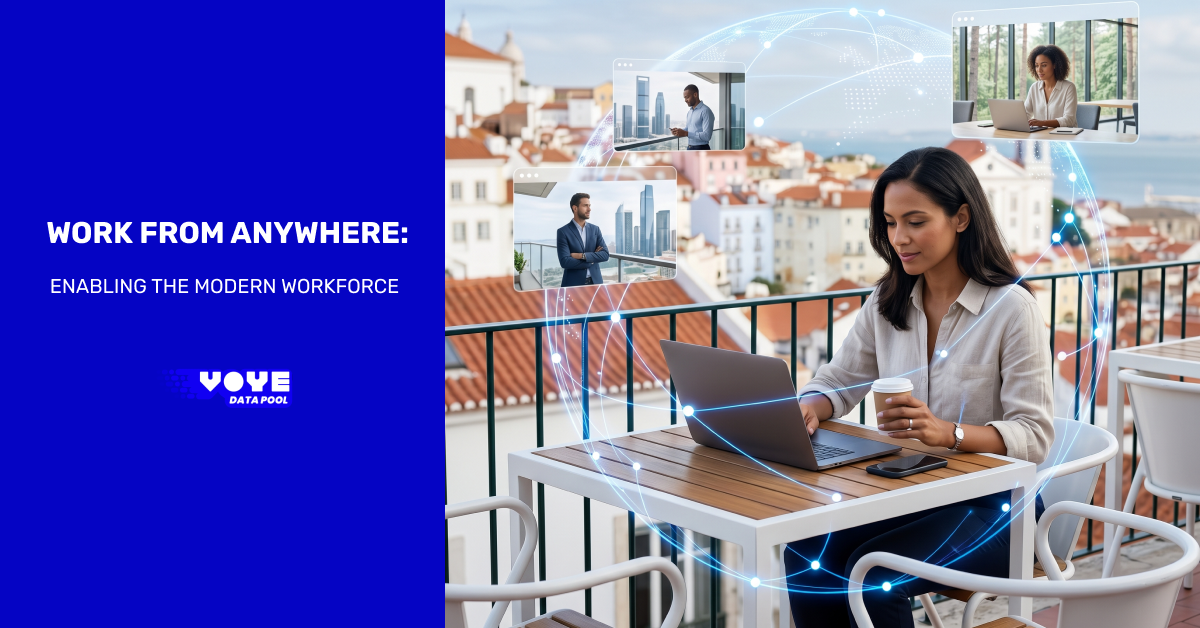
The modern workplace has evolved far beyond traditional office environments. Organizations across industries are redefining how employees collaborate, communicate, and contribute to business growth. Flexible work models are now influencing recruitment strategies, operational planning, employee engagement, and long-term business continuity.
For HR and operations leaders, enabling a distributed workforce involves much more than remote access to company systems. It requires scalable processes, strong communication frameworks, secure digital infrastructure, and data-driven workforce management strategies.
Recent workforce studies continue to highlight the growing demand for flexibility among employees. Many professionals now prioritize workplace autonomy and location flexibility alongside compensation and career growth opportunities. Businesses that adapt to these expectations are often better positioned to attract skilled talent and improve employee retention.
The Evolution of Workforce Flexibility
Workplace flexibility has shifted from a temporary adjustment to a long-term operational strategy. Advances in cloud computing, collaboration platforms, and digital workflow management have enabled organizations to support employees across multiple locations efficiently.
Several factors continue to drive this transformation:
- Expansion of digital business operations
- Rising employee demand for flexibility
- Global talent shortages
- Increased focus on employee well-being
- Cost optimization initiatives
- Business continuity planning requirements
Organizations are increasingly moving away from location-dependent hiring models and building geographically diverse teams that can operate effectively across regions and time zones.
Why Flexible Work Models Matter for HR Teams?
HR leaders are under growing pressure to create work environments that support both organizational goals and employee expectations. Flexible workforce strategies can directly impact hiring outcomes, retention rates, and overall employee satisfaction.
Key HR advantages include:
- Improved talent acquisition opportunities
- Increased employee engagement
- Lower attrition rates
- Better workforce diversity
- Enhanced employer branding
- Higher productivity levels
Many HR professionals now view workforce flexibility as a long-term talent retention strategy rather than a short-term operational adjustment.

Power Your Remote Workforce
Enable uninterrupted communication and collaboration for traveling business professionals globally.
Operational Benefits for Businesses
Operations teams also benefit significantly from distributed workforce models. Organizations can reduce dependency on physical office infrastructure while improving operational resilience and scalability.
Important operational advantages include:
- Reduced facility and infrastructure costs
- Better disaster recovery preparedness
- Increased workforce availability
- Faster business scalability
- Improved cross-regional collaboration
- Reduced commuting-related disruptions
Businesses that establish strong remote operational frameworks are often more adaptable during periods of market uncertainty or rapid organizational growth.
Building a Strong Distributed Workforce Infrastructure
A successful workforce strategy requires reliable systems that support collaboration, security, accountability, and employee experience.
Communication and Collaboration Systems
Clear communication is essential for maintaining alignment across distributed teams. Organizations must invest in centralized platforms that allow employees to collaborate efficiently regardless of location.
Core collaboration tools often include:
- Video conferencing platforms
- Project management systems
- Internal communication applications
- Shared documentation platforms
- Workflow automation software
Consistent communication structures help reduce operational delays and improve transparency across departments.
Cybersecurity and Data Protection
As remote access increases, cybersecurity becomes a critical operational priority. HR and operations leaders must work closely with IT teams to establish secure workforce management systems.
Important security measures include:
- Multi-factor authentication
- Secure VPN access
- Endpoint monitoring
- Employee cybersecurity training
- Cloud-based security protocols
- Access control management
Strong cybersecurity practices help protect both employee information and sensitive organizational data.
Performance Management in Remote Environments
Traditional management models often rely heavily on physical supervision. Modern distributed workforce strategies instead focus on measurable outcomes and performance visibility.
Organizations can improve workforce performance by implementing:
- Goal-oriented KPIs
- Regular manager check-ins
- Transparent reporting systems
- Skills development programs
- Employee recognition initiatives
Managers who prioritize accountability and communication over micromanagement often achieve stronger engagement across distributed teams.
The Growing Importance of Workforce Intelligence
Data-driven workforce management has become increasingly important for organizations operating across multiple regions. HR and operations teams rely on accurate workforce insights to support hiring, workforce planning, operational forecasting, and employee engagement strategies.
Understanding Modern Workforce Data Requirements
Organizations managing large-scale or geographically distributed teams often require access to structured business and workforce data to improve operational decision-making.
A reliable custom data pool can help organizations:
- Analyze workforce trends
- Improve recruitment targeting
- Support operational planning
- Enhance market research initiatives
- Streamline outreach campaigns
- Improve workforce forecasting accuracy
Access to accurate and organized datasets enables businesses to make more informed workforce and operational decisions.
Leveraging Data Solutions for Business Growth
Modern organizations increasingly depend on scalable data intelligence solutions to support recruitment operations, business expansion, and workforce optimization.
Voye Data Pool provides structured data solutions that support organizations in areas such as workforce intelligence, lead generation, operational outreach, and business research. Their services help businesses access organized datasets that can improve targeting accuracy and operational efficiency.
For HR and operations teams, reliable workforce data can support:
- Smarter hiring strategies
- Better workforce segmentation
- Improved operational visibility
- Enhanced regional expansion planning
- More effective employee outreach initiatives
Organizations that integrate workforce intelligence into operational planning are often better prepared to adapt to changing workforce trends.
Employee Experience in Distributed Work Environments
Maintaining a strong employee experience is essential for long-term workforce stability. Employees who feel disconnected from organizational culture may experience lower engagement and reduced productivity.
Creating a Strong Workplace Culture
Building culture across distributed teams requires intentional leadership and consistent communication.
Effective strategies include:
- Virtual team-building initiatives
- Leadership communication sessions
- Employee wellness programs
- Recognition and rewards systems
- Collaborative learning opportunities
Organizations that maintain strong communication and recognition practices often achieve higher workforce satisfaction levels.
Supporting Employee Well-Being
Remote and hybrid work environments can sometimes create blurred boundaries between work and personal life. HR leaders must develop policies that encourage healthy work habits.
Best practices include:
- Flexible scheduling policies
- Mental health support programs
- Encouraging regular breaks
- Clear workload expectations
- Paid time-off encouragement
Employee well-being directly impacts productivity, retention, and organizational performance.
Recruitment and Talent Acquisition Without Geographic Limits
One of the most significant advantages of flexible workforce models is expanded access to skilled professionals across regions.
Access to Broader Talent Pools
Organizations are no longer restricted to hiring candidates located near physical office locations.
Benefits of broader hiring strategies include:
- Faster access to specialized skills
- Improved workforce diversity
- Greater innovation through diverse perspectives
- Reduced hiring limitations
- Improved scalability for growing businesses
Companies that expand recruitment beyond local markets often gain a competitive advantage in talent acquisition.
Travel Smart For Work
Keep business operations active with reliable mobile data across multiple countries.
Modern Recruitment Strategies
Hiring across multiple regions requires efficient recruitment systems and standardized onboarding processes.
Modern recruitment workflows commonly include:
- Virtual interviews
- AI-assisted candidate screening
- Digital onboarding systems
- Automated documentation management
- Skills-based assessments
These approaches help organizations maintain hiring consistency while improving the candidate experience.
Compliance and Operational Challenges
Although distributed workforce models offer many advantages, organizations must also address operational and compliance-related complexities.
Employment Regulations Across Regions
Businesses operating across multiple jurisdictions must comply with local employment laws, tax requirements, and labor regulations.
Important compliance considerations include:
- Payroll regulations
- Tax obligations
- Employment classifications
- Working hour policies
- Data privacy requirements
HR and legal teams should collaborate closely to reduce compliance risks and maintain operational consistency.
Managing Global Team Coordination
Teams operating across different time zones can face communication and scheduling challenges.
Organizations can improve coordination by:
- Establishing overlapping work schedules
- Encouraging asynchronous communication
- Using centralized project management tools
- Documenting workflows clearly
- Setting transparent response expectations
Well-defined coordination systems help distributed teams operate more efficiently.
Technology as the Foundation of Workforce Agility
Technology continues to play a central role in enabling scalable workforce flexibility.
Cloud-Based Workforce Operations
Cloud infrastructure allows employees to securely access systems, workflows, and collaboration platforms from multiple locations.
Benefits of cloud-based operations include:
- Improved accessibility
- Real-time collaboration
- Better operational scalability
- Reduced infrastructure dependency
- Faster deployment of business tools
Cloud technologies also improve business continuity during operational disruptions.
Automation and Operational Efficiency
Automation reduces administrative workload while improving process consistency across HR and operations functions.
Examples include:
- Automated onboarding systems
- Payroll processing workflows
- Performance management platforms
- Employee self-service portals
- Recruitment automation tools
Organizations that automate repetitive operational tasks can improve efficiency while allowing teams to focus on strategic priorities.
Future Trends Shaping the Modern Workforce
Flexible workforce models are expected to remain a core component of long-term business strategy. Organizations are increasingly adopting hybrid and remote-first structures to remain competitive in evolving labor markets.
AI-Driven Workforce Analytics
Advanced analytics tools are helping businesses improve hiring decisions, productivity forecasting, and workforce planning.
Skills-Based Hiring Models
Organizations are shifting toward practical skill assessments rather than relying solely on traditional educational qualifications.
Employee-Centric Workplace Policies
Modern employees increasingly expect flexible schedules, wellness initiatives, and personalized workplace experiences.
Global Workforce Expansion
Businesses are building international teams to access specialized expertise and support global growth initiatives.
The concept of work from anywhere continues to influence how organizations approach workforce management, operational planning, and employee engagement strategies.
Balancing Flexibility with Accountability
Successful workforce flexibility requires a balance between employee autonomy and operational accountability.
Organizations can maintain this balance by focusing on:
- Clear communication structures
- Transparent performance expectations
- Secure digital systems
- Consistent leadership practices
- Data-driven workforce management
Businesses that establish structured operational frameworks are often more successful in maintaining productivity across distributed environments.
Strategic Priorities for HR and Operations Leaders
HR and operations teams should focus on building adaptable systems that support evolving workforce expectations.
Develop Flexible Workforce Policies
Organizations should create policies that encourage productivity while supporting employee flexibility.
Invest in Workforce Technology
Reliable communication platforms, workflow systems, and performance management tools are essential for operational scalability.
Strengthen Workforce Intelligence
Using structured workforce data and custom data pool solutions can improve recruitment planning, operational visibility, and workforce forecasting.
Prioritize Employee Engagement
Organizations should continue investing in employee well-being, communication, and career development initiatives.
Train Leaders for Distributed Team Management
Managers require strong communication, coordination, and performance management skills to lead distributed teams effectively.
Conclusion
Modern workforce strategies are evolving rapidly as organizations embrace flexibility, digital transformation, and broader access to global talent. Distributed work environments provide businesses with opportunities to improve operational efficiency, reduce infrastructure costs, and strengthen employee satisfaction.
However, long-term success requires more than remote access capabilities. HR and operations leaders must establish scalable systems that support communication, security, compliance, workforce visibility, and employee engagement.
Reliable workforce intelligence solutions by Voye Data Pool can help organizations improve workforce planning, operational outreach, and recruitment efficiency through structured data solutions. Combined with strong leadership and scalable digital infrastructure, these capabilities support sustainable workforce growth in an increasingly flexible business environment.
As workforce expectations continue to evolve, organizations that prioritize adaptability, operational intelligence, and employee experience will remain better positioned for long-term success.
Stay Connected Anywhere
Access seamless global connectivity while managing distributed teams on the move.