

Why Your Company Needs a Private APN Solution?
Integrating mobile data into your MDM strategy gives enterprises greater control, enhanced security, and improved visibility. It enables seamless connectivity across global teams while simplifying device and data management.


 9 min read
 Share
Share

Enterprise mobility is no longer optional. It is a critical foundation for modern business operations. Organizations today rely heavily on mobile devices, IoT endpoints, and distributed teams that require secure and consistent connectivity across multiple regions. At the same time, managing this growing ecosystem has become increasingly complex.
Mobile Device Management, often referred to as MDM, has been the backbone of enterprise mobility strategies for years. However, traditional MDM approaches are no longer sufficient on their own. The rise of global workforces, data-sensitive operations, and real-time connectivity demands has created a gap that needs to be addressed.
Understanding the Evolution of Enterprise Mobility
Enterprise mobility has shifted from basic device usage to a fully connected ecosystem that supports remote work, global teams, and real-time data access. As organizations rely more on mobile devices and IoT, the need for secure, scalable, and centrally managed connectivity has become essential for maintaining performance and control.
The Shift Toward Mobile-First Operations
Organizations across industries are shifting toward mobile-first operations. Employees are working remotely, field teams are expanding, and connected devices are increasing in number.
This shift brings several challenges:
- Managing thousands of devices across regions.
- Ensuring secure access to enterprise systems.
- Maintaining consistent network performance.
- Controlling operational costs.
Traditional IT infrastructures were not designed for this level of mobility. As a result, enterprises need a more integrated and scalable approach.
Limitations of Traditional MDM Strategies
While MDM platforms help manage devices, enforce policies, and monitor usage, they often lack direct control over the mobile network layer.
Key limitations include:
- Dependency on public networks.
- Limited visibility into mobile data usage.
- Increased exposure to security risks.
- Difficulty in managing global connectivity.
Without integrating mobile data management, MDM strategies remain incomplete.
What Is a Private APN, and Why Does Does It Matter?
A private APN is a secure, dedicated gateway that allows mobile devices to connect directly to an organization’s internal network without passing through the public internet. It ensures controlled access, enhanced data security, and reliable connectivity for enterprise operations. This matters because businesses handling sensitive data and large-scale device deployments need a trusted network environment to reduce risks, improve performance, and maintain compliance.
Defining Private APN
A Private Access Point Name, or APN, is a dedicated mobile network pathway that allows devices to securely connect to enterprise systems without traversing the public internet.
Instead of relying on shared network infrastructure, organizations get:
- A secure and isolated communication channel.
- Controlled access to internal resources.
- Enhanced data privacy.
Why Are Enterprises Adopting Private APN Solutions?
As organizations scale globally, the need for secure and reliable connectivity becomes critical.
Benefits include:
- Improved network security.
- Consistent performance across regions.
- Reduced risk of data interception.
- Simplified compliance with regulations.

Simplify Global Connectivity Today
Manage devices and data seamlessly across regions with one platform.
Integrating Mobile Data into Your MDM Strategy
Integrating mobile data into your MDM strategy enables organizations to manage both devices and their connectivity from a single, unified framework. This approach enhances visibility, strengthens security, and enables IT teams to enforce policies not only on devices but also on network access. By aligning connectivity with device management, businesses can gain greater control, optimize data usage, and ensure consistent performance across theirmobile ecosystem.
Integrating mobile data directly into your MDM strategy is the next logical step. It ensures better control, improved security, and seamless connectivity. This is where advanced networking approaches, such as a private APN solution, become essential.
Bridging the Gap Between Device and Network Management
Integrating mobile data into MDM allows organizations to manage not only devices but also the connectivity that powers them.
This integration provides:
- End-to-end visibility.
- Centralized control.
- Better policy enforcement.
Key Components of an Integrated Strategy
An effective integrated MDM and mobile data strategy combines device control with network intelligence to deliver security, visibility, and efficiency across the organization. The following components are essential for building a strong and scalable framework:
1. Unified Device and Connectivity Management
Managing devices and data plans from a single platform ensures operational efficiency.
- Monitor device health and data usage together.
- Apply policies across both device and network levels.
- Reduce administrative overhead.
2. Real-Time Data Monitoring
Real-time insights into mobile data usage help organizations:
- Prevent overages.
- Identify unusual activity.
- Optimize resource allocation.
3. Policy-Based Network Access
Organizations can define rules for how devices connect to networks.
Examples include:
- Restricting access to certain applications.
- Allowing connections only through secure gateways.
- Enforcing encryption standards.
4. Enhanced Security Controls
By integrating connectivity into MDM, enterprises can:
- Minimize exposure to public networks.
- Protect sensitive data in transit.
- Reduce attack surfaces.
The Role of eSIM Technology in Modern Connectivity
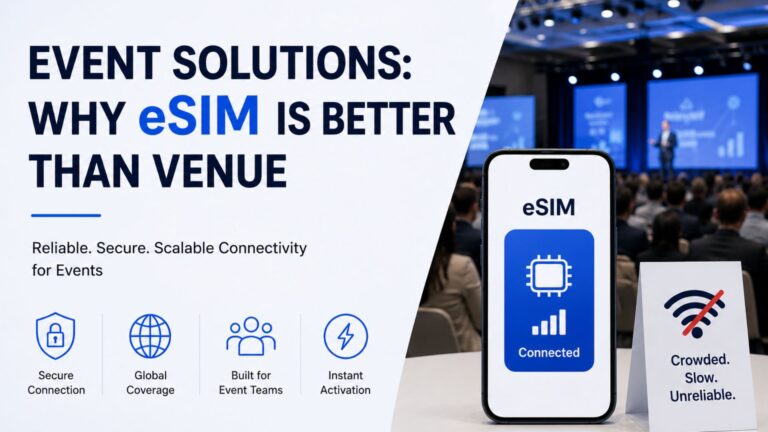
eSIM technology is transforming how enterprises manage mobile connectivity by eliminating the need for physical SIM cards and enabling remote provisioning. This shift allows organizations to deploy, activate, and manage connectivity across devices instantly, regardless of location.
Why eSIM Is Transforming Enterprise Mobility?
eSIM technology eliminates the need for physical SIM cards and enables remote provisioning of connectivity.
Key advantages:
- Instant activation across regions.
- Reduced logistics and operational costs.
- Seamless switching between networks.
How Voye Data Pool Supports Enterprise Needs?
Voye Data Pool provides a comprehensive platform for managing global connectivity with ease.
Key capabilities include:
- Centralized eSIM management.
- Connectivity across 130+ countries.
- Scalable solutions for teams and devices.
- Secure and reliable data access.
Organizations can deploy and manage connectivity without delays, ensuring business continuity.
Security Advantages of a Dedicated Mobile Network
A dedicated mobile network provides enterprises with a higher level of control and protection compared to traditional public network access. As organizations handle increasing volumes of sensitive data, securing mobile connectivity becomes a critical priority.
Protecting Sensitive Enterprise Data
Security is one of the primary reasons enterprises move toward private network solutions.
With a dedicated network layer, organizations can:
- Encrypt all data transmissions.
- Restrict unauthorized access.
- Monitor traffic in real time.
Reducing Exposure to Public Network Risks
Public networks are inherently vulnerable. By avoiding them, enterprises can:
- Prevent man-in-the-middle attacks.
- Reduce data leakage risks.
- Ensure compliance with industry standards.
Scalability and Global Connectivity
As businesses expand beyond geographical boundaries, the ability to scale connectivity seamlessly becomes essential. A modern mobile data strategy must support growth while maintaining consistent performance and control across regions.
Supporting Distributed Teams
Modern enterprises operate across multiple geographies. Connectivity solutions must support:
- Cross-border operations.
- Remote workforce mobility.
- Global device deployments.
Simplifying Expansion
An integrated connectivity approach allows organizations to scale without complexity.
Benefits include:
- Faster onboarding of new devices.
- Consistent network performance globally.
- Reduced dependency on local carriers.
Cost Optimization Through Integrated Connectivity
Managing mobile connectivity efficiently is not just about performance and security, it also plays a major role in controlling operational costs. An integrated approach helps organizations gain better visibility and make smarter financial decisions.
Controlling Mobile Data Expenses
Managing mobile data effectively helps organizations reduce unnecessary costs.
Strategies include:
- Monitoring usage patterns.
- Allocating data based on needs.
- Eliminating unused plans.
Improving Operational Efficiency
A unified platform reduces manual effort and streamlines processes.
- Fewer vendors to manage.
- Simplified billing and reporting.
- Automated provisioning.
Enhancing Operational Visibility
Gaining clear and complete visibility into devices and connectivity is essential for effective enterprise mobility management. Without accurate insights, it becomes difficult for IT teams to maintain control, optimize performance, and respond to issues promptly.
Centralized Dashboard for Complete Control
An integrated platform provides a single view of:
- Device status.
- Data usage.
- Network performance.
This visibility helps IT teams make informed decisions quickly.
Data-Driven Decision Making
With detailed analytics, organizations can:
- Identify trends.
- Optimize resource allocation.
- Improve overall performance.
Optimize Data Usage Smartly
Reduce costs and improve efficiency with intelligent data management.
The Strategic Importance of Custom Data Pool
As enterprises manage growing numbers of connected devices and distributed teams, efficient data allocation becomes critical. A custom data pool enables organizations to distribute mobile data dynamically across users and devices, ensuring optimal utilization and cost control.
What Is Custom Data Pool?
Custom data pooling allows organizations to share data across multiple devices and users, improving efficiency and flexibility.
Benefits of Custom Data Pool
- Optimized data usage across teams.
- Reduced wastage of unused data.
- Better cost management.
- Increased flexibility for scaling operations.
Future-Proofing Your MDM Strategy
As enterprise mobility continues to evolve, organizations must build strategies that can adapt to new technologies, growing device ecosystems, and changing business requirements. Future-proofing your MDM approach ensures long-term efficiency, security, and scalability.
Preparing for IoT Growth
The number of connected devices is expected to grow exponentially. Enterprises must be ready to manage:
- Sensors.
- Smart devices.
- Connected machinery.
An integrated approach ensures readiness for this expansion.
Adapting to Changing Business Needs
As organizations evolve, their connectivity requirements change.
A scalable and flexible solution allows:
- Quick adaptation to new technologies
- Seamless integration with existing systems.
- Continuous performance improvement.
Why Enterprises Choose Voye Data Pool?
Enterprises require a connectivity solution that is reliable, scalable, and easy to manage. Voye Data Pool stands out by offering a unified platform that simplifies global connectivity while ensuring security and performance.
Simplified Connectivity Management
Voye Data Pool offers a streamlined approach to managing global connectivity.
- Easy deployment.
- Centralized control.
- Minimal setup time.
Reliable and Secure Network Access
Organizations benefit from:
- Consistent performance.
- Secure connections.
- Reduced downtime.
Scalable for Any Business Size
Whether managing a small team or a large global workforce, the platform adapts to your needs.
Driving Smarter Connectivity for the Future
Enterprise mobility is evolving rapidly, and traditional approaches are no longer sufficient. Integrating mobile data into your MDM strategy is essential for achieving secure, scalable, and efficient operations.
By combining device management with advanced connectivity solutions, organizations can gain complete control over their mobile ecosystem. This approach not only enhances security but also improves performance, reduces costs, and supports global expansion.
With platforms like Voye Data Pool, businesses can simplify connectivity, manage devices seamlessly, and stay ahead in an increasingly connected world.