


Maximizing Your Data Plan: Tips for Admins
Enterprise admins must manage connectivity efficiently as organizations deploy more devices and global teams. Learn how to maximize data plan usage through smarter monitoring, better allocation strategies, and centralized connectivity management to maintain performance and control enterprise data consumption.


 6 min read
 Share
Share
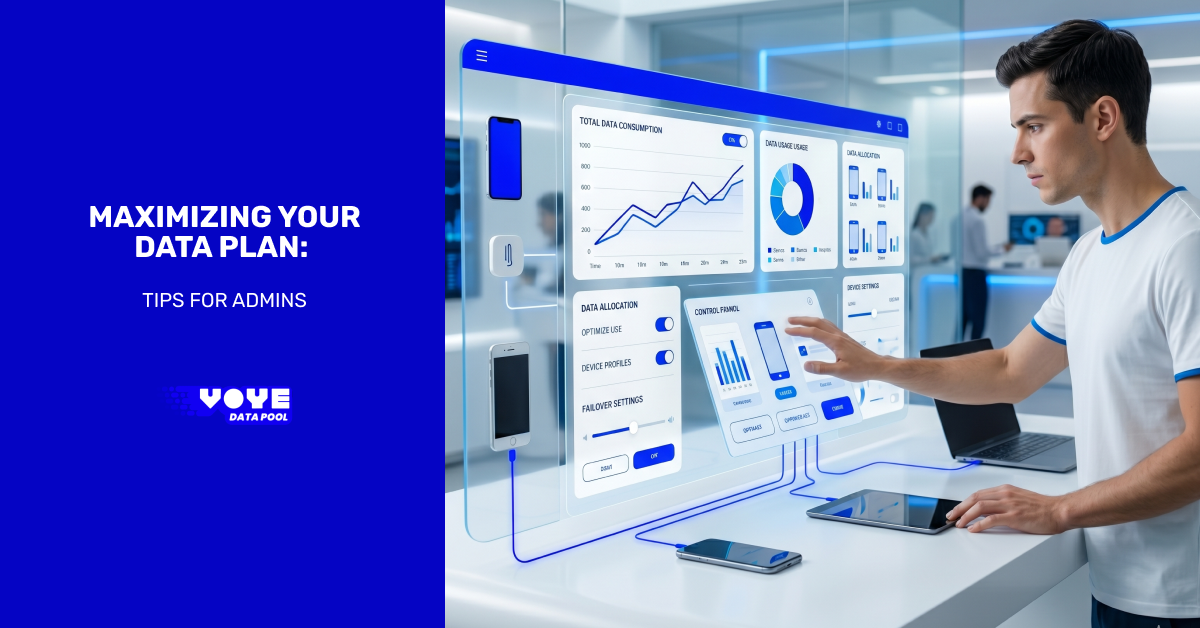
Enterprise connectivity has become a critical component of modern business operations. Organizations rely on stable internet access to power communication, collaboration tools, mobile workforces, and connected devices. As enterprises scale globally and deploy more connected infrastructure, managing data usage effectively becomes a key responsibility for IT administrators.
Data plans that support enterprise devices, employees, and operational systems must be managed carefully to prevent inefficiencies, unexpected costs, and performance issues. Without clear management strategies, organizations may experience unnecessary bandwidth consumption, uneven resource allocation, and connectivity disruptions.
For enterprise administrators, learning how to manage connectivity resources efficiently helps ensure that business operations run smoothly. By implementing the right monitoring systems, allocation strategies, and connectivity policies, IT teams can maintain performance while optimizing data usage across devices and locations.
At Voye Data Pool, we support enterprises with scalable eSIM connectivity management that simplifies how organizations manage global data usage. Through centralized control and flexible connectivity management, administrators can ensure reliable connectivity while maintaining visibility into enterprise data consumption.
Understanding Enterprise Data Usage Challenges
Managing connectivity across an enterprise environment is far more complex than managing personal data plans. Organizations often operate with hundreds or thousands of connected devices, distributed employees, and multiple operational locations.
Several factors contribute to enterprise data management challenges.
1. Increasing Number of Connected Devices
Modern enterprises deploy a wide range of connected equipment, including employee smartphones, laptops, tablets, IoT devices, and operational infrastructure. Each of these devices consumes connectivity resources.
2. Global Workforce Mobility
Employees frequently travel across regions or work remotely. Maintaining connectivity while controlling data usage becomes more complex when devices move across networks.
3. Bandwidth Heavy Applications
Cloud platforms, video conferencing tools, and real-time collaboration software consume significant amounts of data. Without proper monitoring, these applications can quickly increase overall usage.
Understanding these challenges helps administrators develop strategies that ensure efficient connectivity management.
Why Data Plan Optimization Matters for Enterprise IT?
Efficient connectivity management is not only about controlling costs. It also influences performance, productivity, and operational stability.
When enterprise data plans are optimized effectively, organizations benefit in several ways.
- Better network performance across devices and teams.
- Reduced operational costs related to data consumption.
- Improved visibility into connectivity usage patterns.
- Enhanced ability to scale connectivity infrastructure.
- Greater control over global connectivity resources.
Optimizing connectivity usage, therefore, becomes a strategic priority for enterprise IT teams.

Manage Global Connectivity Smarter
Monitor enterprise device usage and optimize connectivity across multiple regions.
Monitoring Data Usage Across Enterprise Devices
One of the most important steps in effective connectivity management is monitoring how data is consumed across the organization.
- Track Device Level Consumption
Administrators should monitor how individual devices consume data. This helps identify devices that may be using excessive bandwidth.
- Analyze Application Usage
Understanding which applications consume the most bandwidth allows administrators to optimize connectivity policies and prioritize critical services.
- Identify Usage Patterns
Monitoring usage trends helps IT teams predict future connectivity requirements and allocate resources accordingly.
Continuous monitoring ensures administrators maintain full visibility into enterprise connectivity activity.
Implementing Data Allocation Strategies
Once usage patterns are understood, administrators can begin implementing strategies that improve connectivity efficiency.
Create Tiered Data Allocation
Different departments or devices may require different levels of connectivity resources. For example:
- Field teams may require higher mobile connectivity access.
- Administrative staff may rely primarily on office networks.
- IoT devices may use minimal bandwidth.
Allocating data according to operational needs prevents unnecessary resource consumption.
Balance Data Distribution
Enterprises should avoid assigning fixed allocations that may remain unused. Instead, flexible allocation allows connectivity resources to shift where demand is highest.
Use Centralized Connectivity Pools
Centralized connectivity pools allow multiple devices to share available resources instead of maintaining separate plans for each device.
These strategies help enterprises maintain efficient connectivity environments.
Best Practices to Maximize Data Plan Efficiency
For enterprise administrators aiming to improve connectivity management, implementing a combination of technical and operational practices is essential.
In the middle of these strategies, administrators should focus on ways to maximize data plan efficiency across enterprise systems. This includes monitoring consumption patterns, implementing intelligent allocation strategies, and maintaining centralized connectivity control.
Several best practices can help achieve this objective.
- Automate Data Monitoring
Automated monitoring tools allow administrators to track data consumption continuously without manual intervention.
- Establish Usage Policies
Clear usage policies ensure employees and devices operate within defined connectivity limits.
- Prioritize Business Critical Applications
Bandwidth should be prioritized for applications that directly support enterprise operations.
- Restrict Non-Essential Data Consumption
Administrators may limit access to high-bandwidth services that do not contribute to business productivity.
By implementing these best practices, enterprises can maintain connectivity performance while reducing unnecessary data usage.
Leveraging eSIM Technology for Better Data Control
eSIM technology has transformed how enterprises manage connectivity across devices and locations. Unlike traditional SIM cards, eSIM profiles can be activated and managed digitally.
At Voye Data Pool, we provide enterprise connectivity solutions that leverage advanced eSIM infrastructure.
- Remote Connectivity Provisioning
Administrators can activate devices remotely without requiring physical SIM cards.
- Flexible Network Access
Devices can connect to different networks depending on regional availability, improving connectivity reliability.
- Simplified Device Management
Connectivity settings can be configured remotely, allowing IT teams to manage devices efficiently.
- Faster Global Deployment
Organizations can deploy connectivity across international teams and infrastructure without logistical delays.
These capabilities make eSIM technology an important tool for enterprise connectivity management.
Smarter Data for Enterprises
Allocate connectivity resources efficiently for teams and connected enterprise devices.
Centralized Connectivity Management for Enterprises
Managing connectivity across multiple regions requires a centralized management approach. Without centralized control, enterprise IT teams may struggle to maintain visibility into global connectivity usage.
- Unified Administration
Centralized systems allow administrators to manage devices, connectivity policies, and usage patterns from a single platform.
- Real Time Visibility
Administrators gain insight into how connectivity resources are used across departments and regions.
- Scalable Infrastructure
Centralized connectivity systems support enterprise growth by enabling easy expansion of connected devices and locations.
This level of control ensures that connectivity management remains efficient as organizations scale.
How We Help Enterprises Manage Data Plans Efficiently?
At Voye Data Pool, we help enterprises simplify connectivity management through scalable and secure eSIM solutions. Our platform allows organizations to manage global connectivity for teams, devices, and operational infrastructure through a centralized system.
We provide enterprises with the ability to activate devices quickly, monitor connectivity usage, and allocate resources efficiently across more than 130+ countries.
By enabling centralized visibility and flexible connectivity management, we support IT administrators in maintaining efficient data usage while ensuring reliable network performance.
Smarter Data Management for Enterprise Connectivity
As enterprise environments continue to expand, managing connectivity resources becomes increasingly important. Organizations must ensure that their connectivity infrastructure supports distributed teams, connected devices, and global operations.
By adopting effective monitoring systems, intelligent allocation strategies, and centralized connectivity management, enterprise administrators can optimize how connectivity resources are used across the organization.
Through advanced eSIM infrastructure and global connectivity management, Voye Data Pool helps enterprises maintain reliable connectivity while simplifying how administrators manage data plans across complex enterprise environments.