The IT Manager’s Checklist for Global Connectivity
Global businesses depend on reliable connectivity across employees, devices, and locations. This guide provides a practical checklist for IT managers to build secure, scalable, and cost-efficient global connectivity using enterprise eSIM management and centralized platforms like Voye Data Pool.


 11 min read
 Share
Share
Modern businesses are no longer confined by geography. Global hiring, distributed teams, international travel, IoT deployments, and cloud based infrastructure have transformed how organizations operate. As companies expand across continents, maintaining reliable connectivity becomes one of the most critical responsibilities for IT leaders.
For IT managers, global connectivity is not simply about providing internet access. It involves ensuring that employees, devices, and systems remain connected securely and consistently across different countries, networks, and regulatory environments.
Without the right connectivity strategy, organizations face issues such as:
- Unpredictable roaming costs
- Poor network performance
- Security vulnerabilities
- Complex SIM lifecycle management
- Limited visibility into data usage
- Operational disruptions for remote teams
To address these challenges, IT leaders must adopt a structured approach that ensures scalability, security, and operational efficiency.
This guide provides a comprehensive checklist for IT managers responsible for enabling global connectivity. It covers everything from infrastructure planning and device management to security policies and emerging technologies like enterprise eSIM management.
By following this checklist, organizations can build a future ready connectivity ecosystem that supports global teams and connected devices without unnecessary complexity.
Why Global Connectivity Matters for Modern Enterprises?
Global connectivity has become a foundational requirement for digital businesses. Companies rely on seamless network access to support cloud applications, collaboration platforms, IoT ecosystems, and remote work environments.
When connectivity fails, productivity drops immediately.
Here are some common scenarios where global connectivity plays a crucial role:
- Distributed Workforce
Many organizations now employ teams across multiple countries. These employees rely on stable mobile data connections for communication, collaboration tools, and access to internal systems.
- International Business Travel
Sales teams, executives, and field engineers frequently travel across borders. Without reliable connectivity, accessing enterprise applications becomes difficult.
- IoT Deployments
Businesses deploy IoT devices globally for logistics, manufacturing, smart cities, healthcare, and asset tracking. Each device must maintain reliable connectivity across multiple networks.
- Cloud Infrastructure Access
Most enterprise applications now run in the cloud. Employees need secure, consistent access regardless of their location.
- Remote Operations
Organizations increasingly operate remote facilities, warehouses, and monitoring systems that rely on real time connectivity.
For IT teams, this means managing connectivity across multiple carriers, regions, and device types. The complexity grows rapidly without centralized tools and standardized processes.
The IT Manager’s Global Connectivity Checklist
The following checklist provides a structured framework to help IT leaders design and manage global connectivity effectively.
1. Assess Organizational Connectivity Requirements
Before implementing any connectivity solution, IT teams must clearly understand the organization’s requirements.
Key questions to consider include:
Geographic Coverage
Where are your employees, offices, and devices located?
Connectivity requirements vary depending on whether your operations are concentrated in a few regions or distributed globally.
Device Types
Determine the types of devices that require connectivity:
- Smartphones
- Laptops and tablets
- IoT sensors
- Industrial devices
- Fleet tracking equipment
Each device category may require different connectivity solutions.
Data Usage Patterns
Understanding how data is consumed helps optimize connectivity plans.
Examples include:
- High bandwidth collaboration tools
- Continuous IoT data transmission
- Periodic device updates
- Video conferencing and remote monitoring
Mobility Needs
Evaluate whether users and devices frequently cross borders.
Mobile employees and globally deployed IoT devices require connectivity solutions that function across multiple networks.
2. Standardize Connectivity Infrastructure
Fragmented connectivity environments create operational inefficiencies.
Many organizations manage multiple carrier contracts across different regions. This leads to:
- Complicated billing processes
- Limited visibility into usage
- Difficult SIM lifecycle management
- Inconsistent network performance
IT managers should aim to standardize connectivity infrastructure wherever possible.
Benefits of Standardization
Standardization improves several operational aspects:
- Simplified device provisioning
- Centralized network management
- Consistent security policies
- Better cost control
- Faster deployment of new devices
A unified connectivity platform helps IT teams manage global connectivity through a single interface instead of juggling multiple carrier portals.
3. Implement Enterprise eSIM Technology
Traditional SIM cards present several limitations for organizations operating globally.
Physical SIMs require manual replacement when switching carriers or countries. This creates logistical challenges for distributed teams and IoT deployments.
Enterprise eSIM technology solves many of these problems.
What is eSIM?
eSIM stands for embedded SIM. Instead of inserting a physical card, connectivity profiles can be downloaded digitally to the device.
This allows organizations to:
- Activate connectivity remotely
- Switch carriers without replacing hardware
- Manage devices centrally
- Scale deployments more efficiently
Advantages for Global Businesses
Enterprise eSIM management enables several operational improvements:
- Remote Activation
Devices can be activated instantly without physical SIM distribution.
- Global Network Access
eSIMs can connect to multiple carriers across different countries.
- Simplified Device Logistics
Organizations do not need to ship SIM cards to employees or devices.
- Centralized Control
IT administrators can manage connectivity profiles through a single platform.
For companies managing hundreds or thousands of devices, eSIM technology significantly reduces operational complexity.
4. Establish Strong Security Policies
Connectivity introduces potential security risks if not managed properly.
Mobile devices and IoT endpoints often operate outside the corporate network. This makes them vulnerable to threats such as:
- Data interception
- Unauthorized access
- Device compromise
- Network spoofing attacks
IT managers must implement strict security policies to protect enterprise connectivity.
Essential Security Measures
- Network Encryption
Ensure all data transmitted across mobile networks is encrypted using secure protocols.
- VPN Access
Use enterprise VPN solutions for secure access to internal systems.
- Device Authentication
Implement strong authentication mechanisms for connected devices.
- Zero Trust Security Model
Adopt a zero trust framework where every device and connection must be verified before accessing resources.
- Continuous Monitoring
Monitor connectivity activity to detect unusual behavior or potential threats.
Security should be integrated into the connectivity architecture from the beginning rather than added as an afterthought.
5. Enable Centralized Connectivity Management
One of the biggest challenges in global connectivity management is lack of visibility.
Without centralized monitoring tools, IT teams struggle to track:
- Active SIMs
- Data usage
- Network performance
- Device connectivity status
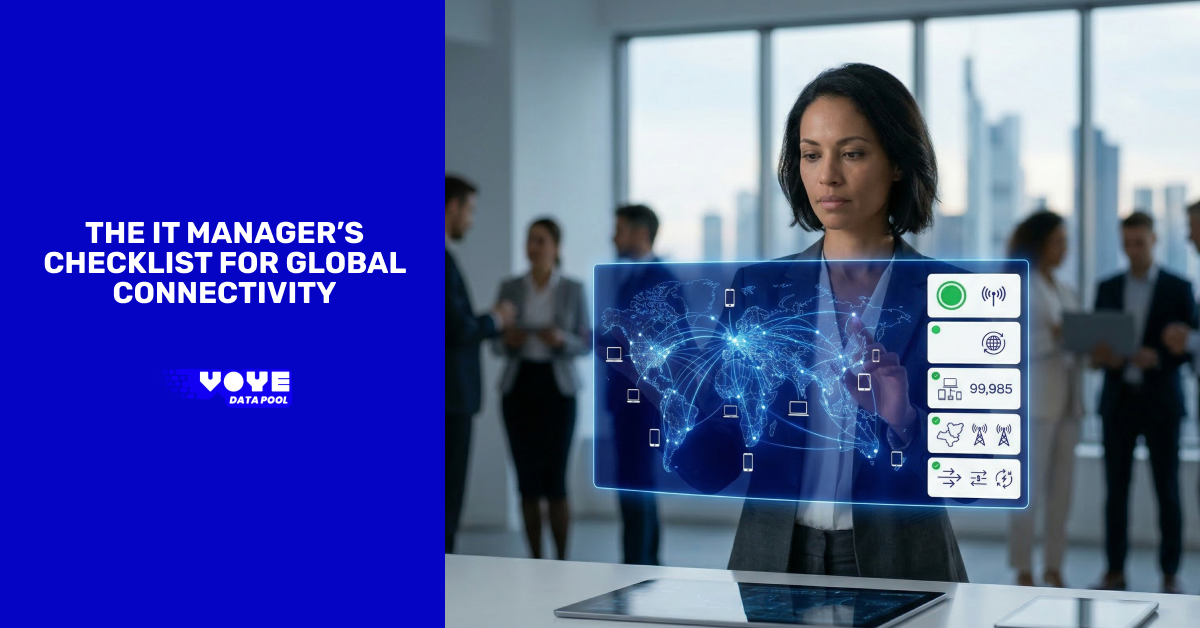
Centralized connectivity platforms provide a unified dashboard that allows IT teams to manage devices across regions.
Features to Look For
A robust connectivity management platform should provide:
- Real time SIM monitoring
- Remote activation and deactivation
- Data usage tracking
- Alerts for unusual activity
- Automated policy enforcement
- Detailed analytics and reporting
These capabilities enable IT teams to proactively manage connectivity instead of reacting to issues after they occur.
6. Optimize Cost Management
Global mobile connectivity can quickly become expensive without proper oversight.
Roaming charges, inefficient data plans, and unused SIMs often lead to unnecessary spending.
IT managers should implement strategies to optimize connectivity costs.
Cost Optimization Best Practices
- Monitor Data Consumption
Regularly review usage patterns to identify inefficiencies.
- Use Pooled Data Plans
Data pooling allows organizations to share data across multiple devices, reducing wasted capacity.
- Automate SIM Deactivation
Automatically disable unused SIMs to prevent unnecessary charges.
- Set Usage Alerts
Configure alerts for unusual or excessive data usage.
Effective cost management requires visibility and automation within the connectivity management platform.
7. Plan for Scalability
Connectivity infrastructure must support business growth.
Many organizations underestimate how quickly device counts increase as operations expand.
For example:
- IoT deployments may scale from hundreds to thousands of devices.
- Remote workforce numbers may grow significantly.
- New markets may require additional network coverage.
IT managers should evaluate whether their connectivity solution can scale without major infrastructure changes.
Key Scalability Considerations
- Support for large device volumes
- Global carrier coverage
- Automated device provisioning
- Flexible data plans
- API integrations with enterprise systems
Choosing scalable connectivity platforms prevents costly migrations later.
8. Support IoT Connectivity Requirements
IoT devices introduce unique connectivity challenges compared to employee devices.
These devices often operate in remote environments and require consistent, low latency connections.
Common IoT Use Cases
- Smart manufacturing
- Fleet tracking
- Asset monitoring
- Environmental sensors
- Smart retail systems
IT managers must ensure that IoT connectivity solutions support:
- Long device lifecycles
- Remote device management
- Low power consumption
- Reliable cross border connectivity
Enterprise eSIM solutions are particularly effective for IoT deployments because they allow remote profile management and network switching.
9. Ensure Compliance with Regional Regulations
Connectivity regulations vary widely across countries.
Many regions impose rules related to:
- Data localization
- SIM registration
- Telecommunications licensing
- Privacy protection
Failure to comply with local regulations can result in service disruptions or legal penalties.
IT managers must stay informed about connectivity regulations in the regions where devices operate.
Compliance Best Practices
- Work with connectivity providers that understand regional requirements
- Maintain documentation for SIM registration where required
- Implement data governance policies aligned with regional laws
- Monitor regulatory updates regularly
Compliance is an essential part of global connectivity planning.
10. Provide Reliable Network Redundancy
Connectivity failures can disrupt business operations.
To reduce risk, IT managers should design redundancy into connectivity infrastructure.
Redundancy Strategies
- Multi Network Connectivity
Devices should be able to connect to multiple carriers if one network fails.
- Automatic Network Switching
Connectivity platforms should allow devices to switch networks automatically based on signal quality.
- Failover Connectivity
Critical systems may require backup connectivity solutions.
Redundant connectivity ensures business continuity during network outages.
11. Enable Real Time Connectivity Monitoring
Proactive monitoring helps IT teams detect and resolve connectivity issues before they affect operations.
Monitoring tools should provide real time insights into:
- Network availability
- Device connectivity status
- Data usage patterns
- Performance metrics
These insights help IT teams identify problems quickly and maintain optimal connectivity performance.
Advanced analytics can also provide predictive insights that help prevent connectivity disruptions.
12. Simplify Device Deployment
Deploying new devices across multiple regions can be time consuming.
Traditional SIM logistics involve shipping physical cards, manual configuration, and coordination with local carriers.
Enterprise eSIM solutions streamline device deployment by allowing remote provisioning.
Deployment Benefits
- Faster device onboarding
- Reduced logistics complexity
- Remote configuration capabilities
- Immediate connectivity activation
This approach significantly accelerates global device rollouts.
13. Integrate Connectivity with IT Management Systems
Connectivity management should not operate in isolation.
Integration with existing enterprise systems improves operational efficiency.
Examples include:
- Mobile device management platforms
- IT service management tools
- IoT device management systems
- Security monitoring platforms
API integrations allow organizations to automate workflows such as device provisioning, connectivity activation, and usage monitoring.
14. Improve Employee Connectivity Experience
Employee productivity depends heavily on reliable connectivity.
Slow or unreliable mobile connections can disrupt workflows and collaboration.
IT managers should ensure that employees traveling or working remotely experience seamless connectivity.
Best Practices
- Provide pre configured connectivity profiles
- Ensure global coverage for frequent travelers
- Monitor connectivity performance for remote workers
- Offer IT support for connectivity issues
A smooth connectivity experience allows employees to focus on their work rather than technical challenges.
15. Future Proof Connectivity Infrastructure
Connectivity technology continues to evolve rapidly.
Emerging technologies such as 5G, private cellular networks, and advanced IoT connectivity are reshaping enterprise networks.
IT managers must ensure their connectivity infrastructure remains adaptable to future developments.
Future Trends to Monitor
- Global expansion of 5G networks
- Growth of eSIM enabled devices
- Increased adoption of edge computing
- AI driven network optimization
- Expansion of IoT ecosystems
Organizations that adopt flexible connectivity solutions will be better positioned to adapt to these changes.
How Voye Data Pool Simplifies Global Connectivity?
Managing global connectivity across multiple regions, devices, and carriers can be complex.
Voye Data Pool addresses this challenge with a unified enterprise eSIM management platform designed for modern businesses.
Voye Data Pool enables organizations to:
- Activate eSIMs Instantly
Devices can be connected remotely without physical SIM distribution.
- Manage Global Connectivity from One Platform
IT administrators can activate, monitor, and manage connectivity across multiple countries through a centralized interface.
- Scale Connectivity for Teams and IoT Devices
Whether supporting remote employees or large IoT deployments, the platform provides scalable connectivity management.
- Monitor Data Usage and Performance
Advanced monitoring tools provide visibility into data usage, network performance, and device connectivity status.
- Simplify Secure Enterprise Connectivity
The platform helps organizations maintain secure, reliable connectivity across global operations.
By simplifying connectivity management, Voye Data Pool enables IT teams to focus on strategic initiatives rather than operational complexity.
Conclusion
Global connectivity is a critical component of modern enterprise operations.
From distributed workforces to IoT deployments, organizations depend on reliable network access to maintain productivity and operational continuity.
For IT managers, managing connectivity across multiple countries and devices requires a structured strategy that prioritizes scalability, security, and efficiency.
By following this global connectivity checklist, IT leaders can:
- Standardize connectivity infrastructure
- Implement enterprise eSIM technology
- Strengthen connectivity security
- Improve cost control
- Simplify device deployment
- Ensure reliable global network access
Modern connectivity platforms such as Voye Data Pool further streamline this process by providing centralized eSIM management and real time visibility into global connectivity operations.
As businesses continue expanding across borders, adopting intelligent connectivity management solutions will become essential for maintaining competitive advantage in a digitally connected world.
With the right strategy and tools in place, IT managers can transform global connectivity from an operational challenge into a strategic enabler for enterprise growth.

Seamless eSIM Connectivity for Enterprises
Activate, manage, and scale eSIMs with ease.