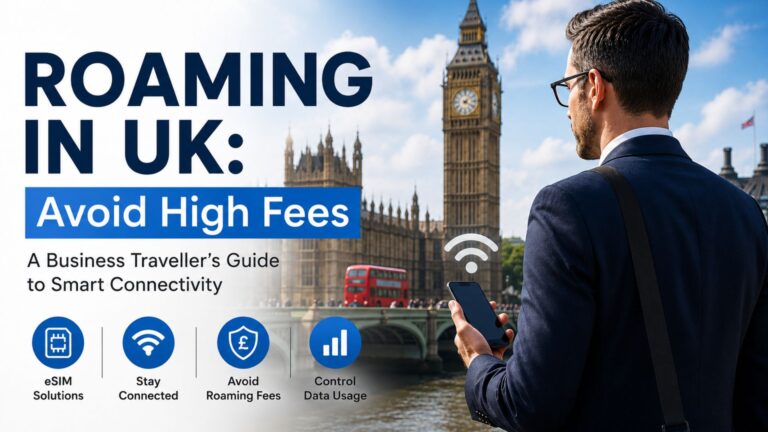


Data-Driven Shift in Corporate Travel: Why eSIM Pools and Centralized Management Are Essential in 2026?
Corporate travel is surging toward record highs in 2025, but rising airfares, hotel rates, and roaming costs are squeezing budgets. Discover how eSIM technology and centralized data pooling help procurement teams reduce expenses, improve compliance, and deliver a seamless mobile-first travel experience.


 7 min read
 Share
Share

Corporate travel is back with a vengeance. After a pandemic‑induced lull, international business trips have roared past recovery and are trending toward record highs. The Global Business Travel Association forecasts $1.57 trillion in global corporate travel spend for 2025, up from $1.48 trillion in 2024. Airlines filled 83.5 % of seats in 2024 thanks to a 10.4 % demand surge, and 1.4 billion international arrivals were recorded that year. Yet procurement teams and travel managers aren’t celebrating—rising airfares, higher hotel rates and complex approval processes are eroding budgets.
At the same time, corporate buyers have gone digital. Roughly 64 % of “new‑age” B2B buyers prefer to purchase via digital channels, 80 % use mobile devices throughout their buying journey, and those who have a positive mobile experience are 90 % more likely to buy again. These buyers typically consume about 13 pieces of content before engaging with a vendor and 60 % are willing to make purchasing decisions based solely on digital content. Travel coordinators, procurement leads and finance teams must therefore offer a seamless digital journey—including mobile‑first booking and real‑time cost controls—if they want to keep employees compliant and costs under control.
Corporate Travel in 2025: Budgets Rising, Complexity Increasing
Recent surveys paint a complex picture for travel managers. The Skift/Navan State of Corporate Travel & Expense 2025 report found that 72 % of travel managers expect trip volumes to increase in 2025, yet only 18 % of business travelers always book on their company’s approved platform. That gap leads to off‑platform bookings and hidden costs. Meanwhile, SAP Concur’s annual Global Business Travel Survey revealed that 97 % of business travellers are at least somewhat willing to travel and 94 % believe travel is helpful or essential for success, but 90 % say they would consider declining a trip due to concerns such as safety (40 %), health (38 %) or burnout (26 %).
Budgets are also under pressure. 89 % of travellers, 93 % of travel managers and 90 % of CFOs expect travel budgets to increase or stay the same, yet 69 % of travel managers feel budgets do not reflect the importance of travel and 81 % of CFOs admit their budgets limit necessary trips. Companies respond by cutting small perks: 87 % of business travellers say their company has reduced previously allowed spending, such as premium cabins or overnight stays to avoid long travel days. With airfare and hotel prices projected to rise further—average ticket prices in the U.S. climbed from $668 in 2023 to $701 in 2024 and are projected to hit $705 in 2025, while hotel rates are expected to rise from $162 to $165—procurement teams need new levers to deliver savings without compromising traveller satisfaction.
The Rise of eSIMs and Travel Data Pools
Traditional roaming remains one of the largest hidden costs in international travel. A week‑long holiday or business trip can cost €50–€100 in roaming fees while a comparable travel eSIM plan often costs €15–€20, saving frequent travellers hundreds of euros. Heavy data users—such as remote workers who stream video—can save more than 90 % compared with roaming charges. Juniper Research forecasts that travellers will save around 75 % per gigabyte by 2029 compared with traditional roaming.
eSIM adoption is exploding. Voye Global estimates that about 40 million travellers used eSIMs worldwide in 2024, and the number is projected to exceed 215 million by 2028. European adoption is leading the charge; analysts estimate 5–10 million European travellers currently use eSIMs each year, and by 2029 more than half of European smartphone users are expected to have eSIM‑capable devices. The travel eSIM market has grown from US $1.46 billion in 2024 to an expected US $3.08 billion by 2032—a compound annual growth rate of 9.8 %. Research firm Counterpoint projects that third‑party travel eSIM downloads will triple between 2025 and 2030, and by 2030 over 80 % of smartphones will be eSIM‑ or iSIM‑capable.
Consumer awareness is catching up. A BICS survey of 2,100 UK adults found that 56 % would consider using an eSIM when traveling, while 10 % already do so, and 40 % are even willing to buy from non‑traditional providers like supermarkets or airlines. Yet challenges remain: 40 % of respondents had never heard of eSIMs and 41 % were unsure if their phones support them.
Why Data Pooling Matters for Corporate Travel?
Even when companies adopt travel eSIMs, individual employees often purchase disparate plans, making cost monitoring difficult. Travel eSIMs can cost half as much and offer double the data compared to traditional roaming, but savings are maximized when data is pooled and managed centrally. Data pooling allows multiple employees across countries to share a single pool of data, reducing unused allocations and simplifying procurement.
Voye DataPool’s enterprise platform brings together eSIM management, real‑time analytics and policy controls. Centralized dashboards give procurement teams instant visibility into consumption and spending, while automated alerts prevent bill shock. With Europe’s eSIM adoption rate at 78 % and 90 % cost reductions possible for heavy data users, pooling eSIM data across travellers becomes a strategic advantage.
Sustainability and Governance
Sustainability is also top of mind. The travel recovery coincides with increasing environmental scrutiny; many companies now include emissions data in booking flows and swap short‑haul flights for rail. eSIMs eliminate the plastic waste associated with physical SIM cards and reduce the carbon footprint of shipping SIMs around the world.
Centralized eSIM platforms help organizations monitor travel emissions, enforce sustainable policies (e.g., booking greener hotels or choosing rail over air) and generate reports for ESG disclosures. With global tourist arrivals already near pre‑pandemic levels and 72 % of managers expecting travel volumes to rise, aligning connectivity strategy with sustainability goals becomes essential.
Digital Engagement: Meeting Modern Buyers Where They Are
The move toward eSIM data pools isn’t just about technology; it’s about how modern procurement operates. Digital‑first travel platforms must cater to the mobile behaviours of travel coordinators and employees. 40 % of business travellers now book hotels via smartphone, and an Accenture survey cited by Engine found that 80 % of travellers use generative AI tools to research, book and manage trip itineraries. Buyers expect quick, self‑service experiences—long forms, opaque pricing and manual approvals are out.
Travel procurement teams should therefore:
- Adopt a mobile‑first approach so travellers can download eSIM profiles, monitor usage and submit expenses from their phones.
- Provide rich digital content (how‑to guides, cost calculators, comparisons) to support the 13 pieces of content buyers typically consume and to build trust before purchase.
- Simplify approvals and booking with a central travel platform, encouraging employees to stay on‑platform. Off‑platform bookings not only drive up costs but also pose duty‑of‑care risks.
- Leverage analytics and AI to forecast usage, detect anomalies and recommend optimal plans.
Conclusion: A Data‑Driven Future
Corporate travel in 2025 is simultaneously resurgent and turbulent. Budgets are rising but so are costs; employees are eager to travel but cautious; and procurement teams juggle compliance, cost control and sustainability. eSIM technology—and, crucially, centralized data pooling—offers a way to thread this needle. Travel eSIMs can reduce per‑gigabyte costs by around 75 % and heavy users can save over 90 % compared with roaming. The market’s momentum—global travel eSIM revenue set to grow from US $1.46 billion in 2024 to US $3.08 billion by 2032—suggests that travel connectivity is entering a data‑driven era.
For travel coordinators, procurement leaders and finance teams, the message is clear: embrace digital, embrace eSIMs and consolidate them through data pools. Doing so can slash roaming costs, provide real‑time control, support sustainability goals and deliver the seamless experience that modern, mobile‑first travellers demand.

Seamless eSIM Connectivity for Enterprises
Activate, manage, and scale eSIMs with ease.