

How Dynamic Data Allocation Works for Global Teams?
Global teams often struggle with uneven network usage, roaming costs, and unpredictable connectivity. Dynamic allocation allows organizations to distribute connectivity based on real demand, keeping employees and devices online while improving visibility and cost control.


 5 min read
 Share
Share

Modern companies rarely operate from a single country. Teams now work across continents, time zones, and networks. Employees join meetings from airports. Engineers upload reports from project sites. Support teams assist customers from different regions on the same day.
The challenge is simple to describe but difficult to manage. Every user and device needs reliable connectivity at the exact moment they are working. Traditional fixed data plans cannot handle this environment efficiently.
Why Do Global Teams Experience Connectivity Challenges?
As organizations expand internationally, network reliability becomes uneven.
- Countries differ in coverage quality.
- Costs vary across regions.
- Local network performance changes daily.
An employee traveling for three days may use more connectivity than a desk-based employee uses in weeks. Yet companies often provide identical plans to both.
This mismatch creates operational problems.
Typical Issues Seen
Overage Charges.
High-usage employees exceed limits and generate unexpected costs.
Unused Capacity.
Some users rarely consume their allowance, but billing remains unchanged.
Multiple Providers.
Businesses manage several carrier contracts in different regions.
Limited Visibility.
Administrators struggle to track usage accurately.
These inefficiencies grow as team size increases.
Typical Issues Seen
Overage Charges.
High-usage employees exceed limits and generate unexpected costs.
Unused Capacity.
Some users rarely consume their allowance, but billing remains unchanged.
Multiple Providers.
Businesses manage several carrier contracts in different regions.
Limited Visibility.
Administrators struggle to track usage accurately.
These inefficiencies grow as team size increases.

Smarter Global Connectivity Control
Monitor usage and allocate resources efficiently for your distributed workforce.
The Basic Idea Behind the System
Traditional connectivity is static. Each user receives a fixed allocation that cannot support others.
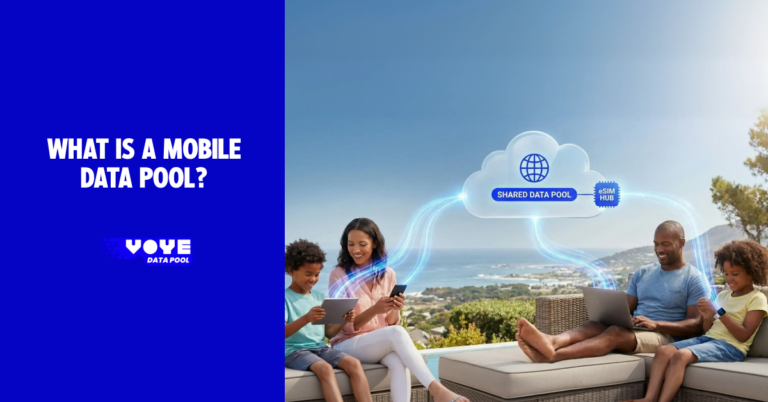
Dynamic data allocation replaces individual limits with a shared company resource. All users and devices draw from a common capacity.
If one team is inactive, their available capacity supports another team working actively. No manual transfer is required.
Connectivity becomes flexible instead of restricted.
How Does It Operate Day to Day?
The platform monitors real-time usage. Whenever a user begins an activity such as uploading files or joining a meeting, resources are assigned automatically.
When activity ends, those resources return to the shared pool.
No employee requests changes. No plan upgrades are required. The system adjusts continuously.
Example Situation
A field technician uploads inspection photos in the morning. Later, a support team handles customer chats. Both groups use the same shared capacity at different times.
The company pays for total usage rather than multiple isolated plans.
Operational Improvements
Teams working across time zones depend on stable communication. Interruptions delay decisions and affect service quality.
With this approach, organizations gain:
Continuous Access.
Employees remain connected while moving between locations.
Reduced Delays.
Work continues without searching for networks.
Lower Administration.
IT staff manage fewer plan changes.
Better Collaboration.
Shared platforms operate smoothly.
Connectivity becomes dependable rather than uncertain.
Financial Benefits
Telecom billing often varies monthly because usage varies between employees.
Dynamic allocation changes cost behavior. Heavy users and light users balance each other automatically. Organizations manage total consumption instead of individual limits.
This leads to:
- Stable monthly expenses.
- Fewer unexpected charges.
- Clearer financial forecasting.
Finance teams gain predictability.
Security Improvements
Public networks introduce security risks. Employees connecting through unknown hotspots may expose sensitive information.
Centralized allocation keeps traffic within controlled connections. Administrators can monitor devices and disable suspicious activity quickly.
Organizations protect:
- Internal communication.
- Customer records.
- Operational systems.
Security oversight becomes stronger.
Manage Devices Anywhere Easily
Activate, manage, and scale eSIMs with ease.
Supporting Remote Workers
Remote work requires reliable access to company platforms. Connectivity problems often prevent communication and delay tasks.
Dynamic allocation allows employees to stay connected without buying local plans or configuring multiple networks. Workers can change locations while maintaining the same access.
This supports flexible work environments and international collaboration.
Managing Connected Equipment
Businesses also deploy sensors, trackers, and monitoring tools. These devices send small amounts of information regularly.
Individual plans waste resources because inactive devices still carry charges.
Shared allocation allows active equipment to use available capacity while idle devices consume none. Maintenance becomes easier and deployment faster.
How Does the Voye Data Pool Assist Organizations?
Voye Data Pool offers centralized eSIM connectivity for global operations.
Companies connect employees and devices through one platform. Administrators activate or suspend connections remotely and monitor usage from a single dashboard. Coverage extends across more than 130 countries.
Businesses avoid managing multiple carriers and maintain consistent communication.
Recommended Practices
Organizations adopting this system should manage it carefully.
Analyze Usage.
Review which teams require the most connectivity.
Set Policies.
Define limits for departments and projects.
Monitor Activity.
Track patterns regularly.
Deactivate Idle Devices.
Prevent unnecessary usage.
These steps maintain efficiency as operations expand.
One Team, One Connection
Global teams require adaptable connectivity. Fixed individual plans create waste and unpredictable costs.
Dynamic allocation distributes resources according to actual demand. Employees stay connected, finance gains control, and IT reduces administrative effort.
Organizations that manage connectivity as a shared operational resource achieve smoother communication and scalable operations.