

How to Manage Employee Data Usage Abroad
Managing employee data usage abroad is a growing challenge for global businesses. From rising international roaming costs to security and compliance risks, unmanaged mobile data can impact productivity and budgets. This guide explains best practices, policies, and modern solutions like corporate eSIMs to help organizations control costs, improve visibility, and ensure secure, uninterrupted connectivity for employees traveling internationally.


 9 min read
 Share
Share
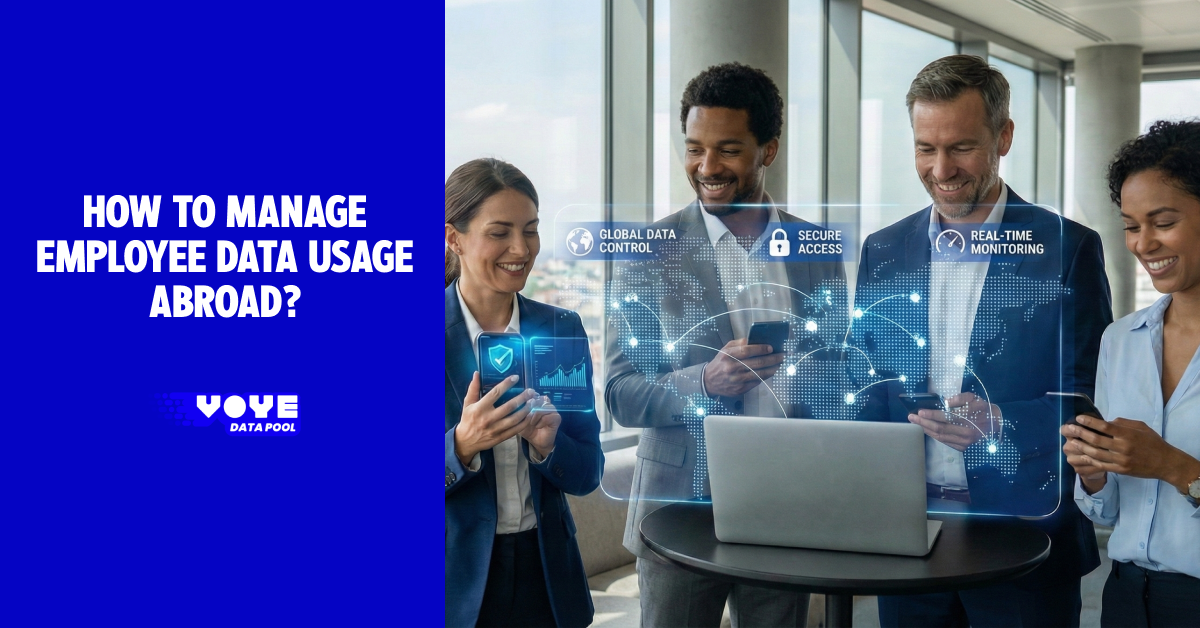
International business travel is no longer limited to senior executives or occasional sales visits. Today, global expansion, distributed teams, remote work, and project-based mobility mean employees across departments regularly work from different countries. With this shift comes a growing and often underestimated challenge: managing employee data usage abroad.
From unexpected roaming bills to cybersecurity risks and compliance gaps, unmanaged mobile data usage can quickly turn international travel into a financial and operational liability. For HR managers, IT heads, operations leaders, and business owners, the question is no longer whether employees will need connectivity abroad, but how to provide it securely, cost-effectively, and with full visibility.
This in-depth guide explores why managing employee data usage abroad is a growing concern, the risks of ignoring it, and how modern solutions like corporate eSIMs are transforming international roaming management. You will also find best practices, policy frameworks, real-world use cases, and a step-by-step roadmap to implement an eSIM-based data strategy for international business travel.
Why Managing Employee Mobile Data Usage Abroad Is a Growing Challenge
The rise of global and remote teams
Several trends are driving the complexity of managing mobile data for traveling employees:
- Global hiring and distributed teams operating across multiple countries
- Increased frequency of short-term international business travel
- Remote work policies that allow employees to work from anywhere
- Dependence on cloud tools, video conferencing, and real-time collaboration
Employees today rely heavily on mobile data for email, CRM access, cloud storage, messaging apps, navigation, and video calls. When this usage happens abroad, costs and risks multiply quickly.
Traditional roaming models are outdated
Most corporate mobile plans were designed for domestic use. International roaming add-ons are often expensive, inflexible, and difficult to manage at scale. As a result, many organizations rely on ad hoc solutions that lack consistency, visibility, and control.
Limited visibility for IT and HR teams
When employees travel internationally, IT and HR teams often lose real-time insight into:
- How much data is being consumed
- Which apps or services are driving usage
- Whether employees are connected to secure networks
- Whether usage aligns with company policies
This lack of transparency makes proactive management almost impossible.
Common Problems Companies Face When Employees Use Data Abroad
High and unpredictable roaming charges
International roaming fees remain one of the most common pain points. Even with negotiated carrier plans, businesses face:
- Per-megabyte or per-day roaming charges
- Bill shock from video calls, cloud sync, or app updates
- Delayed visibility into usage until invoices arrive
A single overseas trip can generate thousands of dollars in unexpected costs.
Data misuse and non-work-related usage
Without clear controls, employees may unknowingly or intentionally use corporate data plans for:
- Streaming video or music
- Personal social media browsing
- Large personal downloads
While often unintentional, this behavior drives up costs and complicates reimbursement policies.
Security risks on unsecured networks
Employees traveling abroad frequently rely on:
- Public Wi-Fi at airports, hotels, cafes, and co-working spaces
- Local networks with unknown security standards
These networks expose company data to risks such as man-in-the-middle attacks, malware, and credential theft.
Lack of centralized monitoring and control
Many organizations struggle with fragmented systems where:
- Mobile usage data is spread across carriers
- IT lacks real-time dashboards
- HR relies on expense reports after the fact
This reactive approach leads to inefficiencies and compliance gaps.
Compliance and data protection challenges
Different countries enforce different data protection regulations. When employees access or transmit company data abroad, organizations may face:
- Data residency concerns
- Industry-specific compliance requirements
- Inconsistent enforcement of security policies
The Impact of Unmanaged Data Usage on Costs, Productivity, and Cybersecurity
Financial impact
Uncontrolled employee data usage abroad can lead to:
- Escalating telecom expenses
- Budget overruns for travel and operations
- Disputes over expense reimbursements
Over time, these costs compound and reduce overall profitability.
Productivity losses
Ironically, attempts to limit roaming costs often hurt productivity. Employees may:
- Turn off mobile data to avoid charges
- Waste time searching for Wi-Fi
- Experience unreliable connectivity during critical work
Inconsistent connectivity disrupts workflows and delays decision-making.
Cybersecurity exposure
From a security perspective, unmanaged data usage increases the risk of:
- Unauthorized access to company systems
- Data breaches through compromised networks
- Loss or theft of devices with active connections
The financial and reputational impact of a single breach can far exceed roaming costs.
Best Practices to Control and Optimize Employee Data Usage Abroad
Establish clear international data usage policies
Every organization with traveling employees should define a formal policy that outlines:
- Approved connectivity methods
- Acceptable and non-acceptable usage
- Security requirements while abroad
- Reimbursement and accountability guidelines
Policies should be simple, practical, and easy to communicate.
Shift from reimbursement to provisioning
Instead of reimbursing employees for personal SIM cards or roaming charges:
- Provide company-managed connectivity solutions
- Centralize billing and usage tracking
- Eliminate inconsistent employee experiences
This approach improves both control and satisfaction.
Use centralized management platforms
Centralized platforms allow IT and operations teams to:
- Monitor data usage in real time
- Set alerts and usage thresholds
- Activate or deactivate connectivity instantly
Visibility is the foundation of effective international roaming management.
Optimize plans based on travel patterns
Analyze historical travel and usage data to:
- Identify frequent destinations
- Allocate data pools strategically
- Avoid overpaying for unused allowances
Data-driven planning leads to sustainable cost optimization.
The Role of IT and HR Teams in Overseas Data Usage Management
IT team responsibilities
IT teams play a critical role in:
- Selecting secure connectivity solutions
- Enforcing security controls on devices
- Monitoring usage and responding to anomalies
- Integrating connectivity with device management systems
Their focus is on security, reliability, and scalability.
HR team responsibilities
HR teams contribute by:
- Communicating policies to employees
- Aligning connectivity rules with travel and remote work policies
- Supporting employee experience and productivity
- Ensuring compliance with labor and data regulations
Collaboration between HR and IT ensures policies are both secure and employee-friendly.
How to Monitor, Track, and Set Limits on Employee Mobile Data Usage
Real-time usage monitoring
Modern tools allow organizations to track:
- Data consumption by employee or device
- Usage by country or region
- Trends over time
Real-time insights enable proactive decision-making.
Usage caps and alerts
Set predefined thresholds to:
- Notify employees when they approach limits
- Alert IT teams of unusual spikes
- Automatically restrict usage if needed
This prevents bill shock without disrupting essential work.
Centralized reporting and analytics
Detailed reports help organizations:
- Audit usage for compliance
- Optimize future data allocations
- Forecast connectivity costs accurately

Take Control of Roaming
Eliminate bill shock and manage employee data usage abroad
Security Considerations for Employees Using Data Abroad
Risks of public Wi-Fi
Public networks are often unsecured and vulnerable to interception. Employees may unknowingly expose:
- Login credentials
- Confidential files
- Customer or financial data
Best security practices for international travel
Organizations should enforce:
- Encrypted mobile data connections
- VPN usage where applicable
- Device-level security controls and remote wipe capabilities
Secure mobile data is often safer than public Wi-Fi.
Traditional International Roaming vs Corporate eSIM Solutions
Traditional roaming limitations
Traditional roaming typically involves:
- High per-day or per-MB costs
- Limited country coverage
- Manual activation and deactivation
- Minimal visibility and control
These limitations make it unsuitable for modern global teams.
Corporate eSIM advantages
Corporate eSIM solutions offer:
- Local or regional data rates in multiple countries
- Instant activation without physical SIM cards
- Centralized management and reporting
- Consistent connectivity across borders
This model aligns with the needs of international business travel.
How eSIM Technology Transforms Employee Data Usage Abroad
eSIM technology is redefining how organizations manage mobile data for traveling employees.
Cost reduction
By using local network profiles, eSIMs:
- Eliminate expensive roaming charges
- Offer predictable pricing models
- Support pooled data across employees
Improved visibility and control
With centralized dashboards, IT teams gain:
- Real-time monitoring of usage
- Ability to set limits and policies
- Immediate control over connectivity
Enhanced security
Corporate eSIMs reduce reliance on public Wi-Fi and:
- Support encrypted mobile connections
- Enable rapid deactivation if a device is lost
- Integrate with enterprise security frameworks
Uninterrupted employee connectivity
Employees benefit from:
- Seamless connectivity across countries
- No need to swap SIM cards
- Faster onboarding for international trips
Platforms like Voye Data Pool enable organizations to activate, manage, and monitor eSIMs for employees from a single secure platform, simplifying global connectivity at scale.
Step-by-Step Guide to Implementing an eSIM-Based Data Strategy
Step 1: Assess travel and usage needs
Analyze:
- Number of traveling employees
- Frequent destinations
- Average and peak data consumption
Step 2: Define policies and governance
Establish:
- Usage limits and security requirements
- Roles and responsibilities for IT and HR
- Escalation procedures
Step 3: Choose an enterprise-grade eSIM platform
Look for solutions that offer:
- Global coverage
- Centralized management
- Scalability and reliability
Step 4: Pilot with a small group
Test the solution with:
- Frequent travelers
- Cross-functional teams
- Real-world usage scenarios
Step 5: Roll out organization-wide
Train employees, monitor adoption, and refine policies based on feedback and data.
Real-World Use Cases of Efficient Employee Connectivity Management
Consulting firm with frequent international travel
A consulting firm replaced traditional roaming with corporate eSIMs. Results included:
- Over 40 percent reduction in roaming costs
- Improved employee satisfaction
- Better visibility into usage by region
Technology company with distributed teams
A global tech company standardized eSIMs for remote employees working across borders. Benefits included:
- Consistent security posture
- Simplified onboarding for new hires
- Centralized reporting for compliance audits
Operations-driven enterprise
An operations-heavy organization used eSIM management to:
- Set strict usage caps
- Prevent misuse
- Align connectivity costs with project budgets
Key Takeaways and Actionable Checklist
Key takeaways
- Managing employee data usage abroad is a strategic necessity
- Uncontrolled roaming impacts costs, productivity, and security
- Traditional roaming models no longer meet modern business needs
- Corporate eSIMs offer cost control, visibility, and security
- Collaboration between IT and HR is essential
Actionable checklist
- Audit current international roaming costs
- Define clear employee data usage policies
- Centralized monitoring and reporting
- Educate employees on security best practices
- Implement a scalable eSIM-based connectivity strategy
Conclusion
As international travel and remote work continue to expand, managing employee data usage abroad will only become more critical. Businesses that rely on outdated roaming models risk rising costs, security vulnerabilities, and frustrated employees.
By adopting modern approaches like corporate eSIMs and centralized management platforms, organizations can reduce expenses, improve visibility, and ensure secure, uninterrupted connectivity for their global workforce. Solutions such as enterprise eSIM connectivity platforms simplify activation, monitoring, and control, helping businesses future-proof employee connectivity during international travel.
The organizations that act now will not only protect their bottom line but also empower their teams to work productively and securely anywhere in the world.
Simplify Global Employee Connectivity
Control roaming costs and manage secure employee data worldwide.